I was only able to catch two species because the rest were too fast for me.
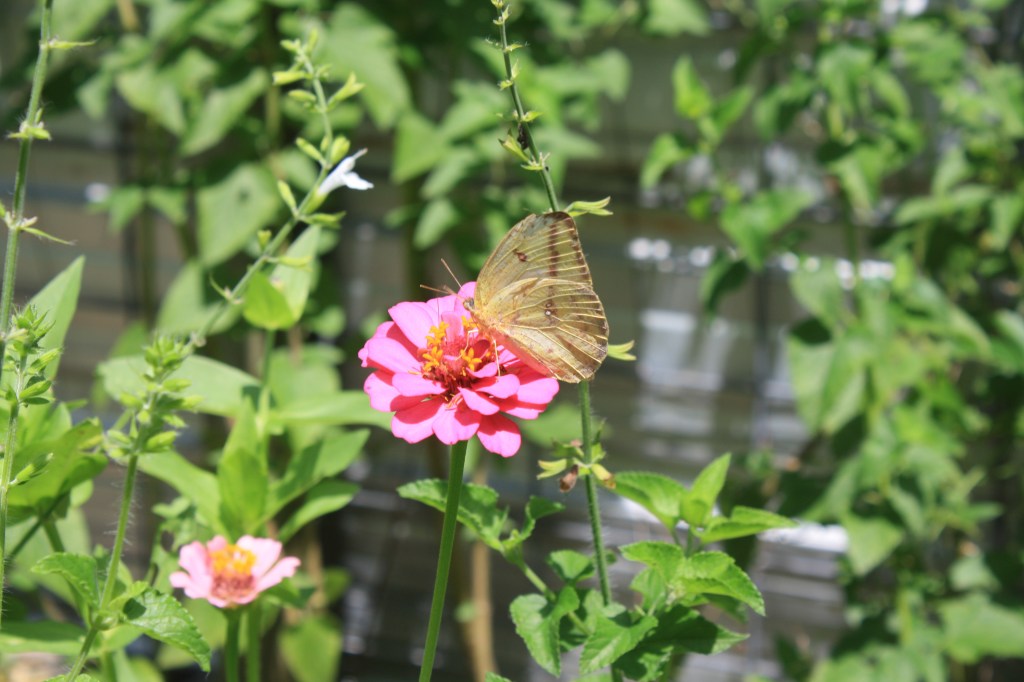
The first is a Sulphur ( yellow) butterfly. It’s either a Cloudless Sulphur or a large Orange Sulphur. Pretty hard to tell. For sure it like’s my zinnias.
Sulphur butterfly
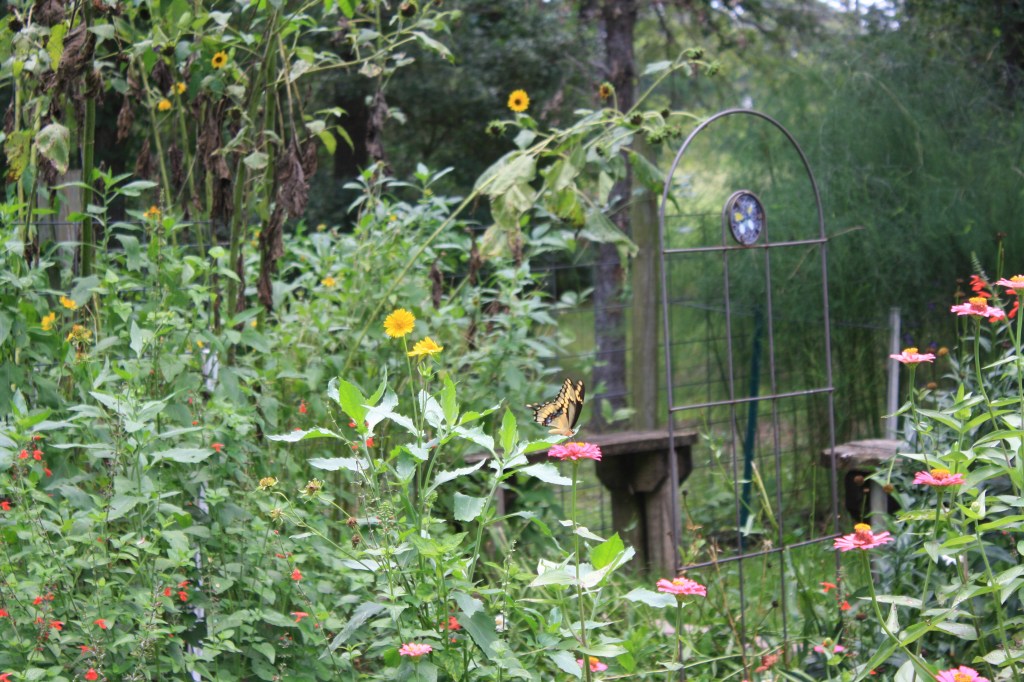
The next beauty is one of my favorites, it’s a Tiger Swallowtail, the yellow version. Notice it’s on a zinnia also.
Tiger swallowtail on a zinnia blossom
So…I wonder what would be a great nectar plant to put in your gardens? ZINNIAS. They are so easy to grow and everyone likes them. How easy is that?
Happy trails to you, until we meet again. Roy would have loved this.
For those of you who don’t know what “fledging” means, its when the baby bird takes its first flight.
In purple martins this happens at or after it is 28 days old. So it is good to know when the very first eggs are laid so you know when this will happen.
If you lower a house down to clean it or look at the nests, young who are close to this age can become scared and jump out. Not a good thing! I have had this happen to me, a long time ago before I was experienced with these birds.
This resulted in a frantic chase by me to catch them all, put them in a container, then replace them in the nest quickly. After that I had to close up the entrance hole with a bandana. Then I tied a long string to the cloth, and raised the house back up. After several minutes, I slowly pulled the bandana out. Luckily the babies stayed in their house.
Right now you can see the mothers and babies who are flying sit on the house and talk to the babies still inside the gourds. They try to urge them to come out and join the rest. They will circle all day and chatter until every young martin has made it up to the skies.
It’s a wonderful and magnificent sound! You won’t forget it.
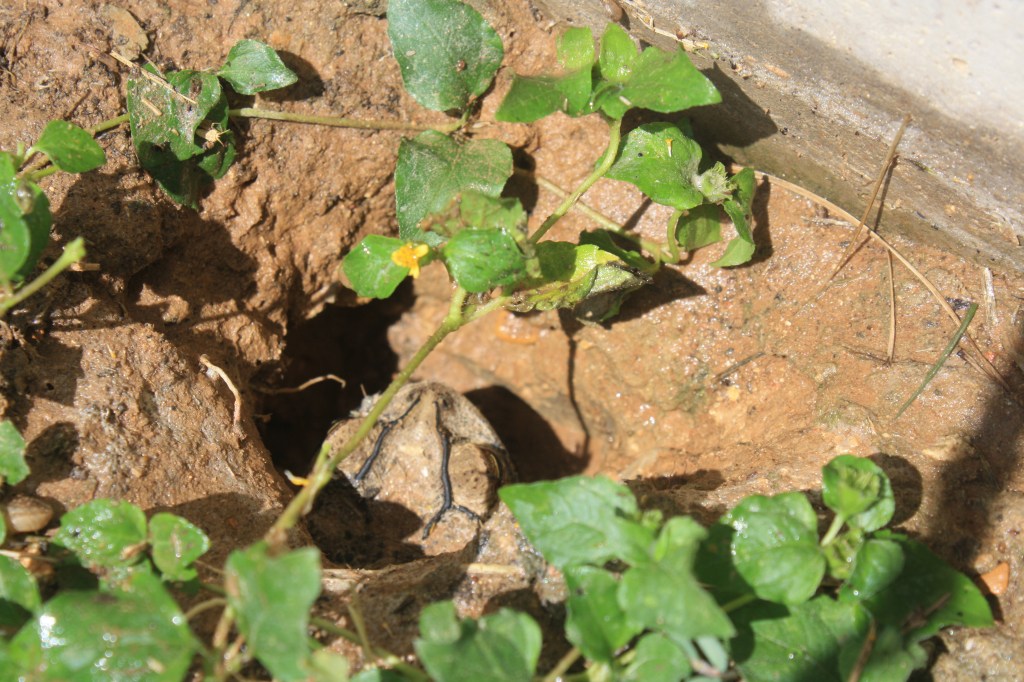
I bet most of you have seen these really big toads around your house. They will probably be near a faucet or anywhere it’s wet. If you make any noise near them they, peak out at you. They are Gulf Coast Toads.
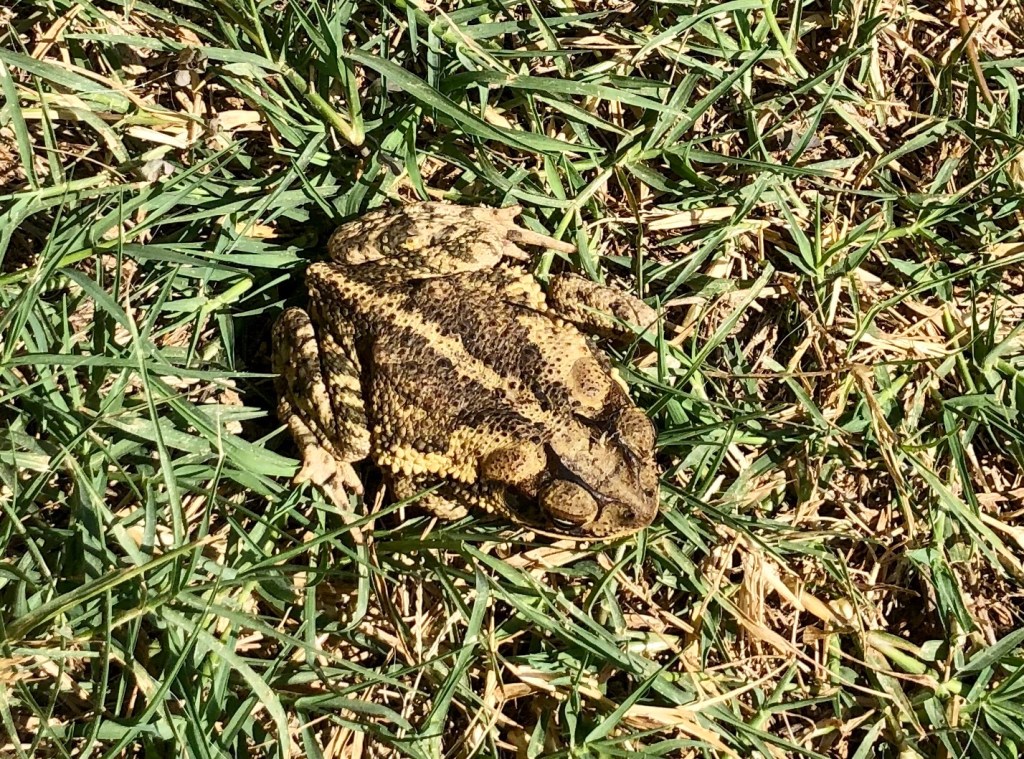
This one is a female, which can be figured out because she is really big. You can tell the Gulf Coast toad species because of the prominent cranial crests on her head, which you can see in Suna’s photo below.
Gulf Coast toad, photo by SA Kendall
These toads live from Mississippi in the east down through Mexico. They are common in our gardens, and eat lots of insects. They come out at night to party, so those of you who are out late might see them.
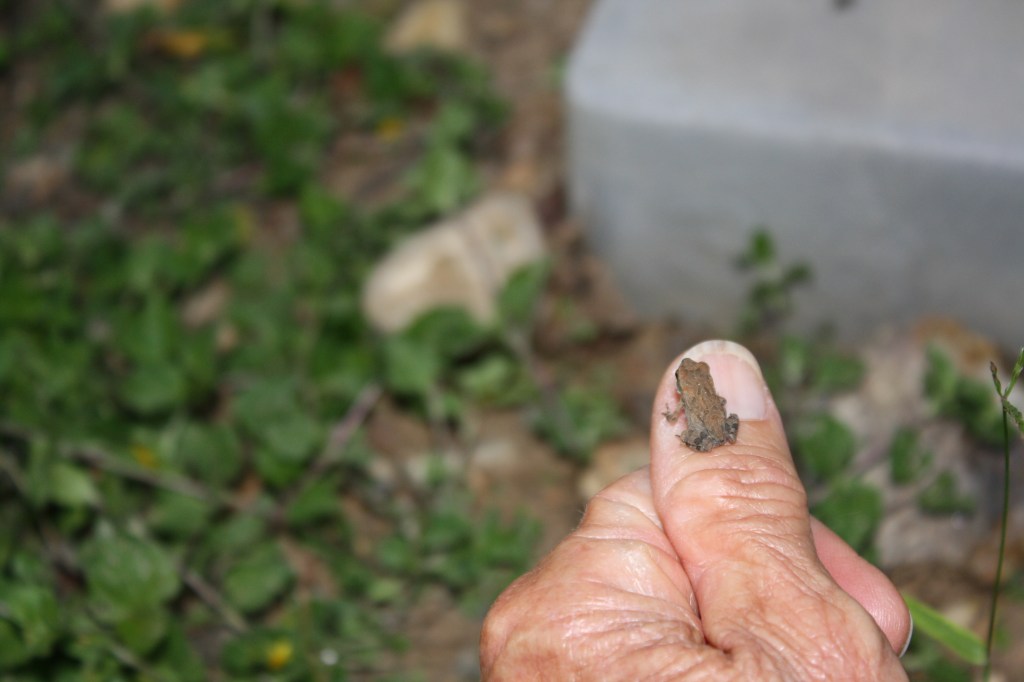
I took a photo of one of their babies last year, I think they are so cute. There were lots and lots of them. [Suna’s roommate in Austin reports there were hundreds of babies in their neighborhood last week; the toads are very common near their creek.]
I am always looking around for nature. This past week I found a wildflower that I had never seen before on our property. I did not know what it was, just that it was new and very pretty.
The pretty new flower
So I called upon two of our own members who really know wildflowers, Suna, and Linda Jo. As I expected, one of them responded quickly with the answer.
The new residents in Donna’s garden
Linda Jo was first to ID this as a Basket Flower or the common name “American star thistle” Centaurea americana. [Suna recognized it, but couldn’t remember the name.]
The flower heads are 4-5 in. wide and are subtended by fringed bracts. The plant looks similar to the thistles but lacks their prickly characteristics… The name “basket flower” refers to the stiff, straw-colored bracts just beneath the flower head, which are divided at the tip into long, sharp teeth.
Ladybird Johnson Wildflower Center Plant Database
I was happy to see a wildflower that I hope will love our place and have a family here.
A few days ago I heard one of my baby purple martins screaming. It was on the ground calling to its parents. It either fell out or was pushed out.
Martins are the largest and heaviest of all the swallows. So, while they are excellent at soaring, they are not good at going to the ground. The entire colony got into the rescue attempt. All the adults were flying over the baby trying to get him or her to fly.
How did I get here?
This is the reason I look at the babies as soon as I can. This way I know how old the first set of eggs were when laid. It takes 28 days for a baby to have enough feathers to take its first flight. I guessed that this baby was about 26 days old
So he was close but not quite there. He needed a few more days.
I could not just lower the gourd rack and pop him back in. Doing this when many of the other babies were the same age could cause many more of them to jump out. Then I would really have trouble.
This year five rat snakes attempted to climb the pole and have my Martins for lunch. So, I knew if he stayed on the ground too long, something would eat him.
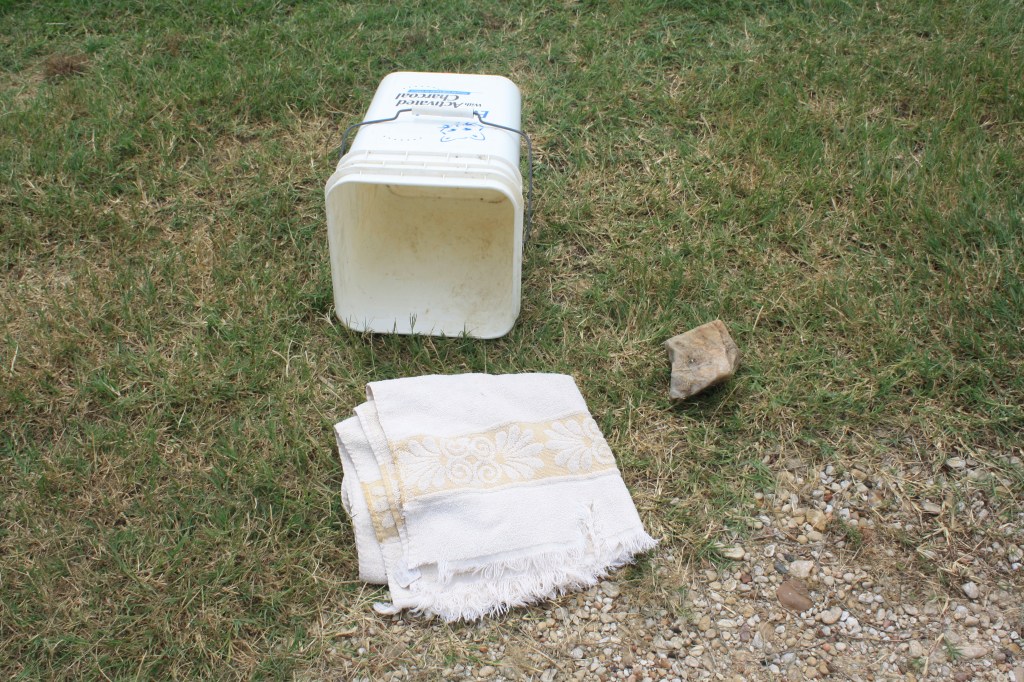
The first night he was on the ground, I put out a five-gallon bucket with a towel over it and a rock inside. He immediately went to it for protection. The adults saw this and again flew around him. They did not attempt to feed him or give him water. This is tough love.
Improvised bird shelter material
The next morning I was out early, and he was still alive and looking at me. So, I left him alone.
Howdy, Donna
I watched over the next four hours, and he left the area around the gourd rack, flying about ten inches high and started out across our pasture. I knew that was dangerous, for sure.
So I put up an open bird feeder on a shepherd’s hook and set him on it. The adults saw this, and once again tried to encourage him to take that first leap. After four hours, he got his nerve up and jumped, flying low until he gained some altitude, and he was off to the sky.
The launching pad bird feeder
I was so happy!! This usually does not happen. But this day, all was well.
Right now there are many baby birds on the ground. So, be careful mowing for a few weeks until they are in the trees.






 Nature Along the El Camino Real