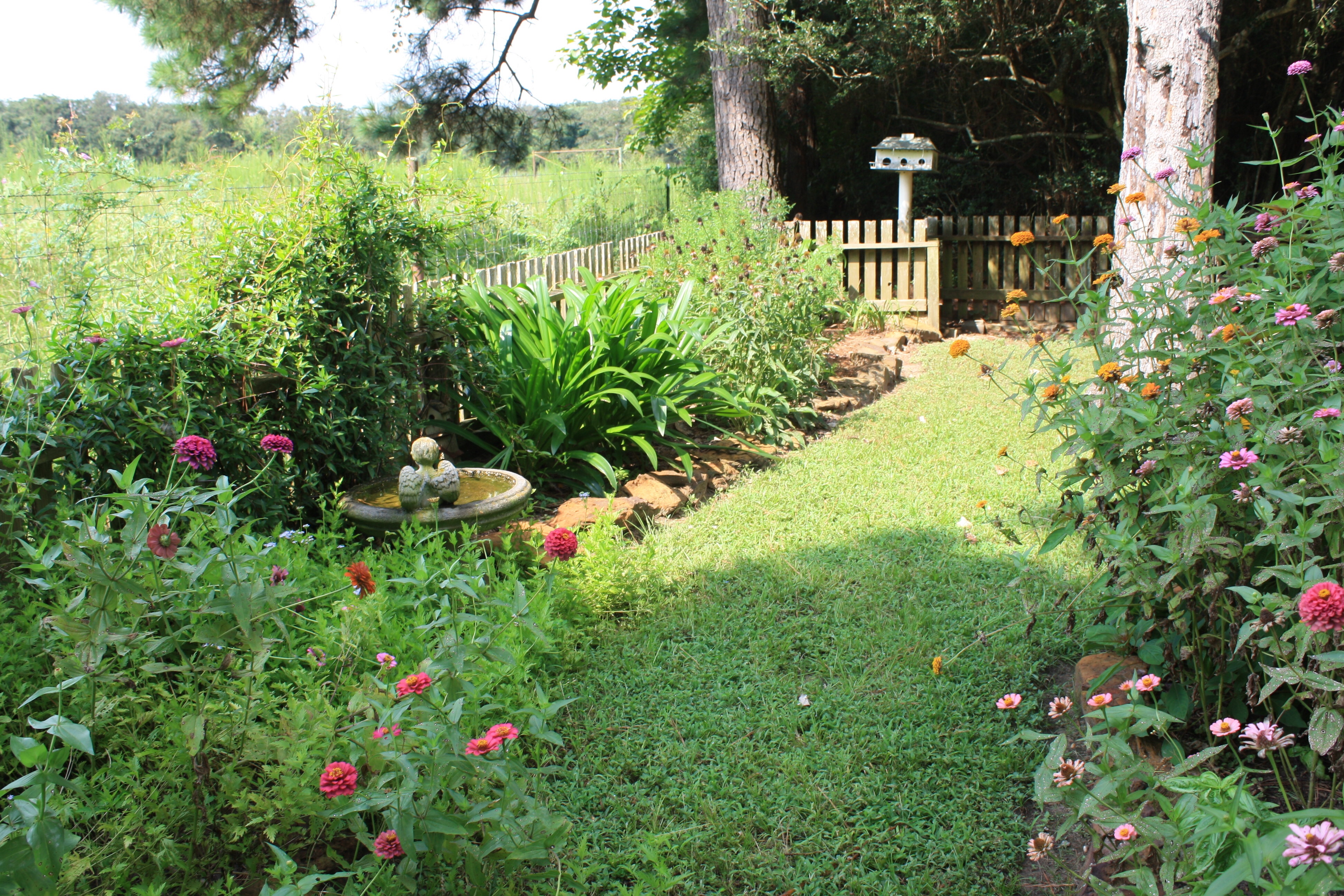
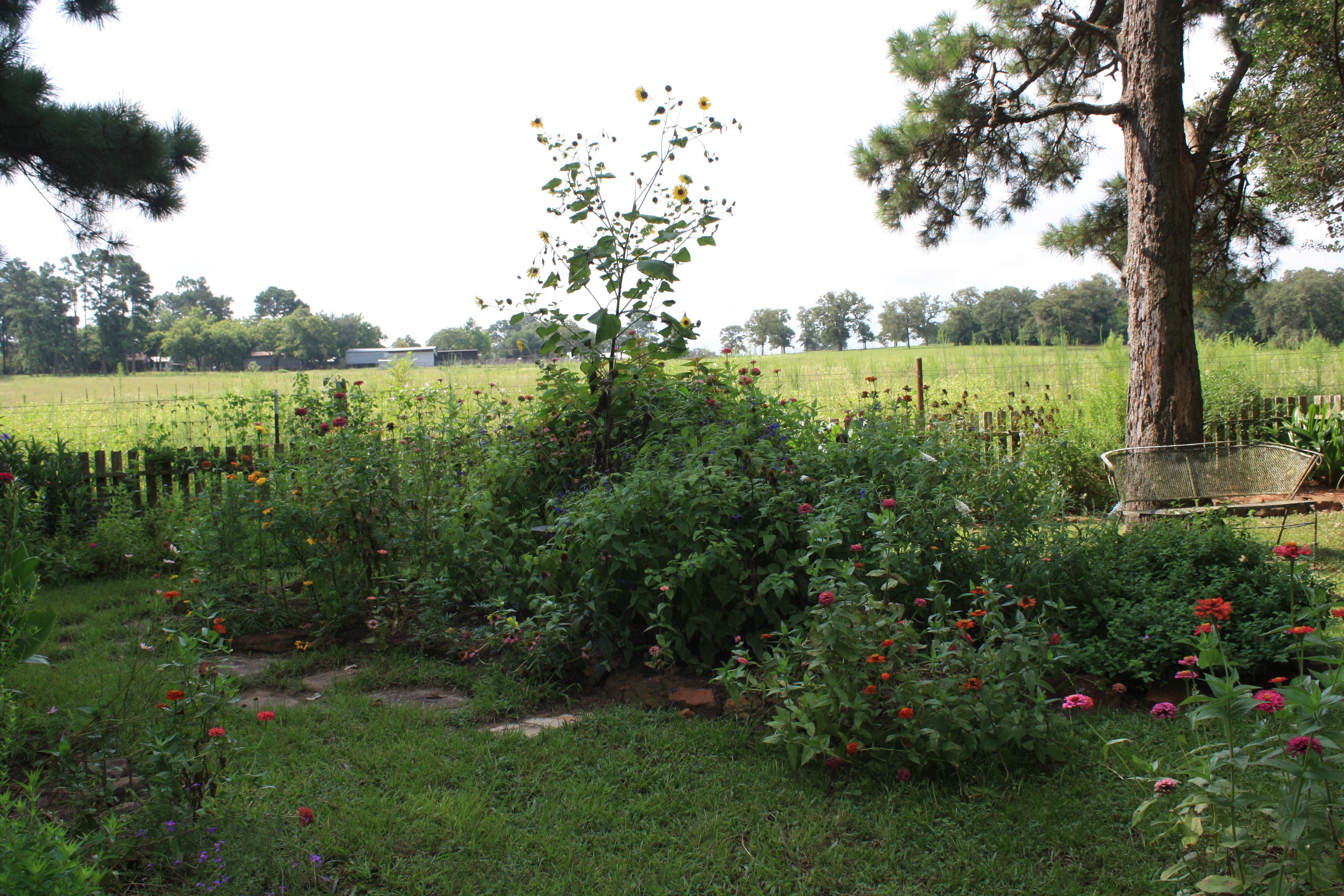
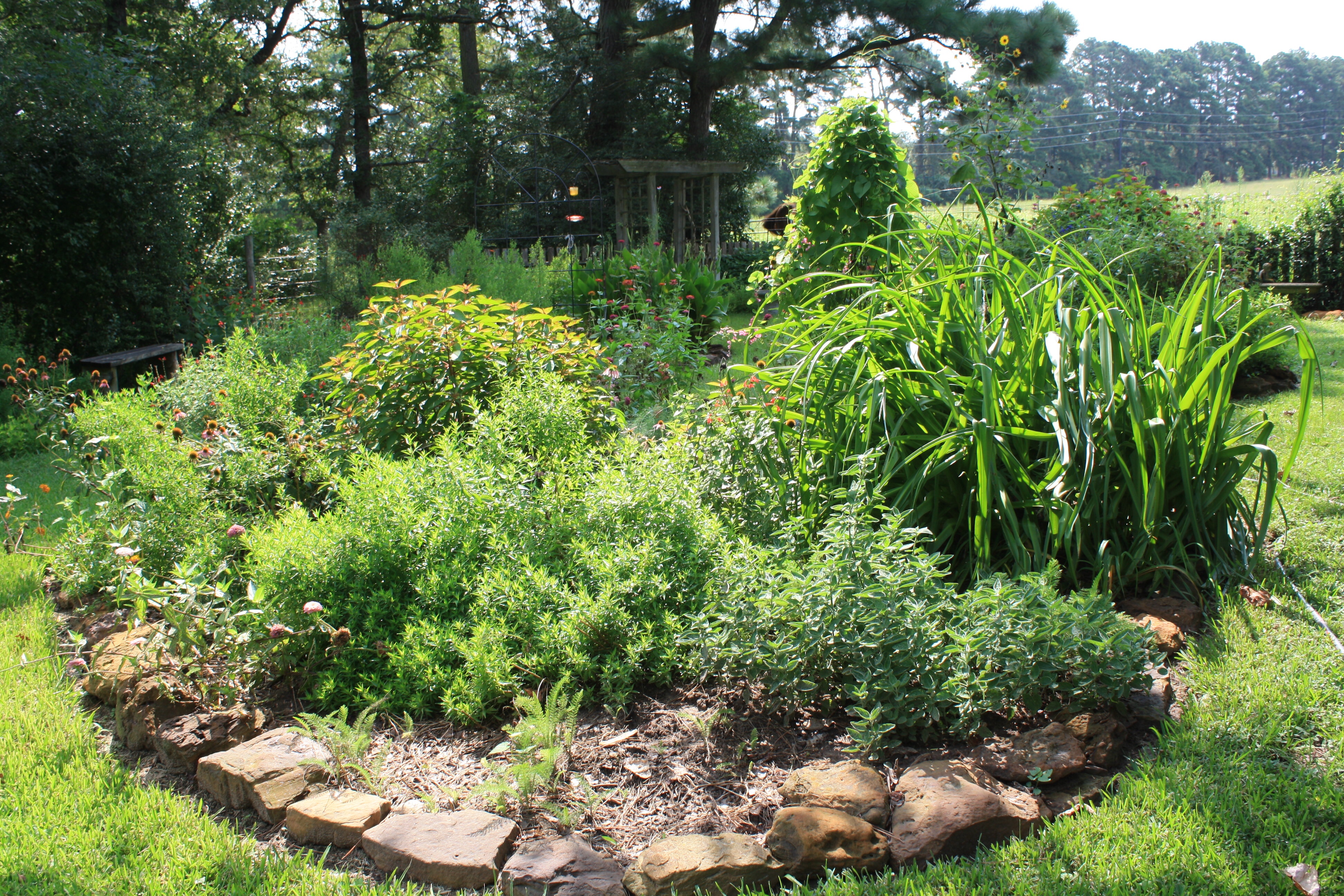
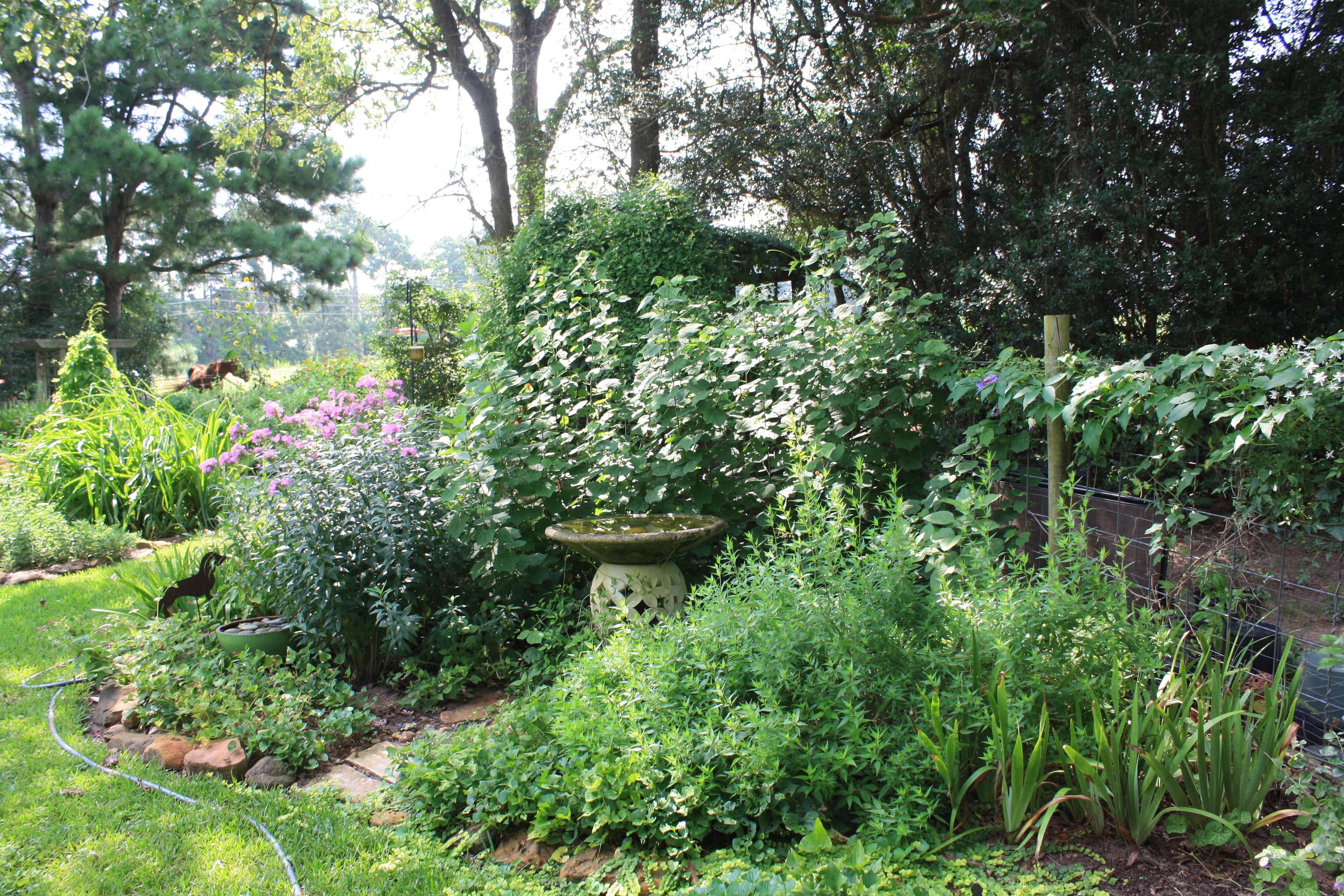
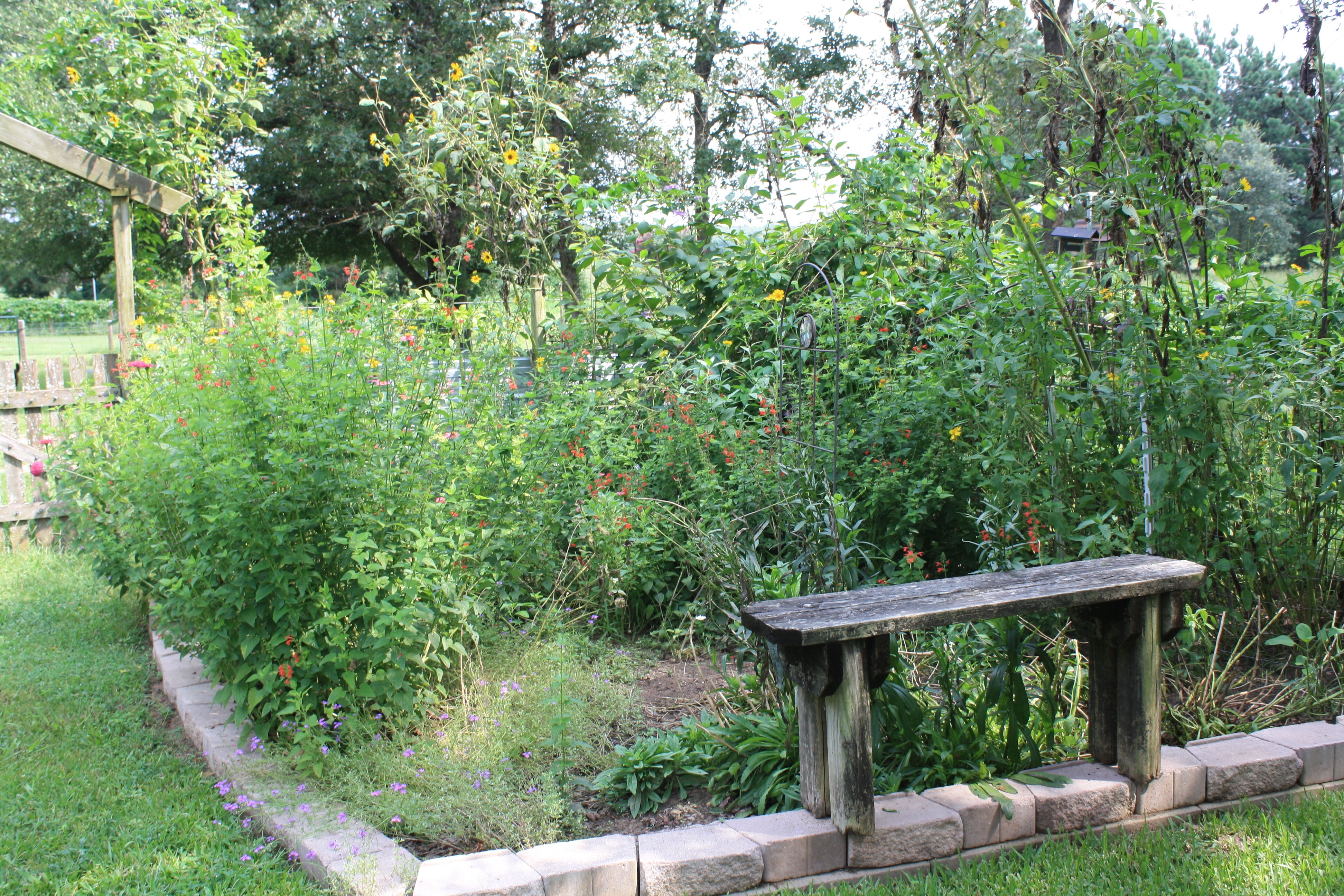
Here is what my garden looks like here in the hot month of August. Many wonderful things wait until it’s really hot to come out and look pretty.
Star jasmine vine
This year the weather has been a little crazy. Something I think will be the norm going forward. We just need to be flexible in our expectations and go with the flow… and share our experiences.
Click on any of the photos to see an expanded view.
The entrance gate with Passion Vine and Cypress Vine
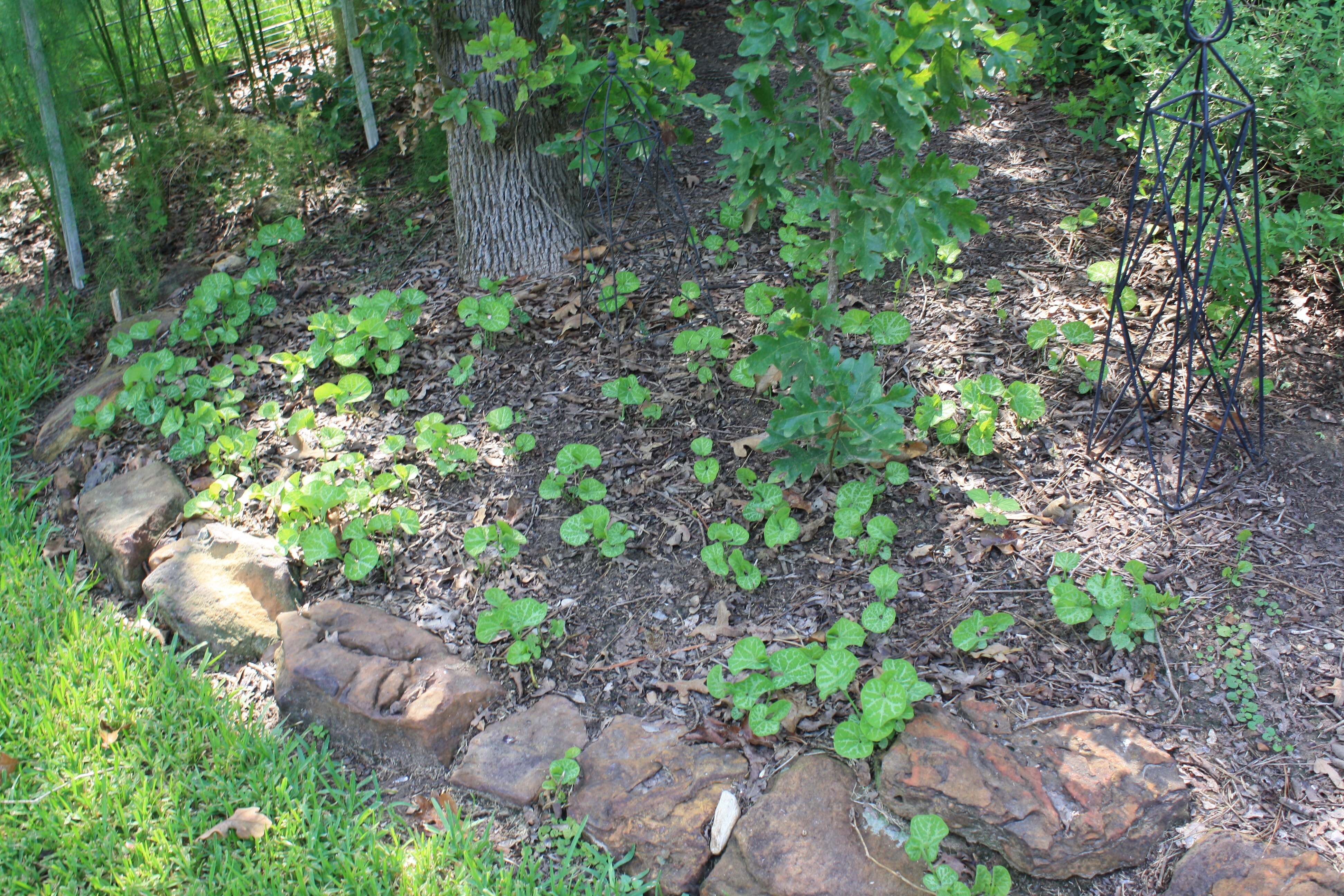
Pipevine coming back after fifth time being eaten to the ground.
Here is the next set of wildflowers and other things I saw on July 28, 2021. I will break the blog posts up to include a few each time. Look for more tomorrow!
There are so many amazing plants outside right now.
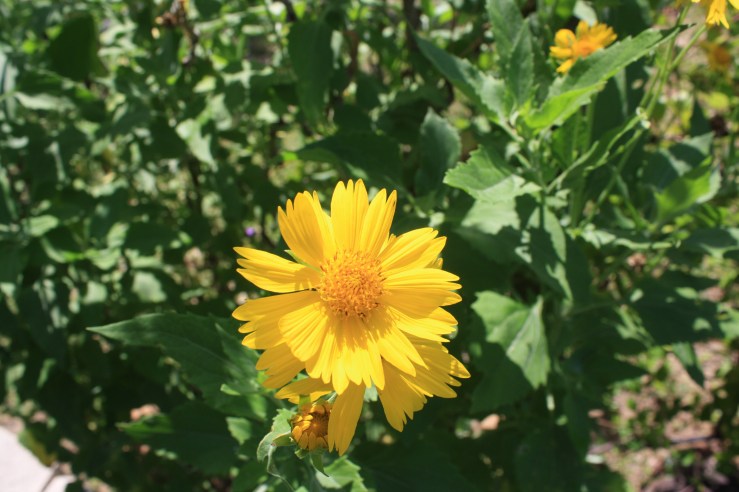
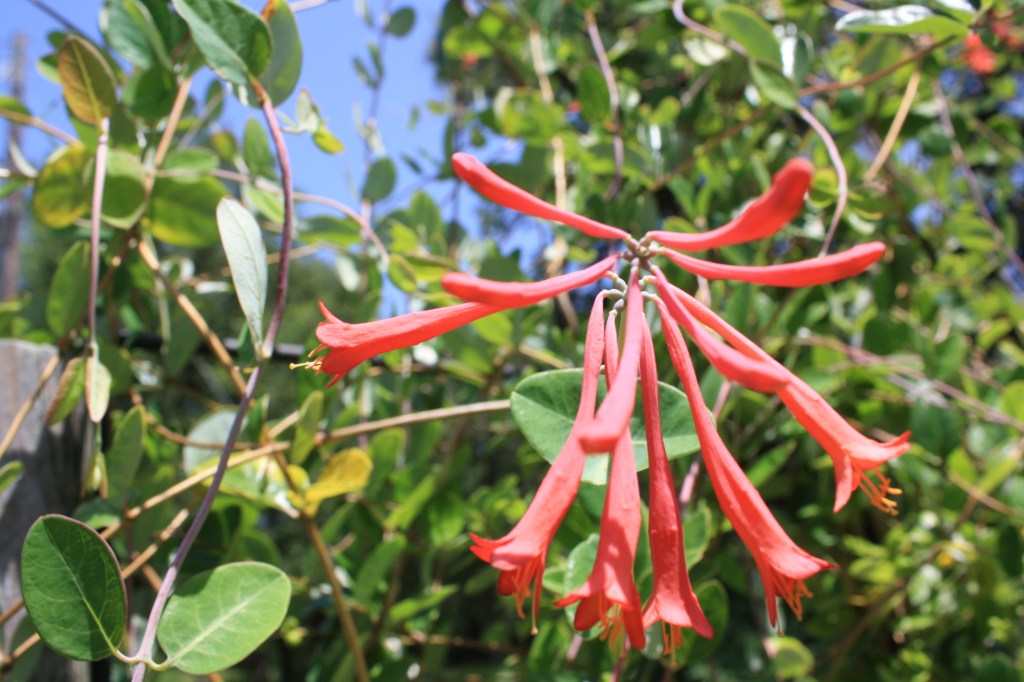
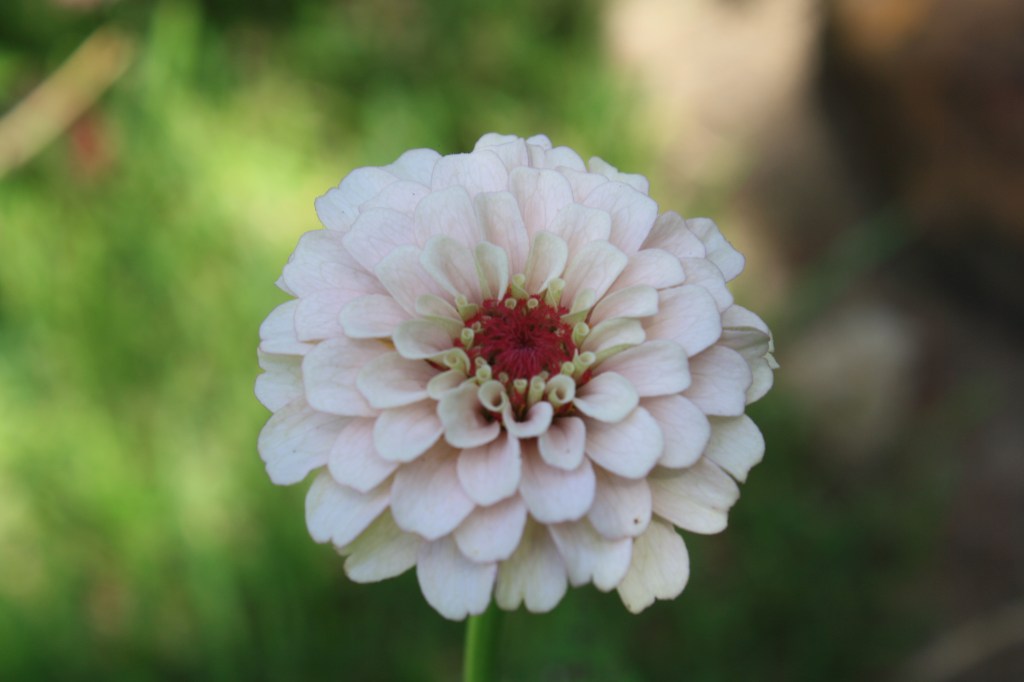
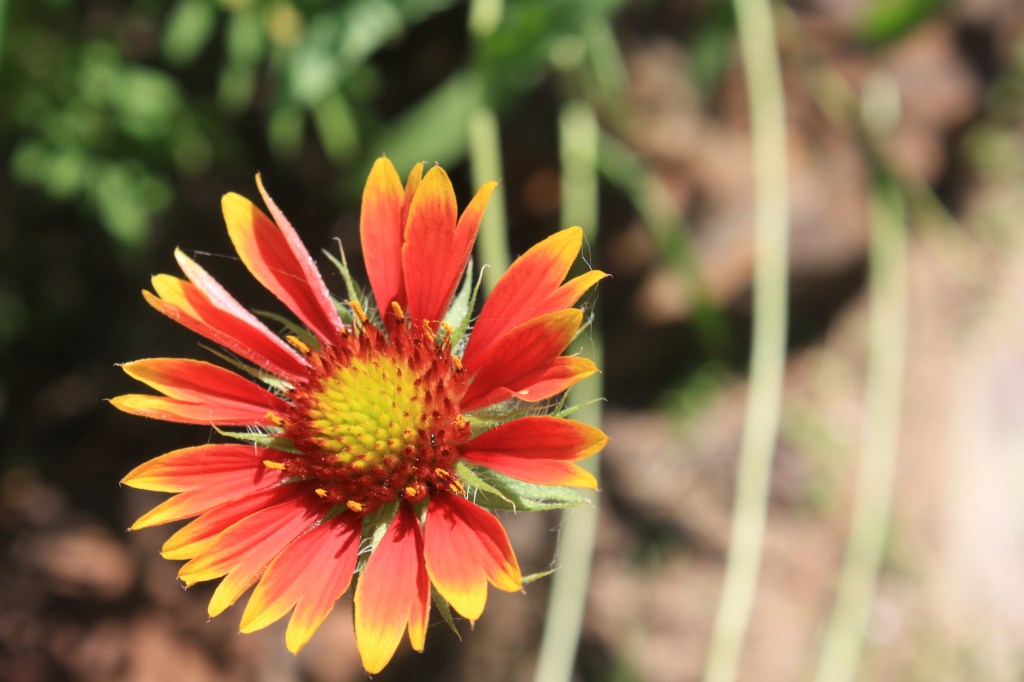
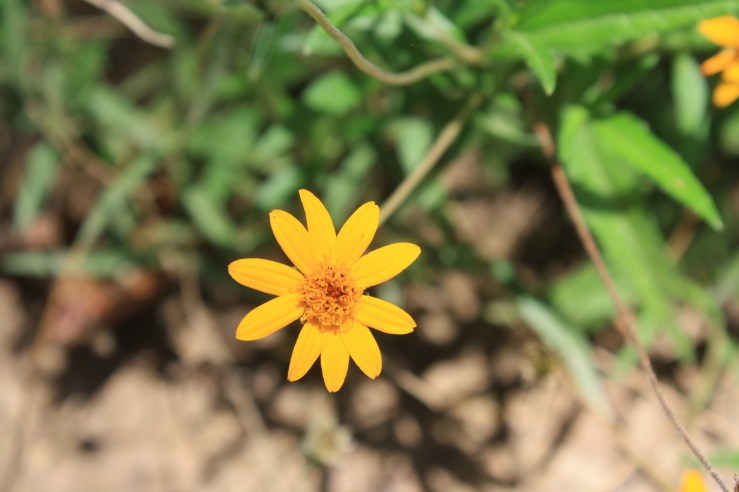
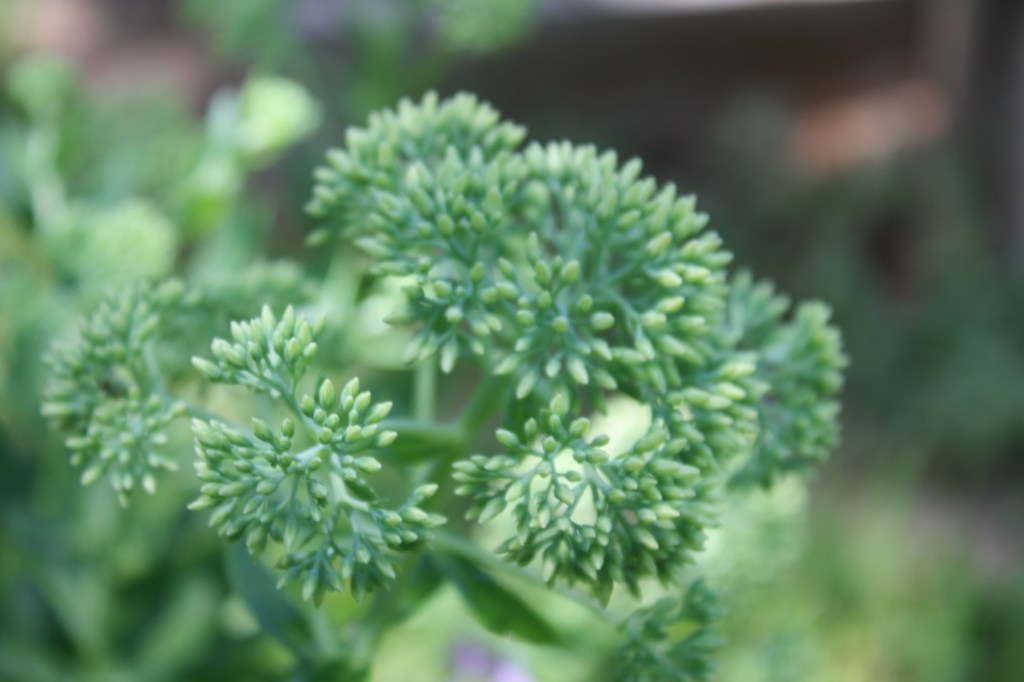
1. Cowpen Daisy. This bad boy gets going and likes to spread everywhere. It does not need rain nor help in any way. 2. Coral Honeysuckle. This is the hummers’ favorite plant at our place. So easy to grow, and I have lots of babies to share. 3. Zinnia. An old-time favorite that every species of butterfly likes, really worth having in your garden.4. Fire Wheel, native plant that grows in the pastures.5. Xemia. Sweet little yellow flower, looks great in the garden.6. Sedum. The flowers attract lots of butterflies.
I bet all of you have these flowers either in the pasture or in your garden. If not, then plant some for the pollinators, and you will enjoy the beauty of butterflies, hummers, and many more beautiful little creatures.
Just look around there are amazing things outside.
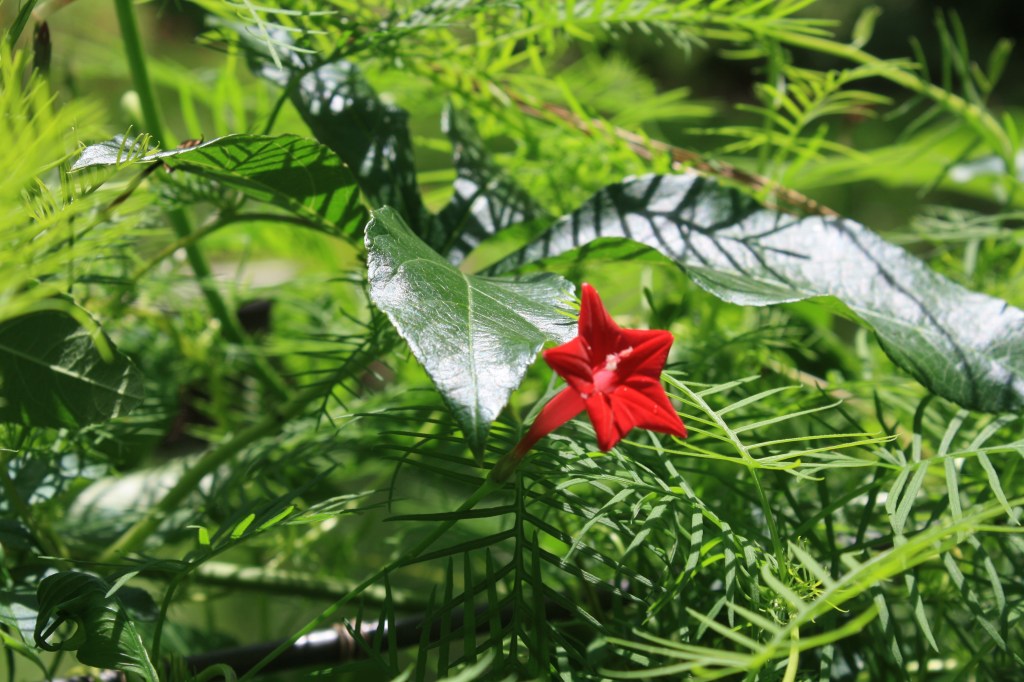
The first photo is a Cypress Vine. It only blooms when it is really hot! Perfect for us. The hummers love it. It looks great mixed with other vines.
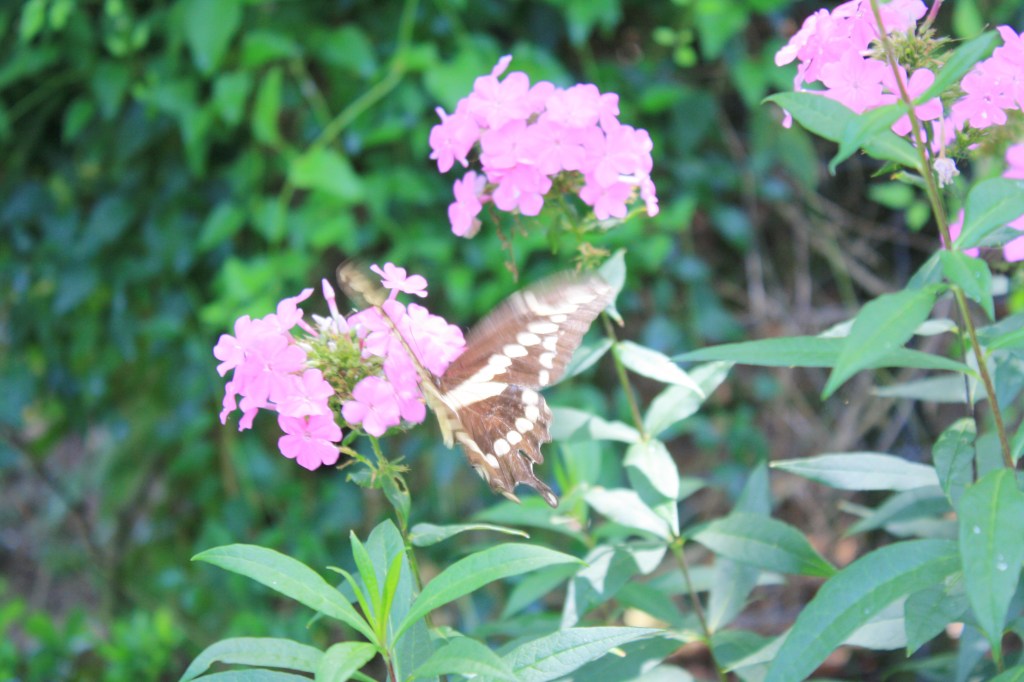
#2 Photo is a Garden Phlox, an old species that is hard to find now. A Tiger Swallowtail is getting some nectar from it.
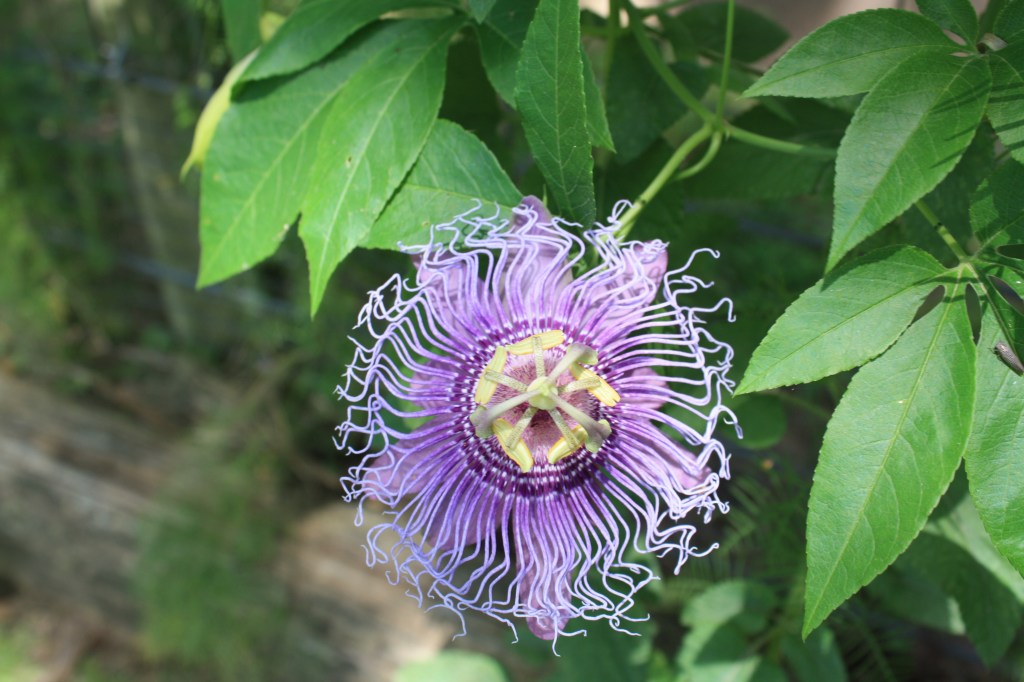
#3 is our Passion Vine that we all love. It’s soo easy to grow and is the host plant for the Gulf Coast Fritillary butterfly.
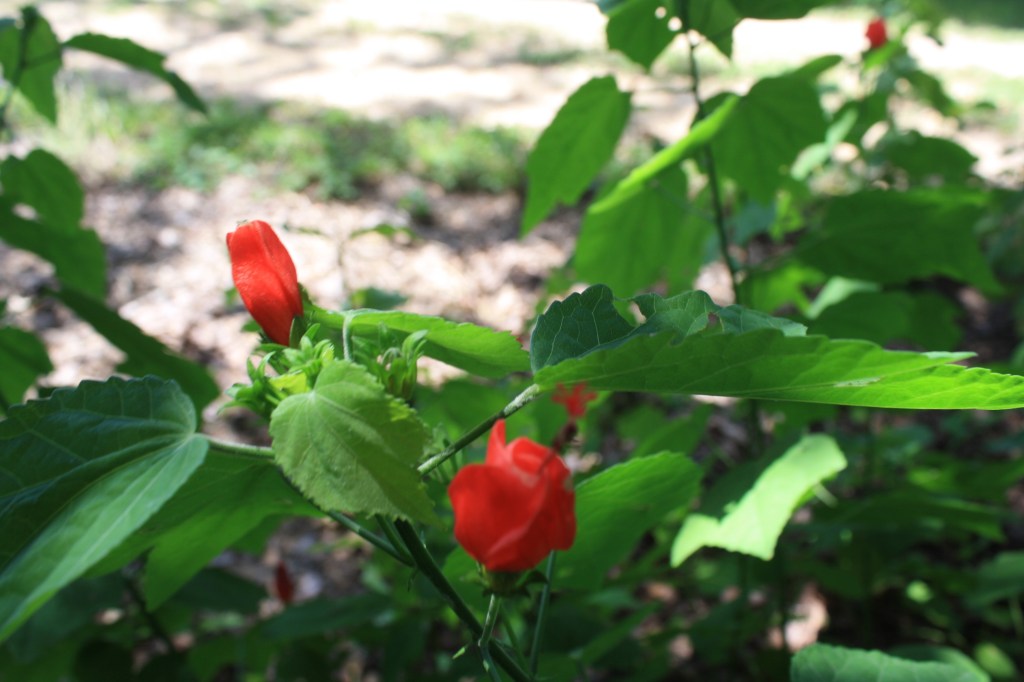
#4 Turk’s Cap: The hummers love this plant also. It likes a little shade and appears late in summer. Very easy to grow.
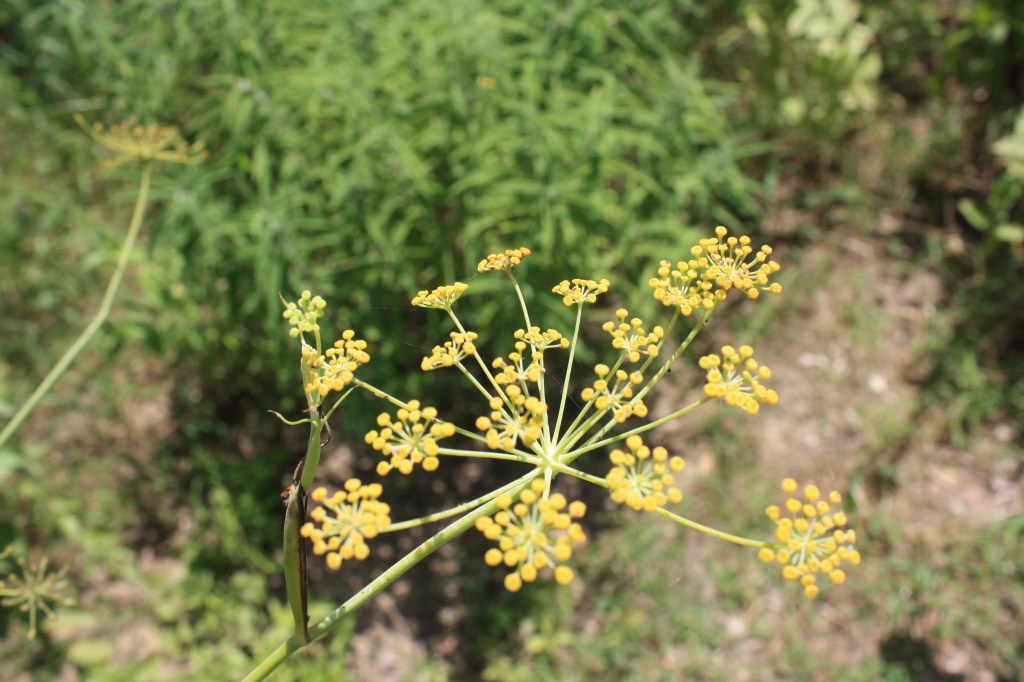
#5 Fennel Herb: The host plant for the Black Swallowtail butterfly. Its roots are edible for humans. The extreme freeze didn’t phase this guy.
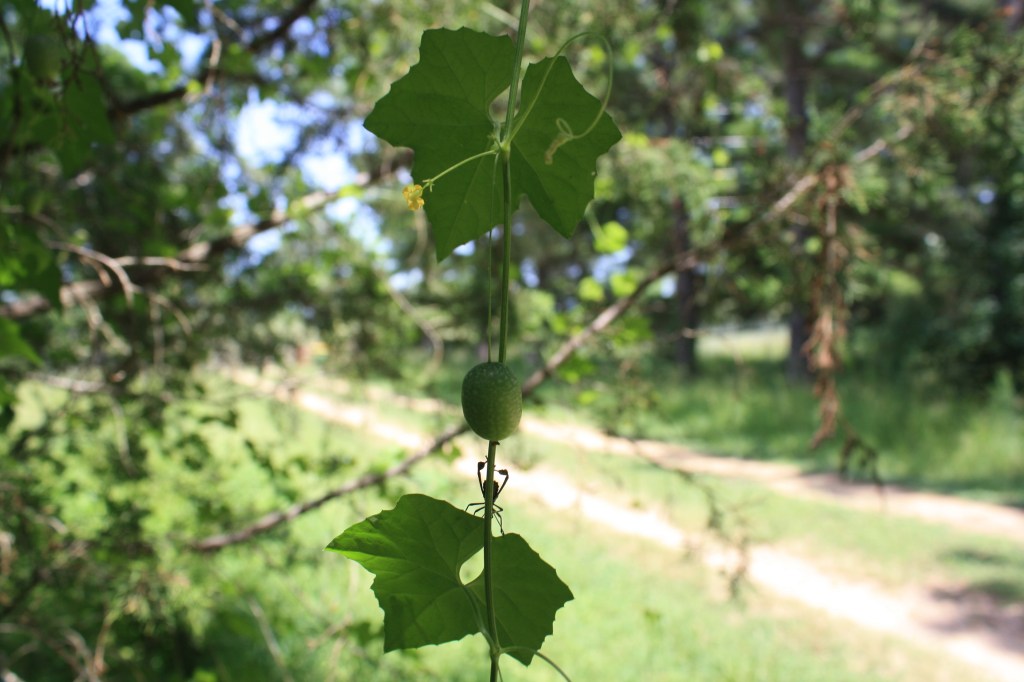
#6 Creeping Cucumber Vine: This is the first time I have seen this plant on our property. The freeze and early rains have brought in some interesting plants to our pastures.
I’ll send a few more blogs showing things I’ve found here.
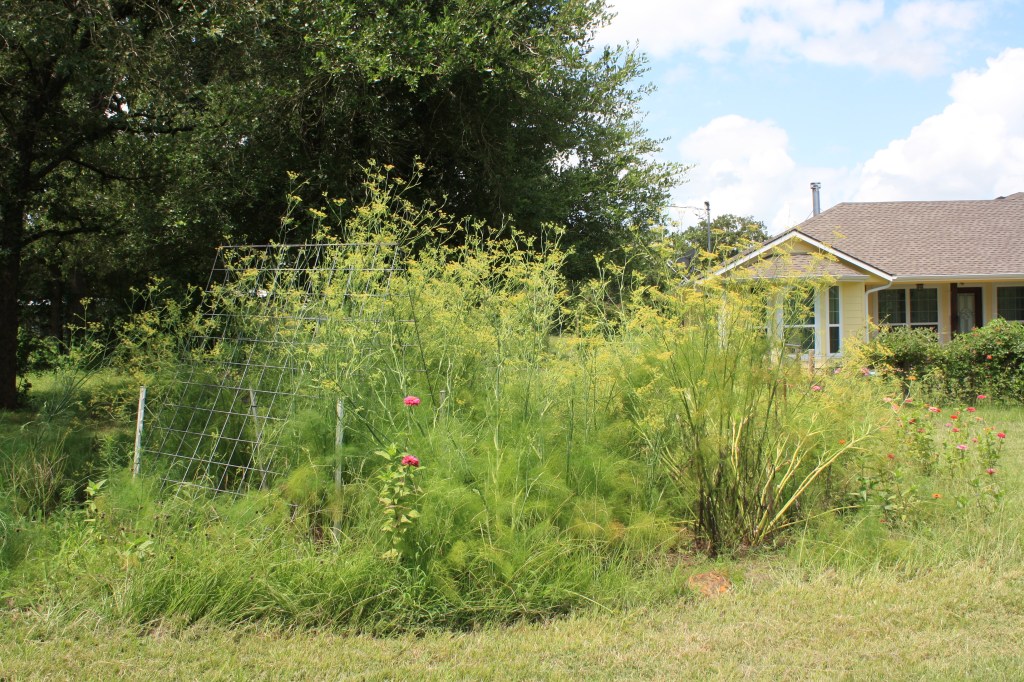
I know you all were wondering earlier this year what I was going to do to this small garden in my front pasture area. The freeze took every single plant to the ground. Laid to waste.
I was not able to weed it, or really do any work in it like I always have for many years. Injuries, a few too many years…it all adds up. I have been 29 several times I think.
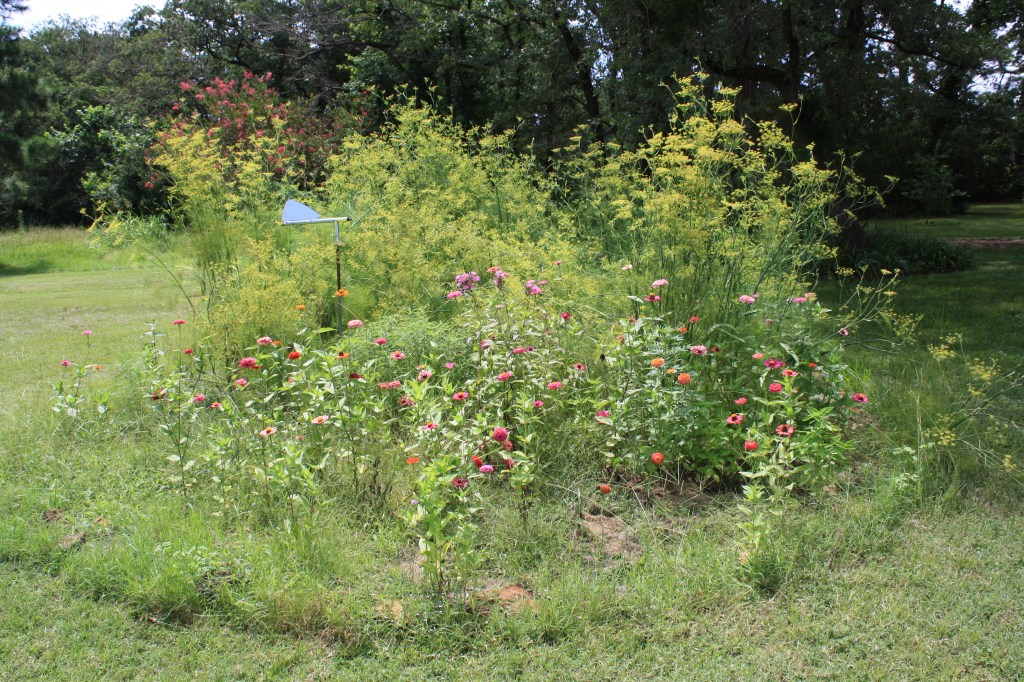
So, let’s talk about what the garden is right now. It looks messy to us humans. But, I didn’t plant it for us. I planted it for the wildlife. This garden had lots of native plants in it and a perch I made for birds to rest on.
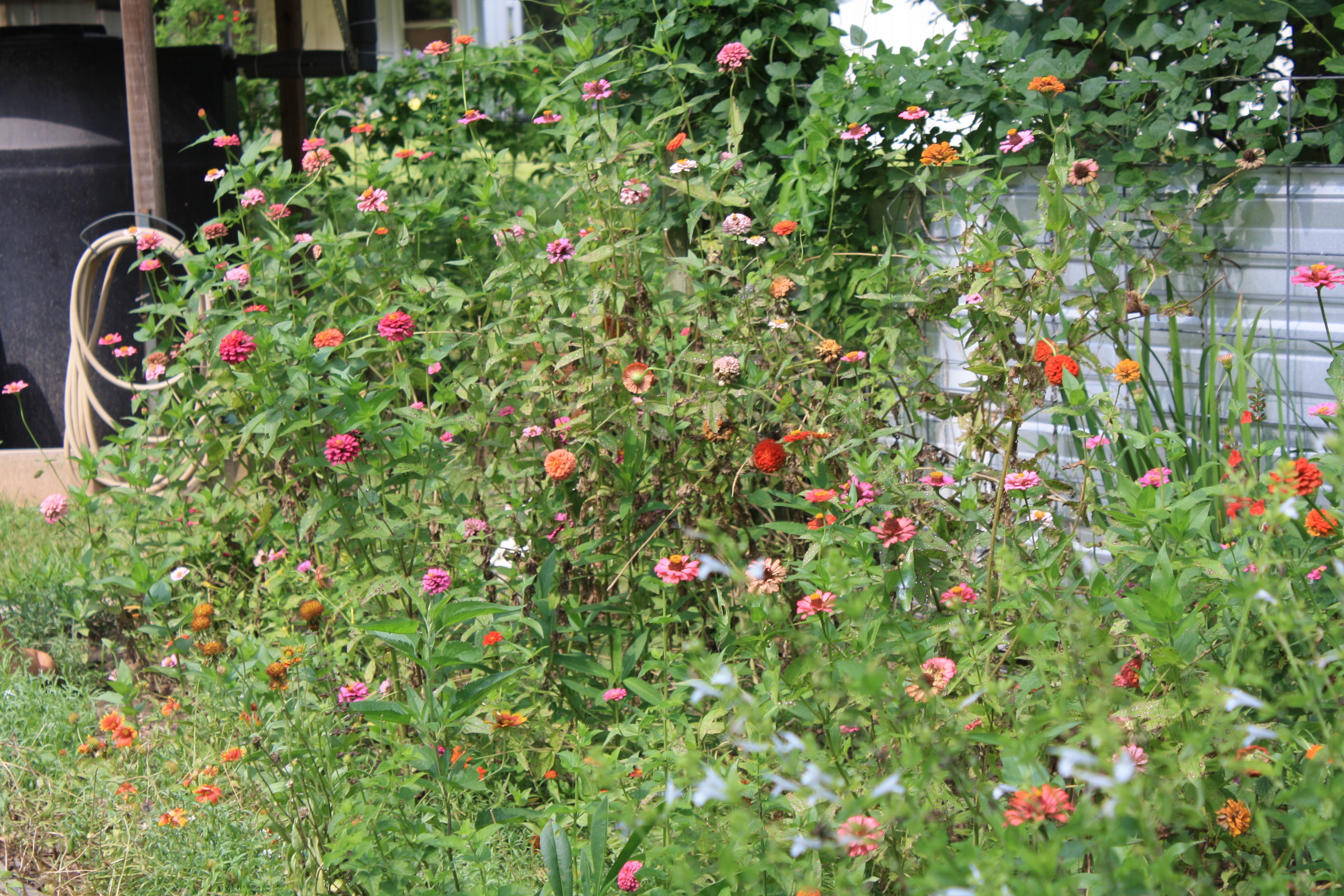
I planted zinnias, fennel, yarrow, sunflowers, sage, coneflowers, salvia, cowpen daisies, and a host of native things that just blew in. Freebies! And very important, I made a perch for the birds to sit on.
Many gardeners forget to put something for the birds to perch on and get off the ground where they feel safe. I cut a cattle panel in two, then took some hognose clips and made it to where it would open up. The birds love it.
All those “native plants” I had put in for years came back after the horrible weather. Even the heat and too much water has not deterred them. But all the mess has lots of bugs in it. Food for hungry birds. So, I may have just given you a reason to get out of all that work, trimming, weeding and other back breaking work.
I could hear the joy of singing this morning inside our house. Outside they were really loud and proud.
The new Purple Martin young are learning to fly, and take care of themselves. In August, they will fly to Brazil, where they will stay till next February. Right now they are learning how to catch insects in the air and drink on the fly.
Watching them put on the brakes as they near the gourd rack is very amusing. Sometimes they have to circle several times till they can stop.
Going fast is their thing; slowing down takes practice. I can only imagine how wonderful it must be to fly above the trees for hours.
I shall miss them when they leave. I wonder if they sing in another language when they are in Brazil?











 Nature Along the El Camino Real