Donna’s Garden in December

by Donna Lewis

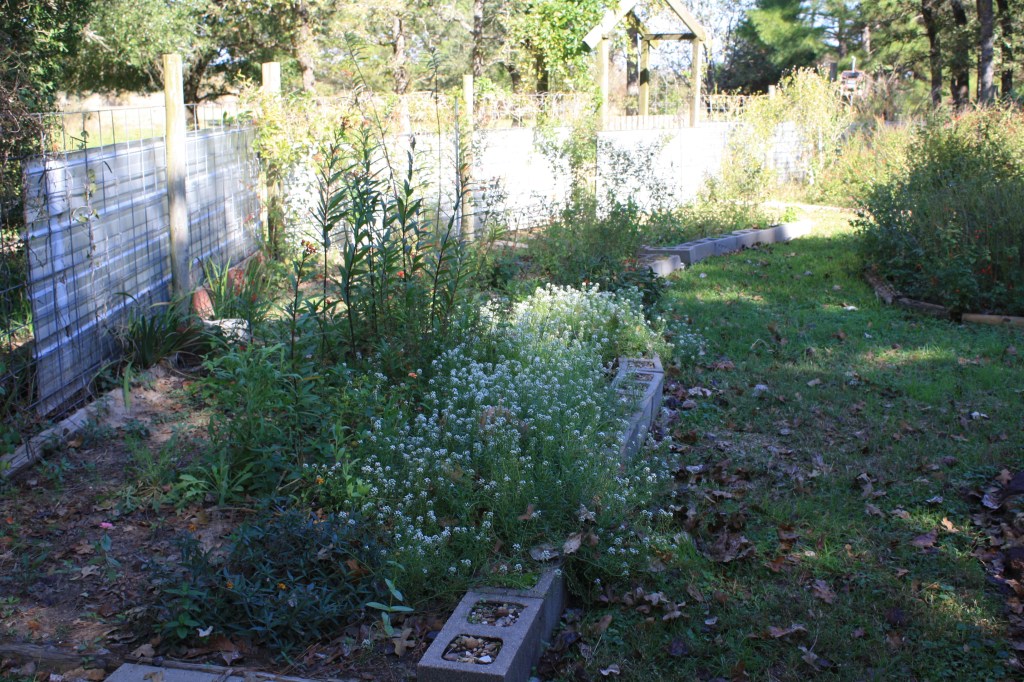
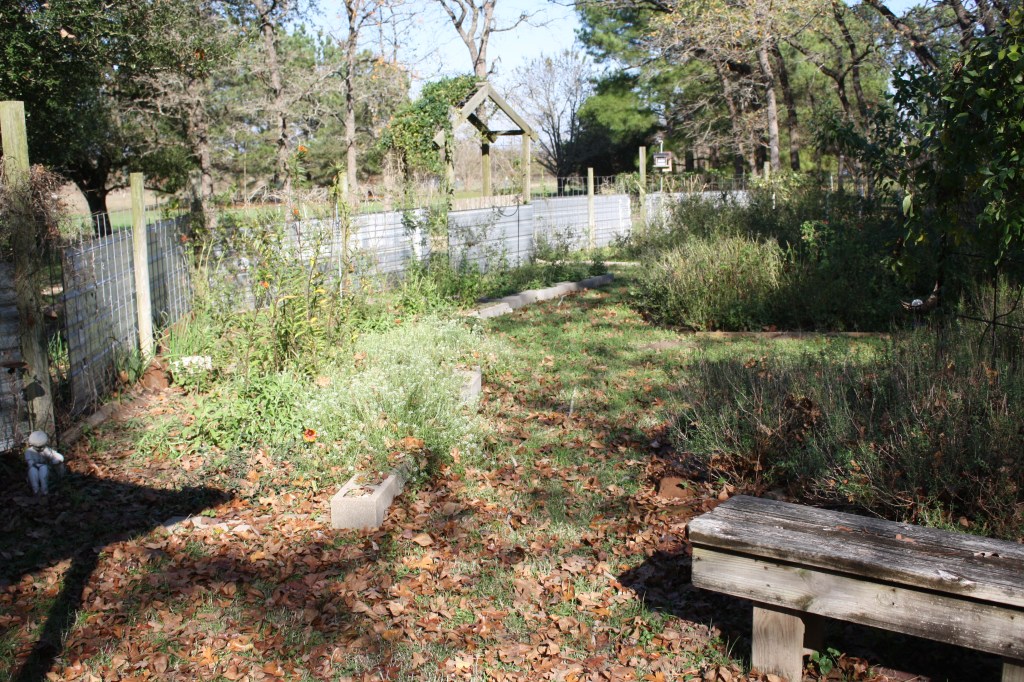
Hi everyone, this is the last photo essay of the year for my pollinator garden here in Milam County.

As you may know, we have had one overnight freeze to date. That’s pretty unusual, but we all know there is no normal for the climate lately. We just go with what happens today.  Always a surprise.

As you can see, the blanket of leaves is starting to cover my friend over. The winter blanket that Mother Earth provides her plant and animal creatures. Last year it looked sparser than it does this year. It was about 58 degrees today when I took these photos. That’s crispy for me.

I do not do cold well.

My garden is a living friend of mine.  She looks different every year, an amazing feat by any standard.  I have planted almost all native plants here in the 14 years or so before she was born. I am always anxious to see what she will look like in the next year.

Sometimes she has more yellow and orange highlights, or some years there is more purple and red. It depends on her mood.
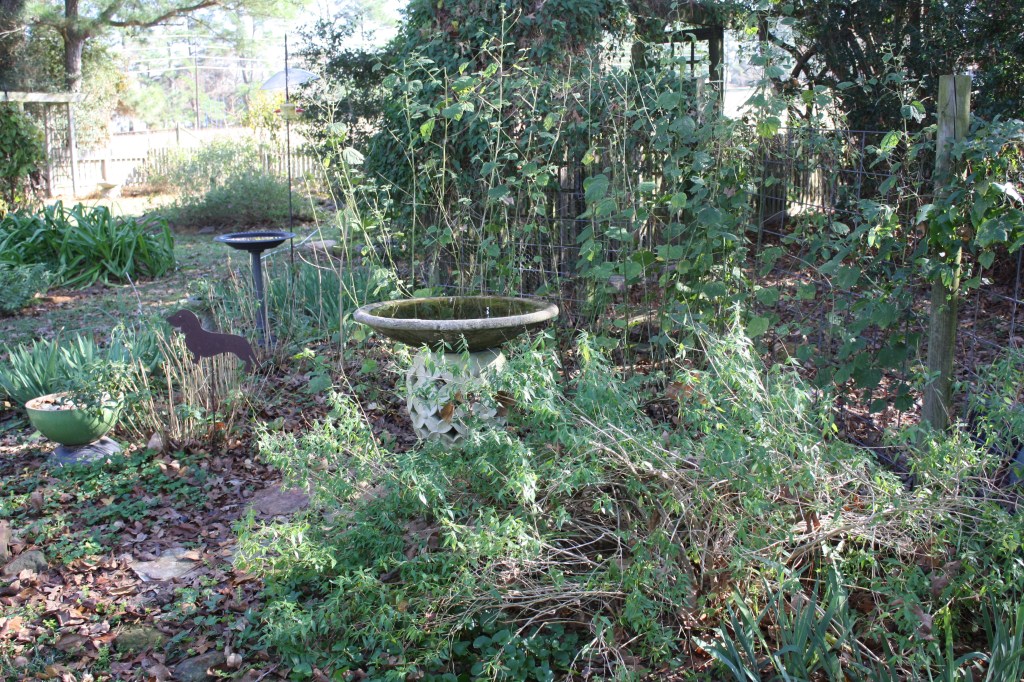
The colors call to the butterflies and birds that come to it for everything they want: water, shelter, food, and nectar depending on their individual needs.

I do my best to learn as much as I can so I can provide what they come for. They also provide me with what I need.  Peace and beauty.
By the way, “Sly,” one of my neighbors’ horses, is always waiting near the corner of the garden on his side for his daily apple or carrots. He likes peace also.

What’s That Sound?

by Donna Lewis

You know that sound without looking. It’s the Snow Geese returning from the arctic tundra and northern parts of Canada to stay in the Southern parts of the U.S. and along the coastlines.

They make a sound that people from around here remember from childhood, and it’s one of the few good things I remember that are still here. I hope it will always be here for me and those who come after.  It’s comforting in a primal way.

Photo by Andy Wilson on iNturalist.

I saw a flock of about thirty-five geese this morning around 10:00 am. I was so happy I just wanted to share the moment with someone. 

Lucky for me, Rusty was by my side, and I pointed them out to him. Rusty is one of our dogs.  He seemed to understand. Well maybe?

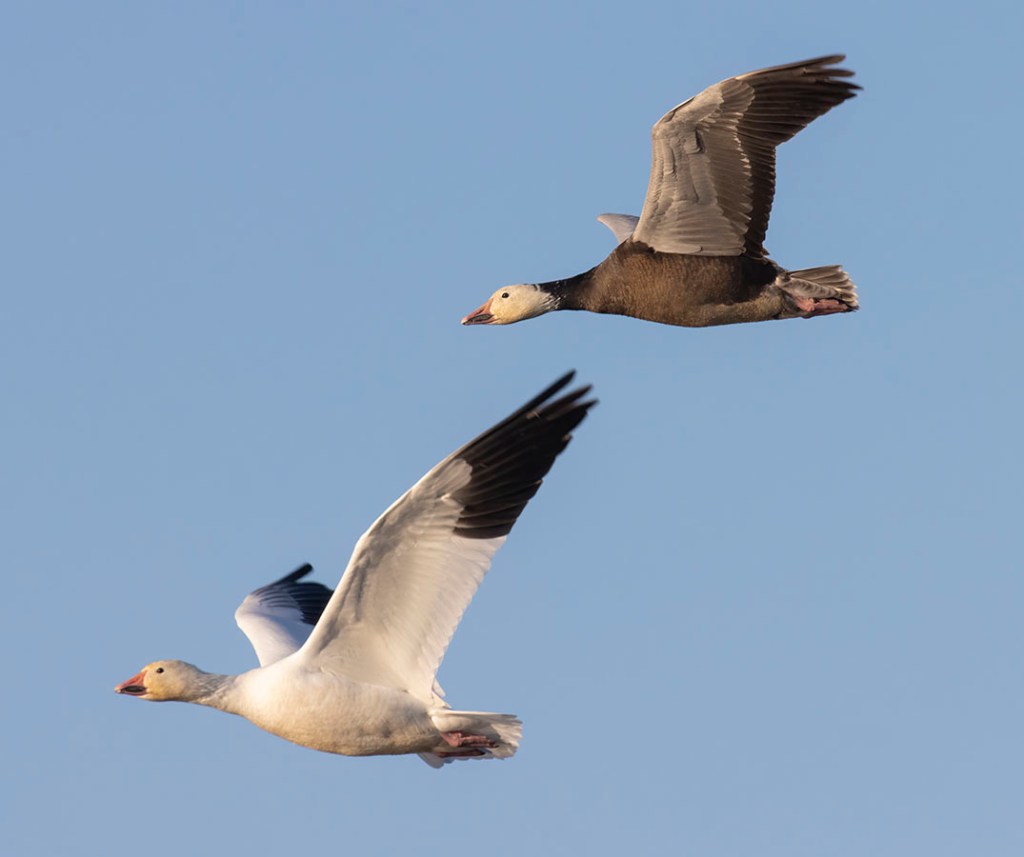
The Snow Goose actually comes in two colors.  The experts call that a morph. There is the traditional white morph and a second dark morph, sometimes called the blue morph. The blue Snow Goose is gaining in numbers, because the white goose is an easier target for both predators and hunters.

Both morphs. Photo by Paul Donohue on iNaturalist.

The geese flock to marshes, farm fields and edges of coastal wetlands. Many of these marshes are being drained for housing projects now. So sad. If you look up at them passing over in their V grouping you can see the long necks, mostly white bodies, and black wing edges.  The dark morphs are harder to identify, at least by me.

The geese make more of a honking call, while the Sandhill Cranes make more of a trilling sound.  They came through a few weeks ago. I hope you go outside while the weather is still warm and clear and look to the skies. The geese are here.  Winter is on our doorsteps.

When Purple Martin Babies Fall Out of the Nest

by Donna Lewis

So, we have a little time until our Purple Martins return, February 2022 to be exact.

If you prepare now, you won’t have to go out when it’s cold to build something. As my friends know, I do not like cold weather. That means that now is good time to brush up on things we might encounter when the Martins are here.

The series of photos show the temporary house for the stranded young bird.

A question I get often is, what do I do when a baby is on the ground? First of all, it’s not a good thing for sure.  But it happens.

I am only going to address this situation if the nestling is in good health but is not old enough to fly on its own. Sometimes they fall out, and sometimes they are knocked out by first-year Martins (teenagers) who like to get into mischief.

This happened to me last year and I was successful in helping the baby fledge (fly on its own).

I put together a makeshift emergency house for it, so the parents could feed it. It just needed a few more days until it could fly. I was not sure it would work, but I gave it a try, since staying on the ground is bad.

I had a feeder a friend made for me, and I added some cedar scraps I had to keep the wind out and protect it. I added some pine needles and a little nest in the corner and put it near the Gourd Rack up on a shepherd’s hook.

I watched for several hours, and nothing happened. Just as I was getting depressed thinking the baby was doomed, one of the parents brought it a bug. YES!!! Some success.

The parents only came once a day, but it was enough to save the baby. It was hungry and after the third day it jumped out and flew.   

The temporary home

I was so happy. So, you see that sometimes you can help a little bit and life goes on.

Donna’s November Garden

by Donna Lewis

Hello everyone,

As promised, I am showing you photos of my pollinator garden through all 12 months of 2021. You can get an idea of what changes take place.   

My garden is 95% native plants and trees. That fact has made it more resilient to temperature and other factors making it easier to manage. Even now I have a few Monarchs, Fritillaries, Swallowtails, Sulphurs, and a host of other butterflies.

It is pretty warm in the garden so many plants like Salvia and Blue Mist Flower still have nectar to provide. Today it is cloudy and windy, not a good day for the butterflies to be out and about. The garden also has more shade now because of the location of the sun. Butterflies need sun to warm their bodies. They cannot regulate their own temperature.

The leaves are starting to cover the open areas and the plants. This provides the needed cover to protect living things from chilly weather. I have tree frogs moving around under the vines.  You can find chrysalis of several butterfly species under branches and along the fencing. Yes, it might look messy, but not for the wild things.

As I like to remind all of us who love nature… you must remember who you are gardening for? Look at the garden from the bird and butterflies’ point of view.

Soon it will be time for the winter nap.

Purple Martins – Where are they now?

by Donna Lewis

We have not been able to hear the lovely and enchanting sound of our Martin friends since they left in late summer.

Have any of you wondered where they go and what they are doing right now? I thought you might want to know.

Some of my babies

The Martins leave on their migration journey in late summer. They are coming from as far north as the border of Canada.  So quite a journey for some. Others have mated and reside here in Texas.  They might be the smarter ones. Not as far to migrate when the time comes.

No one knows for sure how they decide the time to get going south. Factors such as weather and available food factor into the decision. Martins are highly social birds.   After leaving their nesting colonies where their landlords cared for them, they form communal roosts.  They will sleep at night and wait for more to join them.   

Babies from 2011

Then all of a sudden, they will start to leave a few at a time and head South. They arrive and live amongst the Amazon jungles and South American areas where water is plentiful. They will live in these areas which include Venezuela, Columbia, Bolivia, and the most researched Sao Paulo Brazil till the instinct to return to North America comes over them.

Who returns first?  It is the older males first. This is most likely to obtain the highest and safest housing. Of course, this can be the worst thing if the weather stays too cold or wet.   

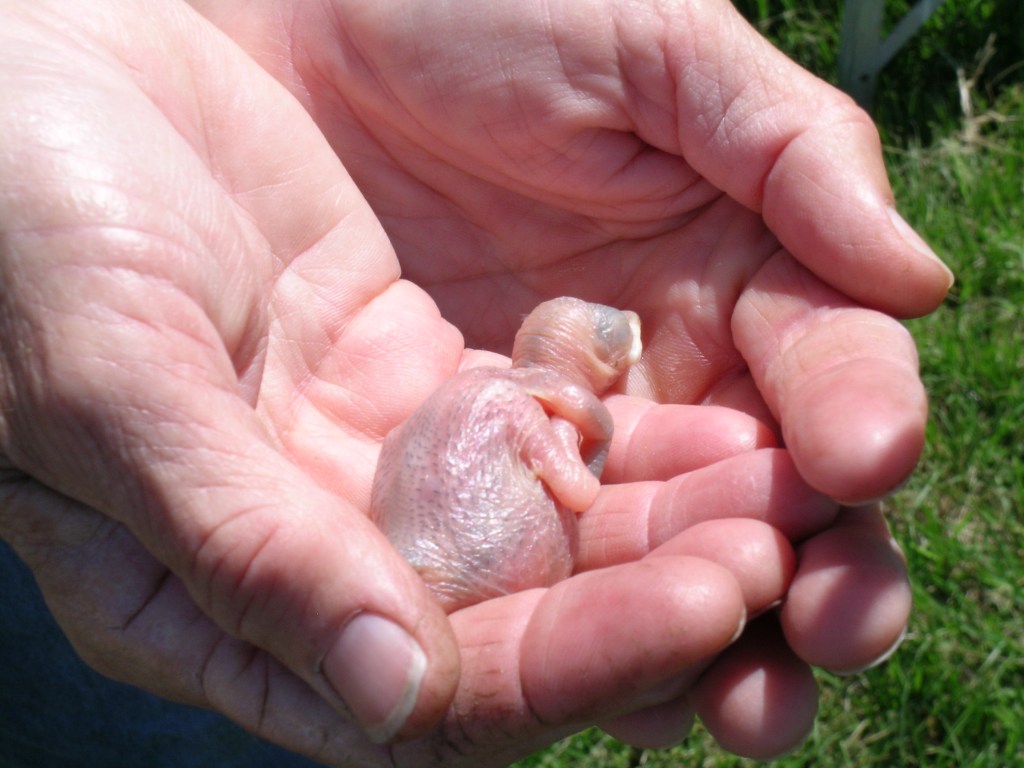
Newborn!

The youngest Martins may take 6 weeks to return. So many things can end their journey.   Weather, food, and loss of their housing can result in loss of life. One banded female was confirmed to have made a 4,000-mile trip in 47 days to return to her landlord.

Climate Change is also becoming a factor. When an unexpected freeze occurs here in Texas, the insects that die from it mean no food for the Martins. They do not and will not eat seeds like many other birds. They eat live insects.

Older babies from 2015

Time will tell how our friends can adapt to the changing world around them. If I can help them, I will.

But we also have to remember that we cannot make them pets. They need to stay wild.

Do what you can, where you are.