
by Ann Collins
You just never know what might pop up, do you? I’ve seen some strange things on my little slice of Heaven, right here in Milam County.
After a whole lot of rain, the oak leaves are coughing up quite a few interesting mushroom/fungus spores. I was cleaning one of my bird baths and spotted something in the tangle of yaupon, Japanese honeysuckle (no, I did not plant it!), mock orange, and who knows what else. It looked like a bunch of decaying celery to me. On closer inspection it looked more like the embryo of a space alien from a dark planet.

Of course, I couldn’t ignore it, just not in my nature. So, pushing and pulling the tangled limbs away, I crawled through the low tunnel with my trusty camera phone cocked and ready in case this little monster tried to attack. Fortunately, it didn’t. In actual fact, it was “rooted” to the ground. Had I known what it was I would have tried to dig it up.

Not nearly enough camera snaps and some pretty wet knees later, I edited my pictures and immediately posted them; only four are allowed on the iNaturalist phone app. In less than five minutes, a guy in Sweden identified it for me. I had entered it under the genus Blumenavia but @nSchwab took me a step further with Blumenavia rhacodes.
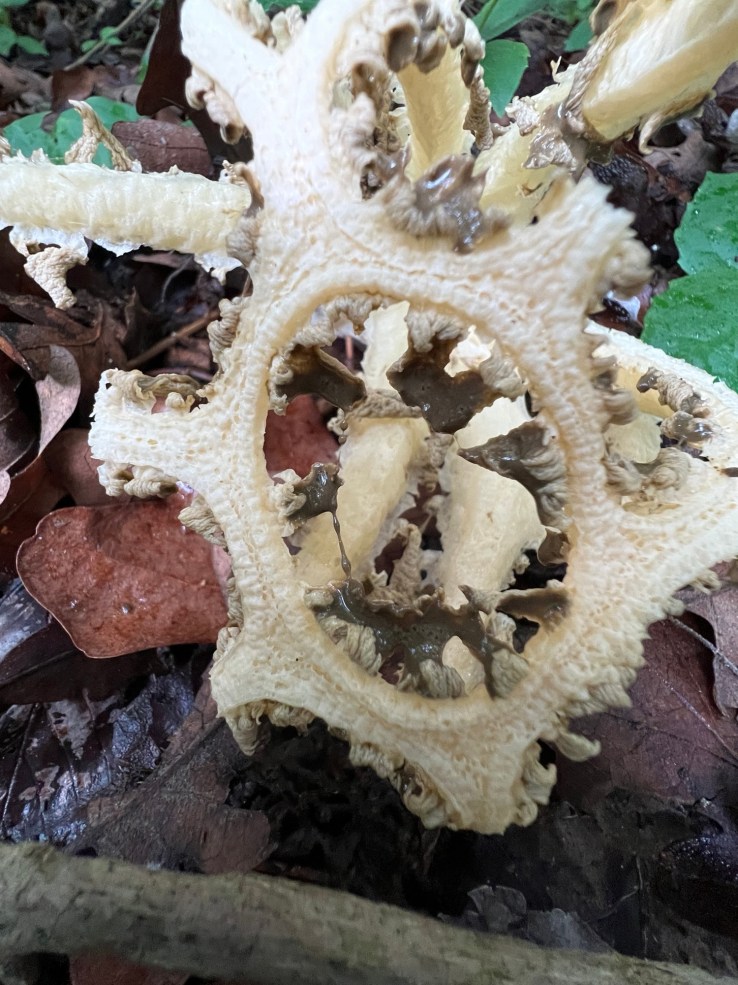
Not too much later, @masaki_hamaguchi from Hokkaido in Japan confirmed the identity for me. At 10:29 am Texas time, Masaki much have been burning the midnight oil like my friend LJC. I’m too lazy and really don’t care to figure out what time it was there. You techy types can figure it out if you want to. Thrilled to have my baby alien identified I quickly agreed with them.

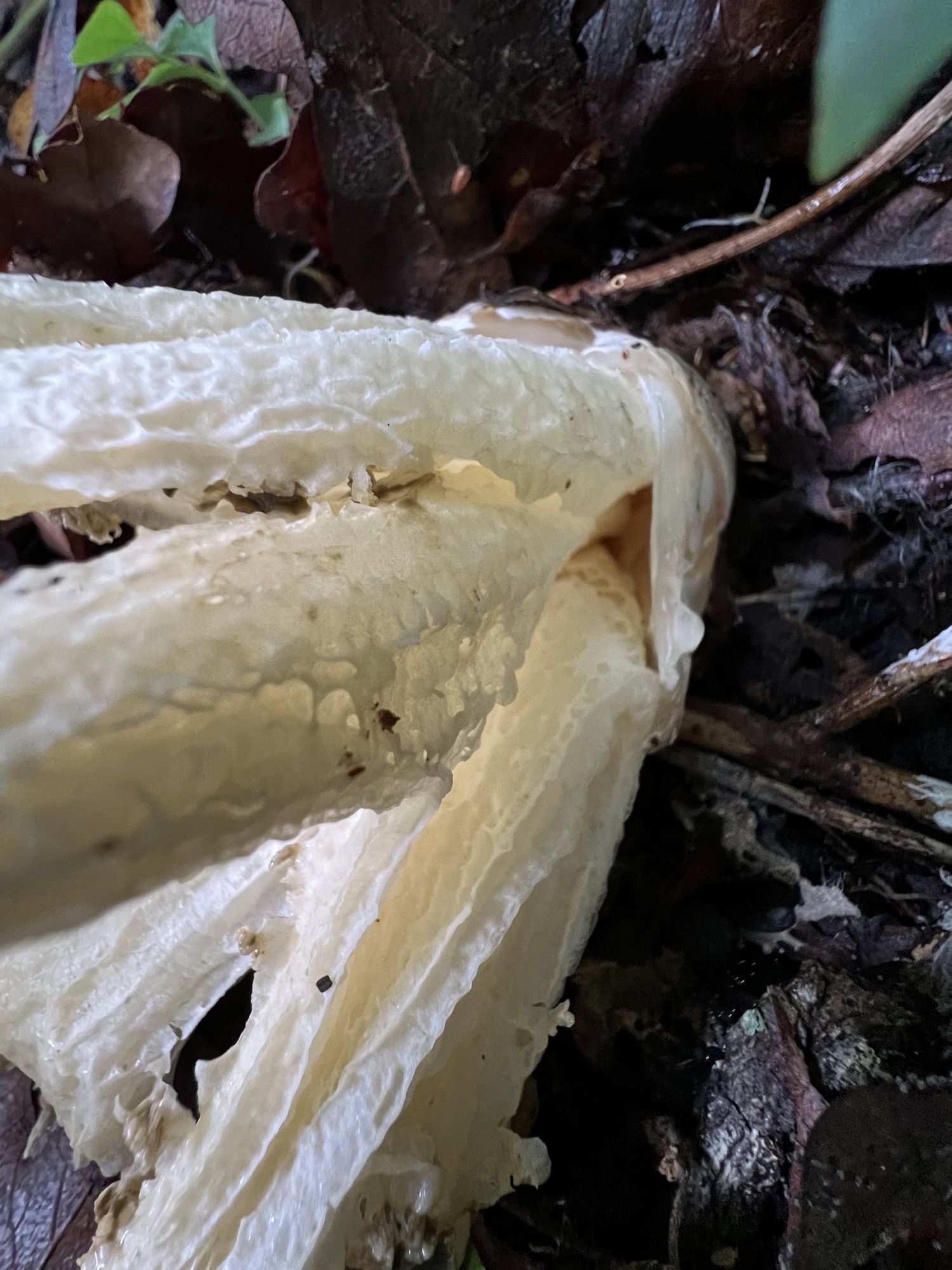

Enough of the excitement of discovery. I proceded to dig deeper and found out that @loganwiedenfeld is at the top of the leaderboard as the top observer of “Blumy” with the massive number of three! Yes! 3! Three! The total observations on iNat is 37! Yes! Thirty-seven! This little old lady from south Milam, Texas has joined a pretty eite group with nothing more than a keen eye for spotting stuff! No months of observation, no collecting data, just plain dumb luck!

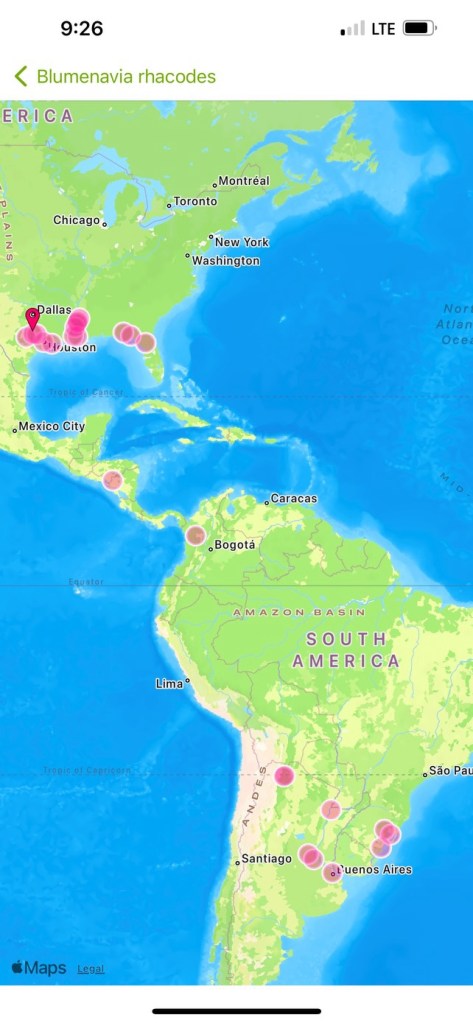
There’s not much information about Blumenavia online. Wikipedia simply says it’s “a genus of fungi in the family of Phallaceae.” The genus contains three species in South America and Africa. iNaturalist has a map locating sightings along the Gulf Coast of North America. A. Moller apparently named it in 1895.
 Nature Along the El Camino Real