Land Trust Info at July Chapter Meeting

by Sue Ann Kendall

Last night’s Chapter Meeting was very informative and a lot of fun. We even had a couple of visitors, and that prompts me to remind you that anyone who happens to be in Cameron, Texas on the second Thursday of any month is welcome to join us at All Saints Episcopal Church. Potluck at 5:30, followed by our program. The monthly meeting follows the presentation. At this month’s meeting, we were privileged to learn from a presentation on land trusts and conservation easements and how they work, from Melanie Pavlas and Lauri Mason, Executive Director and Outreach Manager for Pines and Prairies Land Trusts. This was especially relevant, since Milam County is now a part of the area served by Pines and Prairies.

Melanie shared her passion for land trusts with us.

As we were listening to how land trusts can preserve land from being over-developed, yet let the owners live on the land and farm/ranch just as they always had, many ears perked up. I think they’ll be getting a few phone calls from Master Naturalist landowners! Melanie and Lauri both said they love to talk to folks about what they do, and promise they aren’t trying to sell anything. But, honestly, if one’s heirs aren’t interested in preserving land for use by native plants and animals, this sounds like a great idea.

Please visit their website to learn more about how you can enjoy your land and ensure its preservation in the future.

As usual, we had some milestones to mark, and this month we honored Neil Wettstein for achieving his initial certification, as well as Ellen Luckey from our most recent class for also getting in her first year’s certification in addition to the initial one. Whew.

Members Pamela Neeley, Cindy Rek, and Gene Rek were recertified for 2023. Congratulations to all.

Ellen Luckey, Pamela Neeley, Carolyn Henderson (Chapter President), Neil Wettstein, Cindy Rek, and Gene Rek

There was also some fun, as our cheerleader and iNat superhero, Linda Jo Conn, presented Eric Neubauer with a “Big Spider Badge” in honor of his contributions and of the fact that he’s presenting a talk at the upcoming 2023 Texas Master Naturalist meeting.

Eric self designated it, the badge says. That was fun.

After the meeting, we were joined by Dale Kruse, plant expert extraordinaire (especially mosses and bryophytes, he will tell you), held an orientation meeting for the group of folks who are going to take a class on grass identification with him. Having done this twice myself, I know they will learn so much they’ll feel like their heads will explode, but it will be fantastic. We’re lucky to have people so willing to share their time and expertise with us.

Learning about Vultures at the Chapter Meeting and Beyond

by Sue Ann Kendall

The September Chapter Meeting presentation for El Camino Real Master Naturalist was by Debbi Sorenson, who has been observing vultures on her property for years and decided to do some research on these fascinating scavengers.

Debbi listens to questions and comments during her presentation

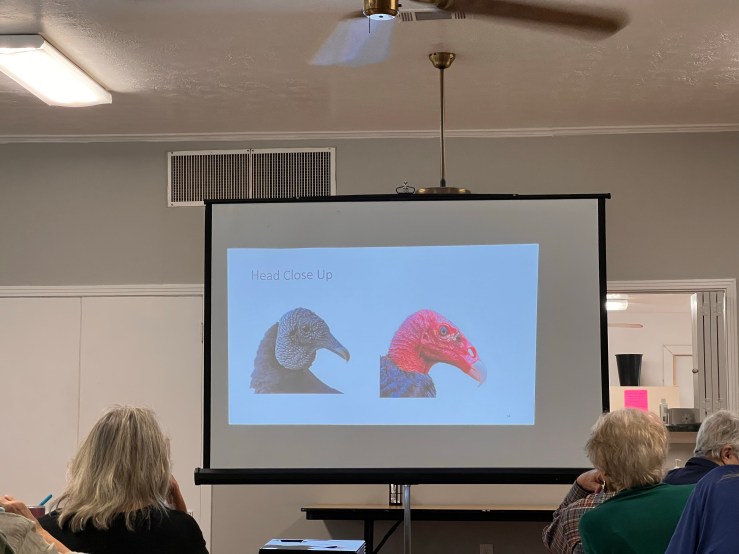
We learned how to distinguish our two resident vultures, the turkey vulture and the black vulture from each other. The easiest way is to look at their heads. Turkey vultures have red heads and black vultures have black heads. In flight, turkey vultures have white on their lower wings, while black vultures just have white “fingers” or wing-tips. The turkey vultures are also a little larger.

There you go, heads

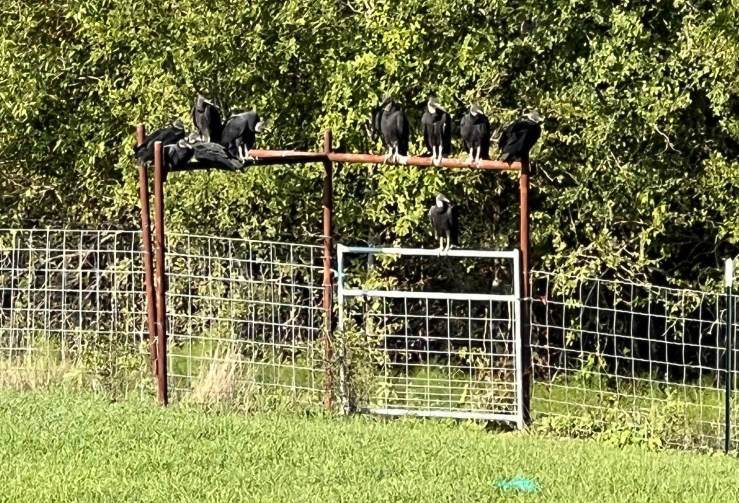
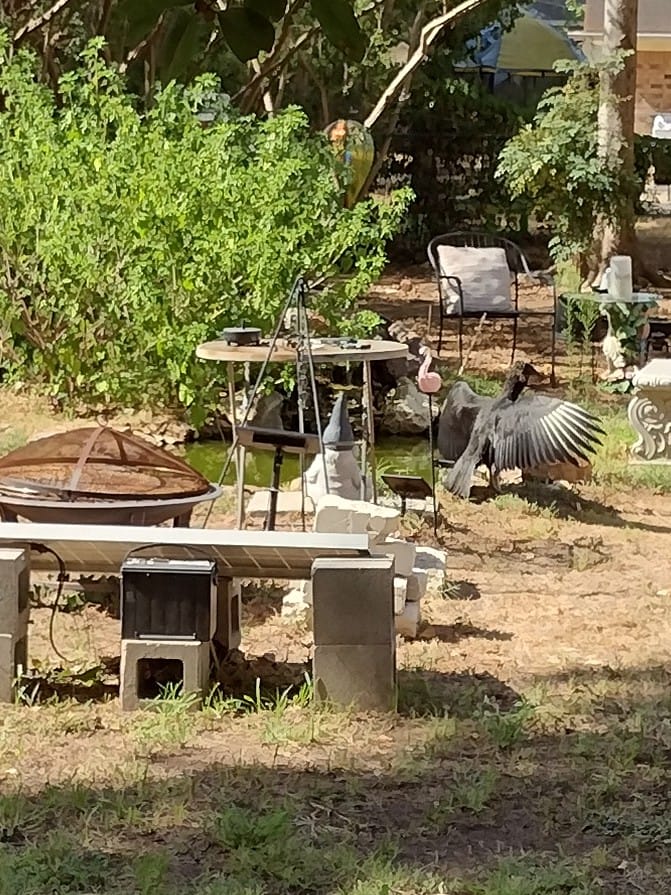
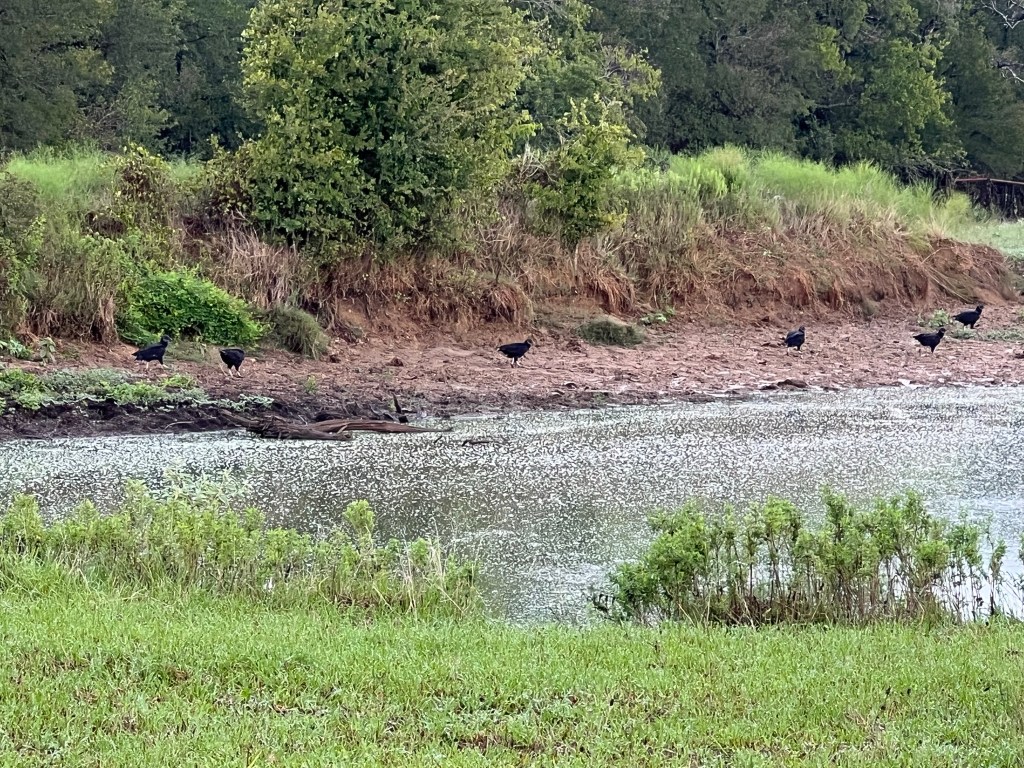
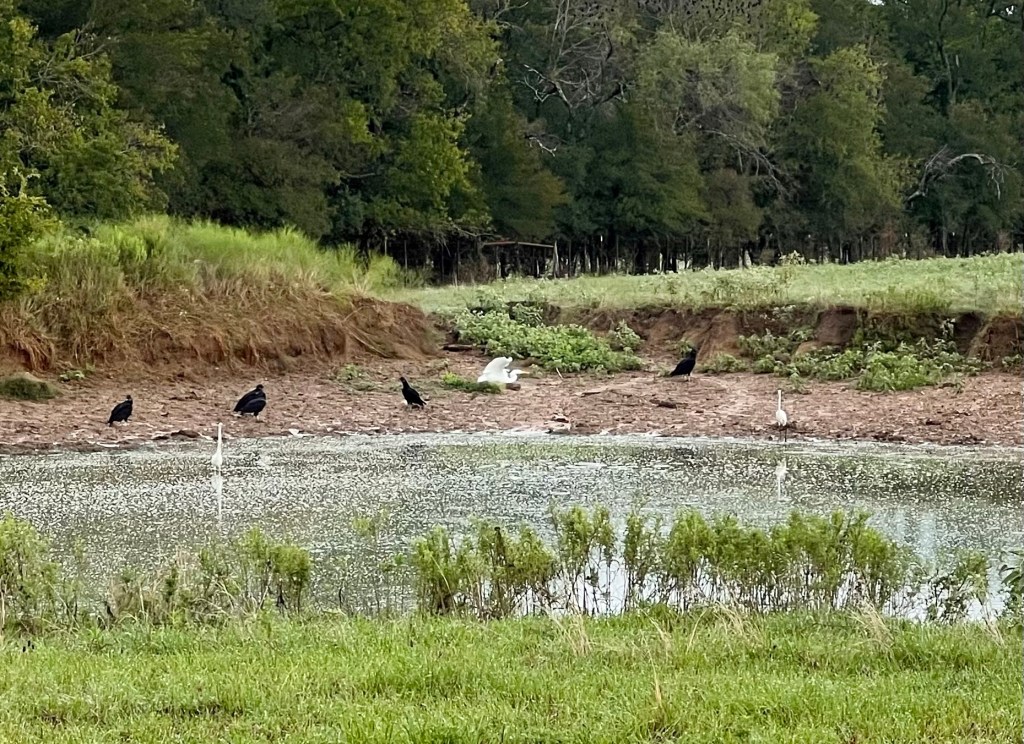
Other interesting tidbits I gleaned were that turkey vultures are almost exclusively carrion feeders an find their food through extra-sensitive senses of smell. Black vultures both hunt and eat carrion and use sight to locate their food. They often see the red vultures eating and take over from them. I’ve seen this at my house.

These black vultures at my ranch found a dead snapping turtle that turkey vultures were eating, and took over.

Debbie also shared the ranges of both birds and told us about their breeding behavior, which is to lay two eggs in abandoned buildings or dead trees and raise them there. George Bowman, a visitor to our meeting, shared how he had a baby vulture raised on his front porch this year (which many of us had enjoyed on Facebook). He ended up with a poopy porch, but a successful fledging of the baby.

Debbi shared that their barn is a vulture nesting headquarters for a pair, and that they enjoyed watching one with just stumps for feet (Old Peg) as it grew. Debbi shares her garbage with them and gets lots of observations in return. I also enjoy watching them. They are graceful in the air but are pretty fun on the ground. I love to watch them as they hop, hop, hop around my tank behind the house.

I guess Debbi isn’t alone in enjoying vultures and their behavior. She had lots of questions to answer, and she also explained that our other resident carrion eater, the crested caracara, is not a vulture at all, but is a falcon, also known as the Mexican eagle.

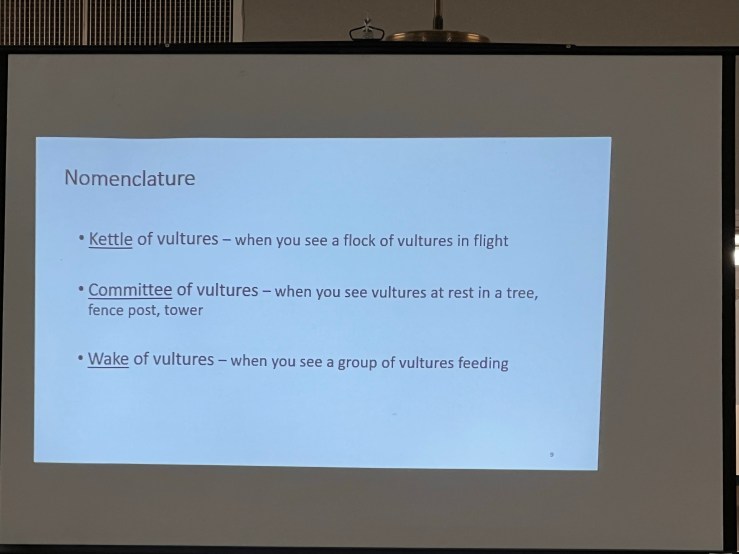
Here’s what you call a group of vultures, depending on what they are doing.

Our meeting concluded with the recognition of two of our members. Congratulations to Alan Rudd and Scott Berger for getting their annual recertification for forty volunteer hours and eight advanced training hours. And Scott received a milestone recognition for 250 hours contributing to the Master Naturalist organization. We appreciate our members!

February Chapter Meeting Draws a Big Crowd

The El Camino Real Chapter Meeting on February 13 really filled our meeting space. It was great to have to go upstairs and fetch more chairs for all the members, 2020 class students, and guests that came to hear Dr. Alston Thoms talk about the indigenous people who lived in the Milam County area from the time of the Mastodons until the present.

The Hermit Haus was filled with so many guests and members! Dr. Thoms is sitting by the center post.

He had a LOT of content to cover, and an hour definitely wasn’t enough to take in all there is to know about this topic. Luckily, the website at Texas Beyond History has lots and lots of additional information.

Dr. Thoms made a great opening slide show wit pictures of us and our meeting building on it!

We learned about the Coahuiltecan, Tonkawa, and Atakapa (Bedi) people who made their lives moving from place to place to follow the food spots they knew of. They primarily ate deer, which have been the primary food source for people in this area since people showed up. They were able to get many types of prey using spears, adl-adl, arrows and such, and they also ate lots of our native plants, even ones we don’t normally eat (like false garlic/crow poison, which is good roasted a long time).

Later on, other groups moved in, but there are still descendants of the Coahuiltecan people in central Texas, after many of them moved to the missions, like the Alamo (bear in mind, its main historical significance is being an early Spanish mission).

Dr. Thoms in May 2018, leaving his talk at our meeting in Milano.

Want to learn a little more? I summarized his previous talk on my personal blog, and we even had a newspaper article on his talk.

At the Chapter Meeting

Lisa Milewski happily gave Donna Lewis her bumblebee pin.

We had a lively Chapter Meeting after the talk. Our first recertification award of 2020 went out to Donna Lewis, who is the first to sport a bumblebee pin on her shirt! Donna does so much work for our chapter, including bringing in our guest speakers and leading meetings when the President is unavailable (like next month, when I have the nerve to have scheduled a vacation at meeting time!).

Liz gets her treasured certification certificate.

Liz Lewis (no relation), a member if the 2018 class, also got an exciting milestone award, as she received her initial certification. She’s now working on setting up the graduation dinner for our 2020 students.

Look at that cool lizard and happy Master Naturalist!

And finally, Linda Jo Conn presented Debbie Harris with the WOW iNaturalist award of the month for her photo of a Texas spiny lizard. Get those photos in, because Linda Jo is watching out for good ones!

We have lots of activities this month, so be on the lookout for more blog posts in the next couple of weeks!