Cucumbers, Dill, and Surprise Butterflies

by Dorothy Mayer

Last year I had quite a few Eastern Black Swallowtails eating most of my dill. I was okay with that, as almost all of my cucumbers were too bitter to can. The weather got too hot too fast for my cucumbers. So, I was disappointed not to be able to can any pickles last year.

The dill was fine, though, and the beautiful butterflies loved it and laid lots of eggs underneath the leaves. When the caterpillars got big enough, I put them in my butterfly house along with a bunch of dill and watched until they all got into a chrysalis. A few did come out & looked healthy. They flew good so I assumed they were healthy.

However, I had three chrysalis that didn’t look right but, I just left them alone. I figured after numerous freezes that they were all dead in there. (I had my butterfly incubator on the back porch where it’s not heated nor cooled.)

Nope. One by one those butterflies managed to come out, and we got to watch them fly away, which was just super fun and amazing. I plan to plant a ton of extra dill this year and try that again. I think it’s a great activity for a learning experience for children and adults alike.

So please, don’t put chemicals on your plants, because you will kill “good bugs” with the “bad bugs.” Poison doesn’t discriminate. It kills ALL bugs and possibly birds, too, as birds eat the insects and feed them to their babies.

Happy Spring Everyone.

The Great Caterpillar Run

by Donna Lewis

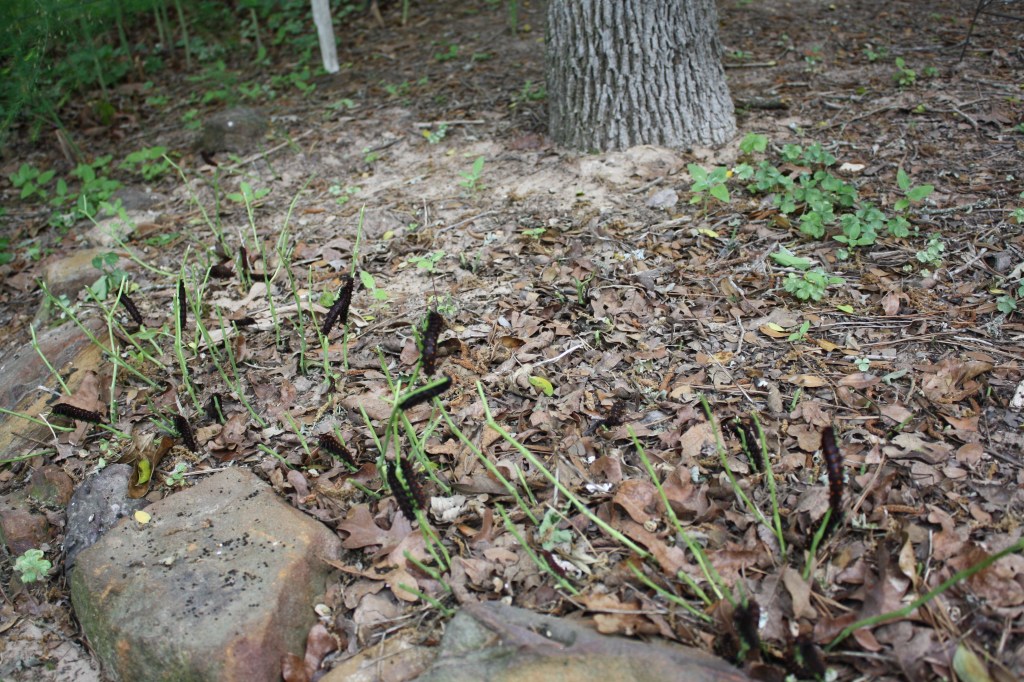
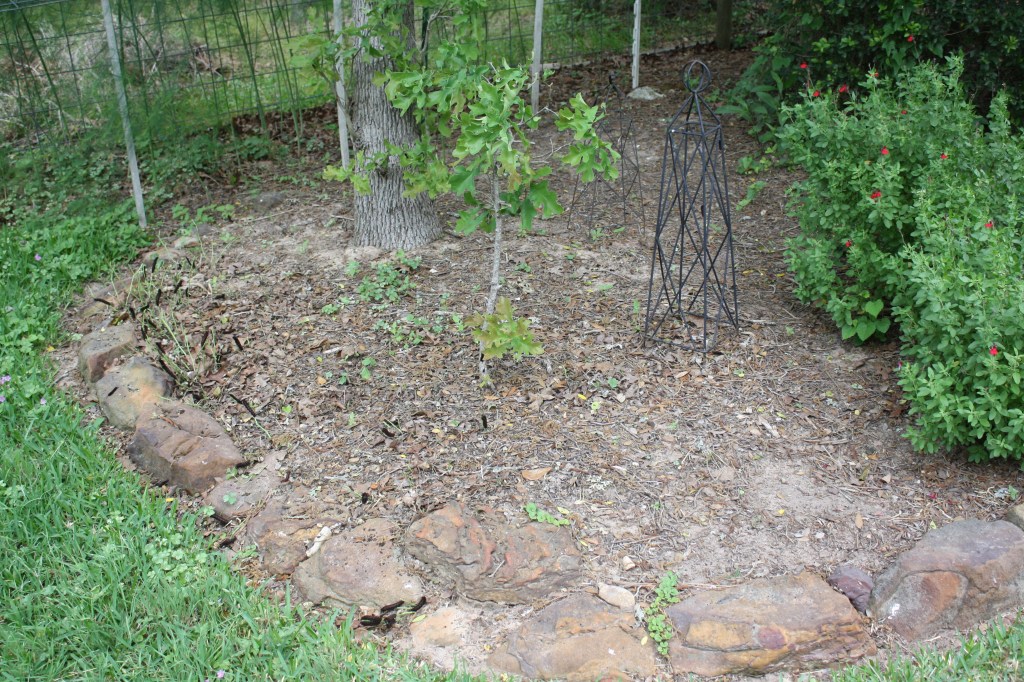
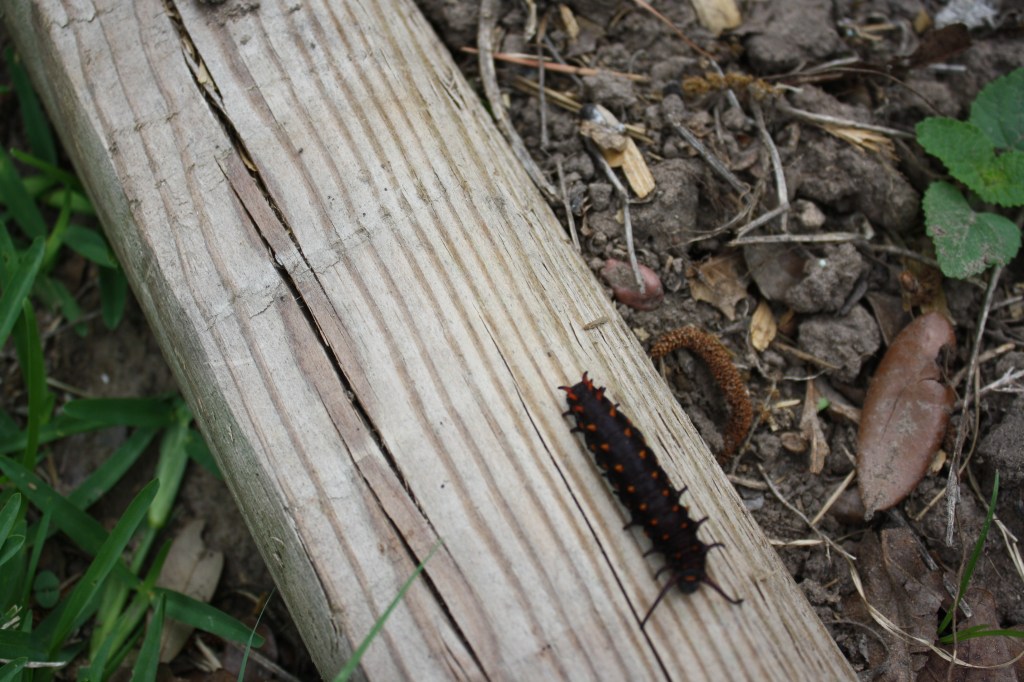
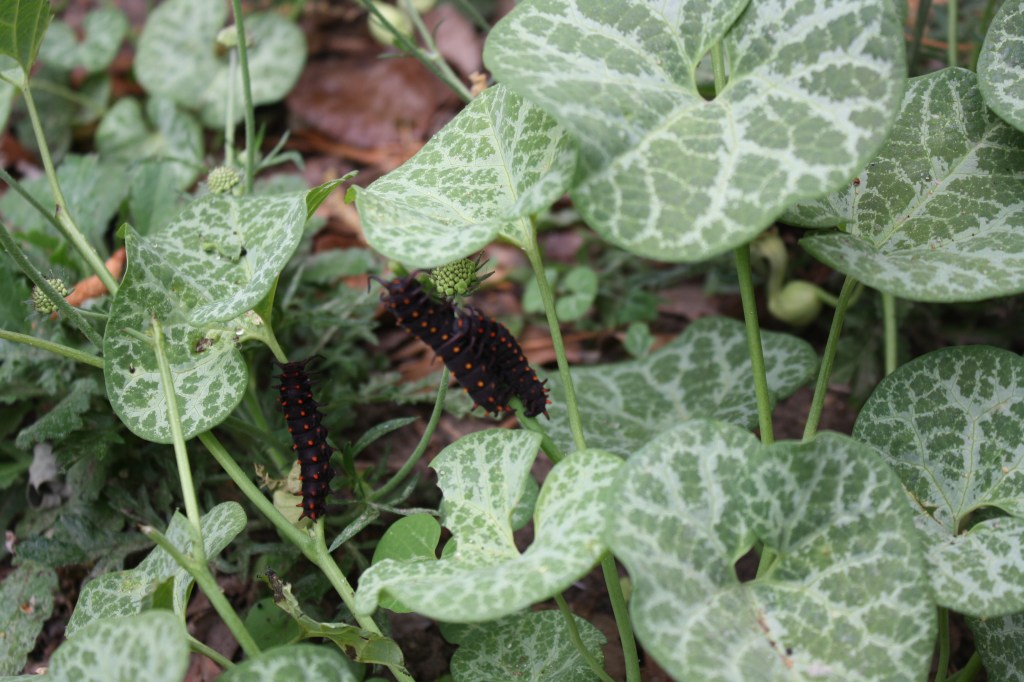
On May 2, I went out to the pollinator garden to work, and all I saw was black Pipe-vine caterpillars on the march to find more pipe-vine plants. They ate all the ones I have in my garden right down to the ground and are even eating the stems right now.  It’s a feast going on….

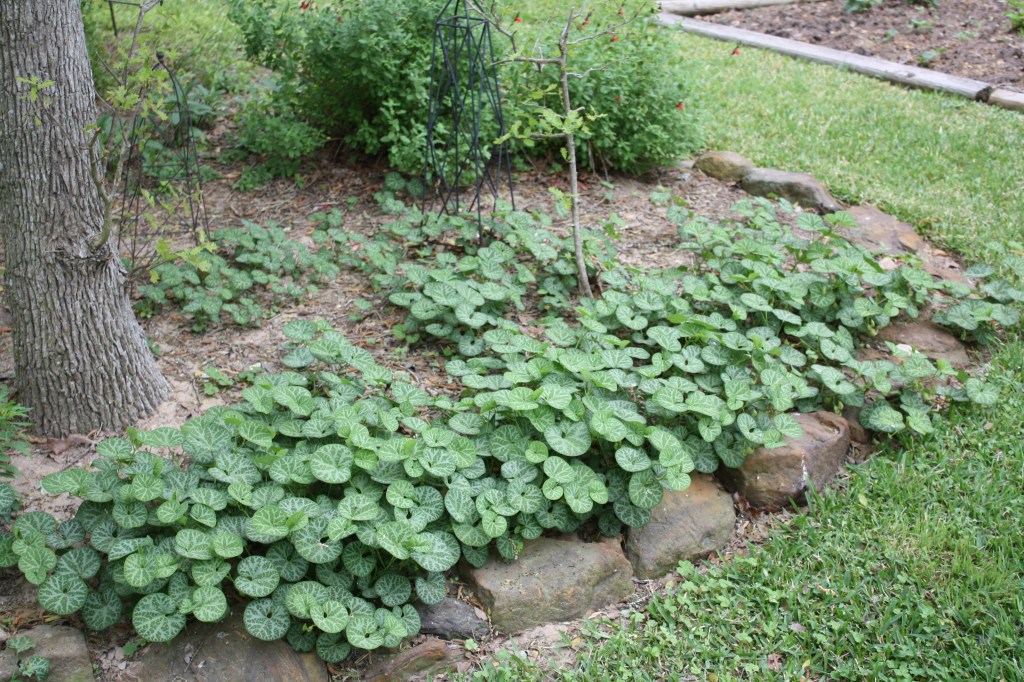
The vines, before

I almost stepped on a bunch of them.

Off it goes!

I got my camera, took a few shots and then carefully walked out of the garden.

The vines, after

They will go out to the pasture and find their native vine until they are big enough to make a chrysalis  and then become a beautiful black swallowtail butterfly.

Nothing left but future butterflies.

In several weeks, my plants will completely grow back and the process begins again. Last year I had four complete cycles.

The caterpillars can be black or dark red.

That is amazing.

PS: Out near where Donna lives, Suna saw at least a dozen of the adults enjoying Indian blanket flowers. Sadly, she was unable to stop the vehicle fast enough for a photo, but it was a beautiful sight.

Pipevine Swallowtail

by Donna Lewis

There has been lots of activity in the pipevine area of my garden.

The first baby pipevine swallowtails (Battus philenor) of the year. These are the black form of the larva. There is also a red form. I will probably have both later on in the month.

This is a species of butterfly that is common around Milam County, so, I am sure there is a native pipevine that it uses as its host plant. My goal this year is to find it, and take some photos.

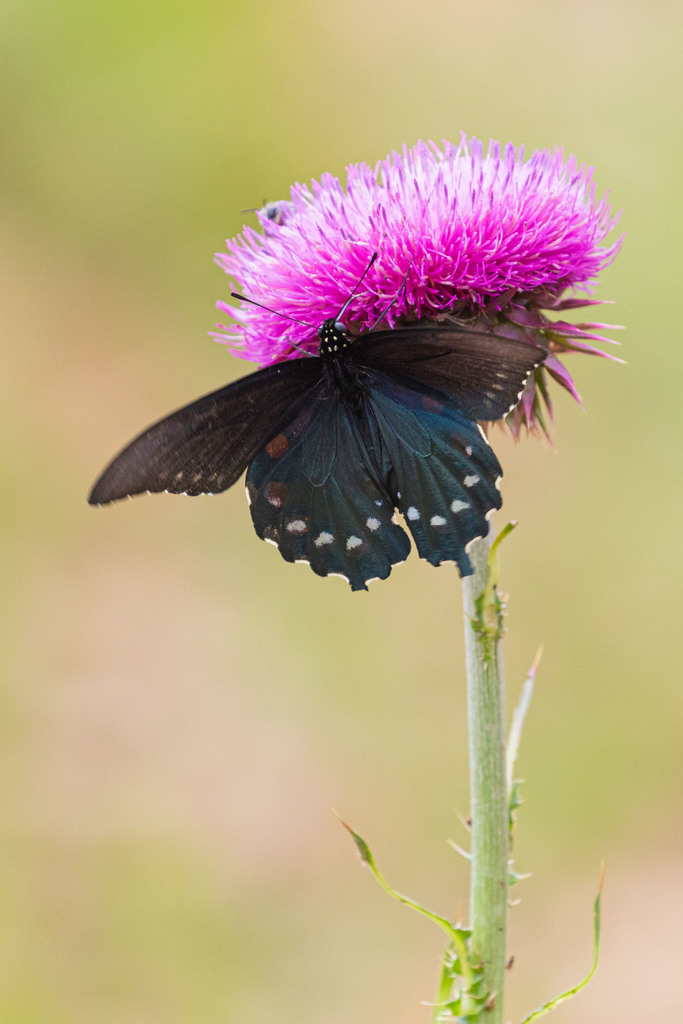
You will know this butterfly by the blue-metallic hind wings.

Photo taken April 20 at Canyon Lake by dnvarga on iNaturalist. Used with permission.

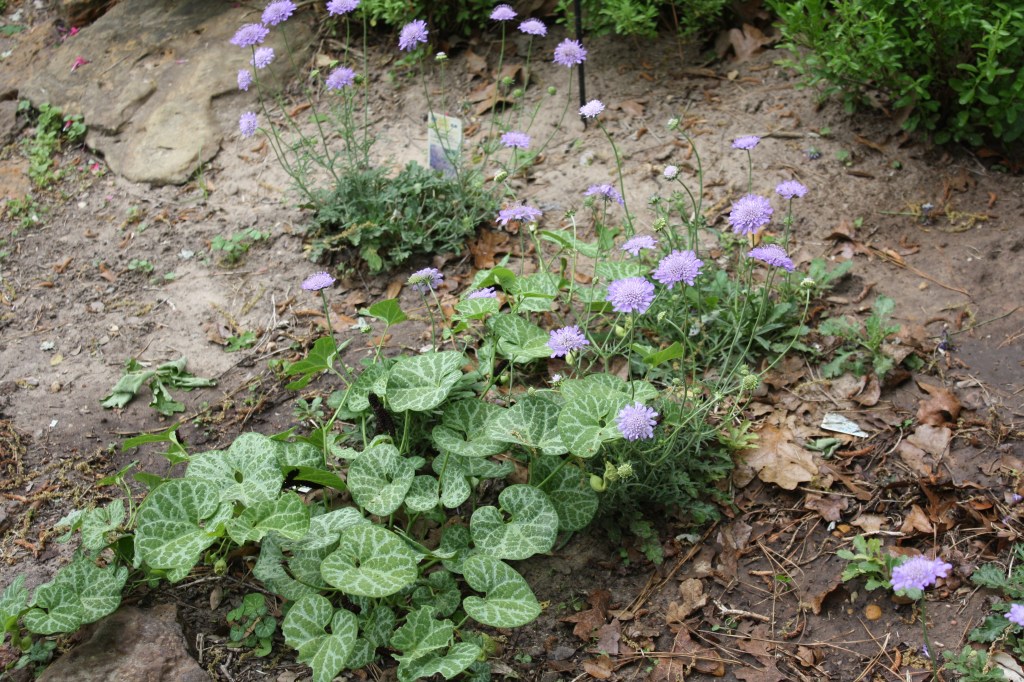
The pipevine plant I have in my garden is a naturalized version from Brazil. It is apparently safe (not invasive).  It is hard to come by, because the caterpillars will eat it to the ground in 24 hours. Thankfully, it has grown back 4 to 5 times each year. This plant has a toxic ingredient like milkweed to protect the adult butterfly.

 I really like these little guys.  They do not sting you and are interesting to watch.

Who are you gardening for?

First Monarch Caterpillar

by Donna Lewis

The first tiny monarch caterpillar in my garden for this year! It is a first instar and very little. Of course, the only milkweed I have right now is pretty tiny also.

The photo is not the best, because the wind was really blowing the camera around.

Still, it’s pretty exciting to see the little thing that will grow up to be a magnificent monarch butterfly.

Reach for the stars, little one.

The Passion Vine and the Butterflies and Other Creatures That Love It

by Donna Lewis

Most of us have these beautiful vines that come up on the ground, fences, and trellises. So besides being magnificent, who else appreciates them? Butterflies and birds, that’s who.

Passionflowers

The vines only show up when it’s hot.  Pretty lucky for us, because it’s hot here.

The Latin name for the passion vine is Passiflora incarnata. What you may not know is that many of the vines we have here are actually naturalized, not native. You can tell by the number of leaves on them which one they are.

Another view.

If they have five leaves, they originally came from Asia and naturalized here. If vines have only three leaves, they are true natives. Both work well here and are host plants for the Gulf Coast and Variegated Fritillary butterfly.  The vine also provides cover for other insects.

Fritillaries

The Gulf Coast species is orange and black with silver under parts.

Gulf Coast Frittilary

They use the passion vine as a host plant. They love hot weather, so only appear when the vine emerges.  Pretty smart of them.

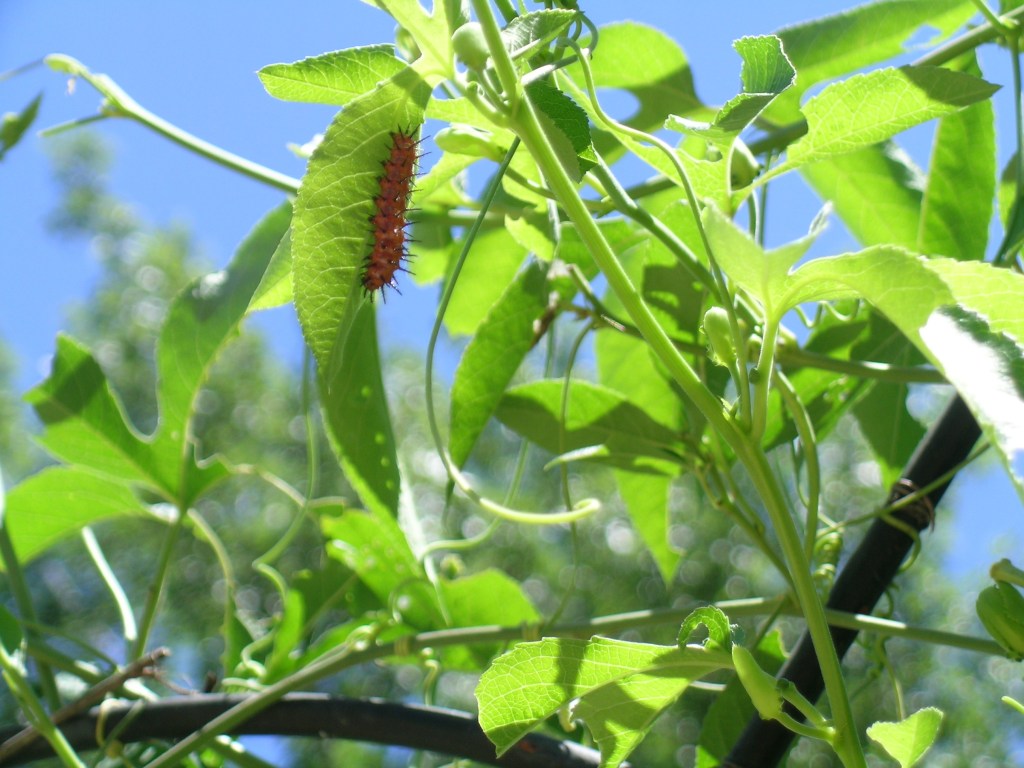
Gulf Coast Fritillary caterpillar

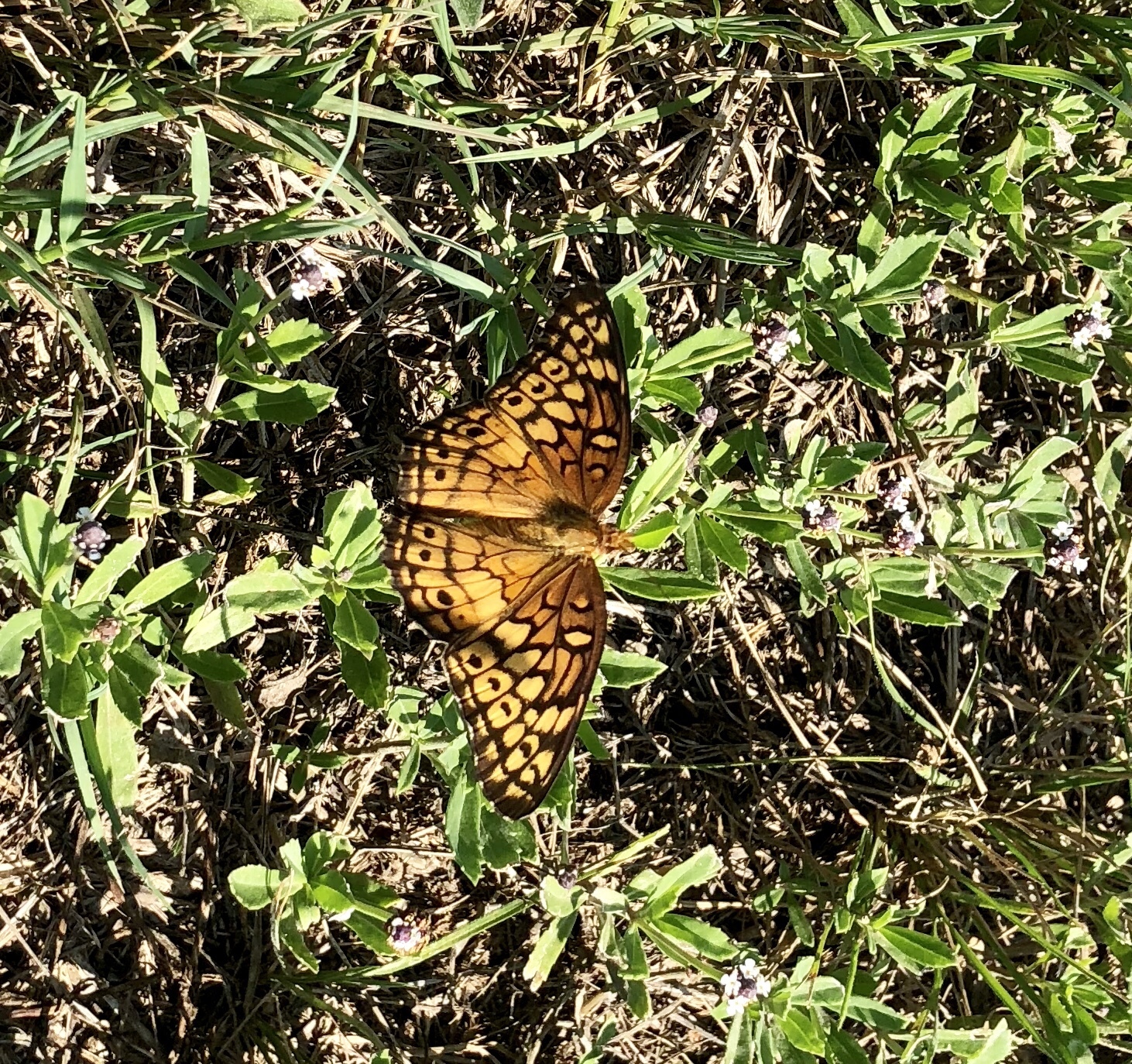
The second species of Fritillary is the Variegated variety.

Variegated Frittilary. Photo by Sue Ann Kendall.
Variegated Frittilary caterpillar. Photo by @susanmco on iNaturalist.

They also use the passion vine as a host plant to deposit their eggs on.

The Vairegated Frittilary does not have the silvery underwings of the Gulg Coast. It looks more like a dried leaf when it has its wings up. Both Fritillaries appear in the summertime, and will leave when the weather turns cooler.

The passion vine is a great way to cover a large area in your garden. [Suna points out that the fruit is also edible and makes a lovely jelly.]

This vine has five-leaf clusters, so it’s naturalized.

Beautiful and practical!  Perfect.