I’ve been making up for lost time at our Chapter’s little bird sanctuary, Wild Wings. Fall and winter are the best times to visit, anyway, since winter visitors may appear. I brought all my birding equipment for the past few weeks, so I could see all the little guys flitting around with my better-quality binoculars.
I also brought my real camera and telephoto lens, so here come the bird photos!
I got to watch a Red-shouldered Hawk and multiple Red-bellied Woodpeckers last week, but didn’t get many photos. I also enjoyed checking out the plants Gene has put in the beds, too.
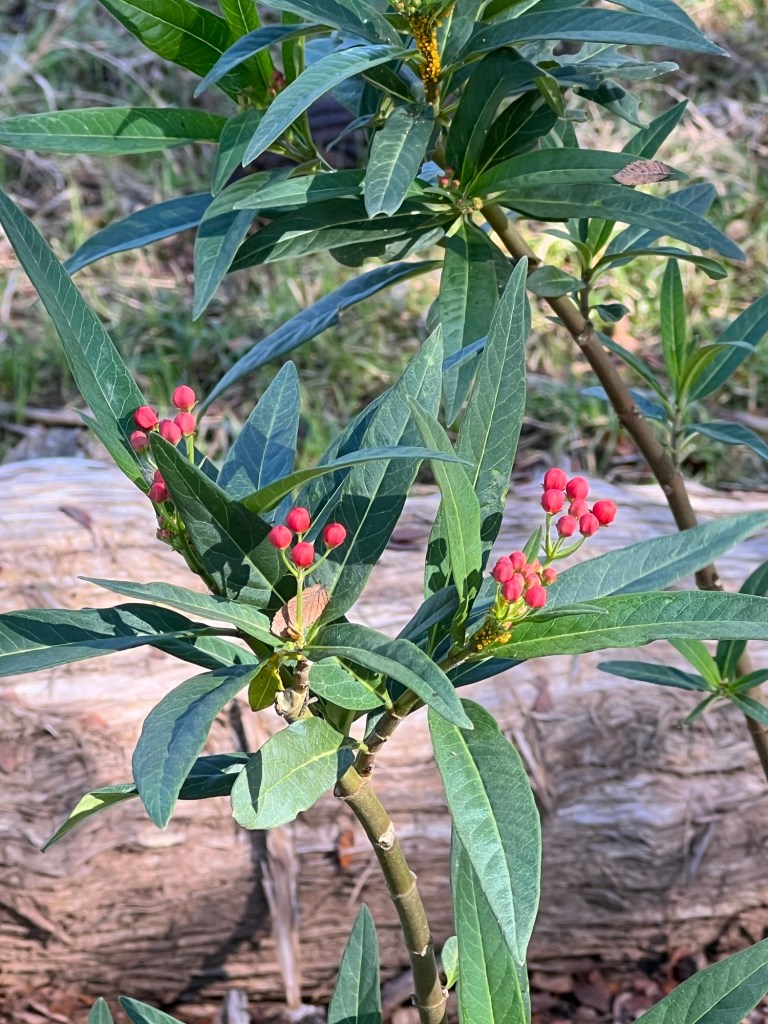
Non-native tropical milkweed will be beautiful next spring and summer.
This week, Kit and I spent time at the sanctuary listening to the birds—we have heard 17 species via Merlin Bird ID this week, plus additional ones last week, so this will be a good month for our totals, which have been missing for a while due to our volunteers and their issues/schedules (I mean me).
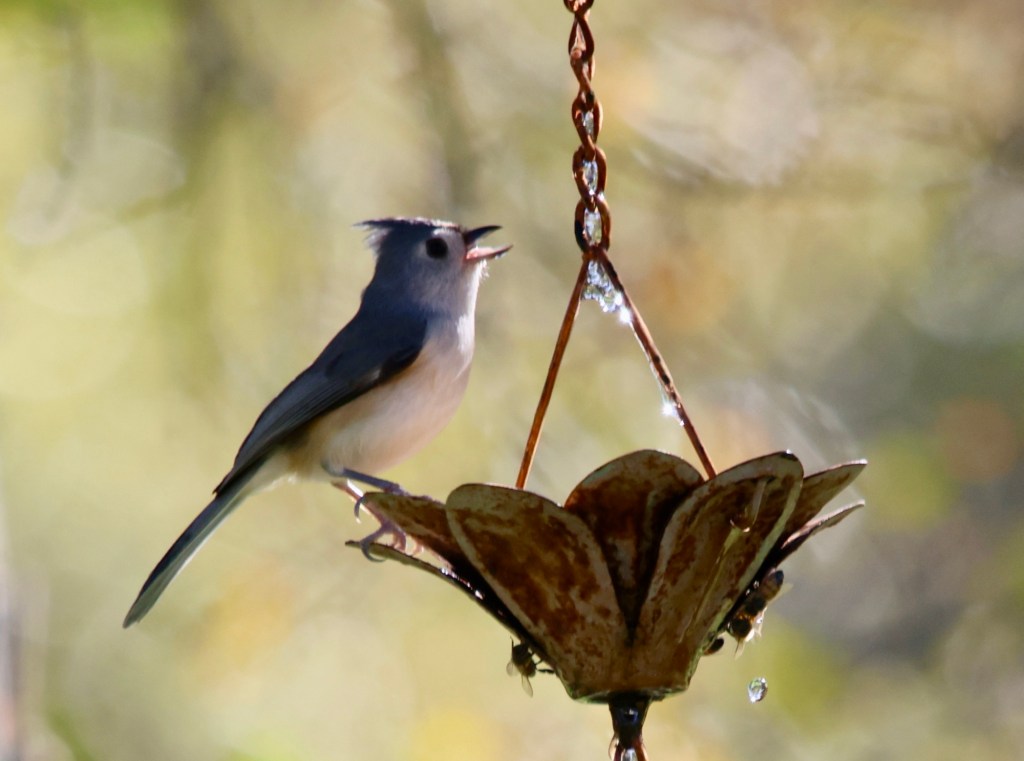
This Tufted Titmouse on the rain chain did not judge me.
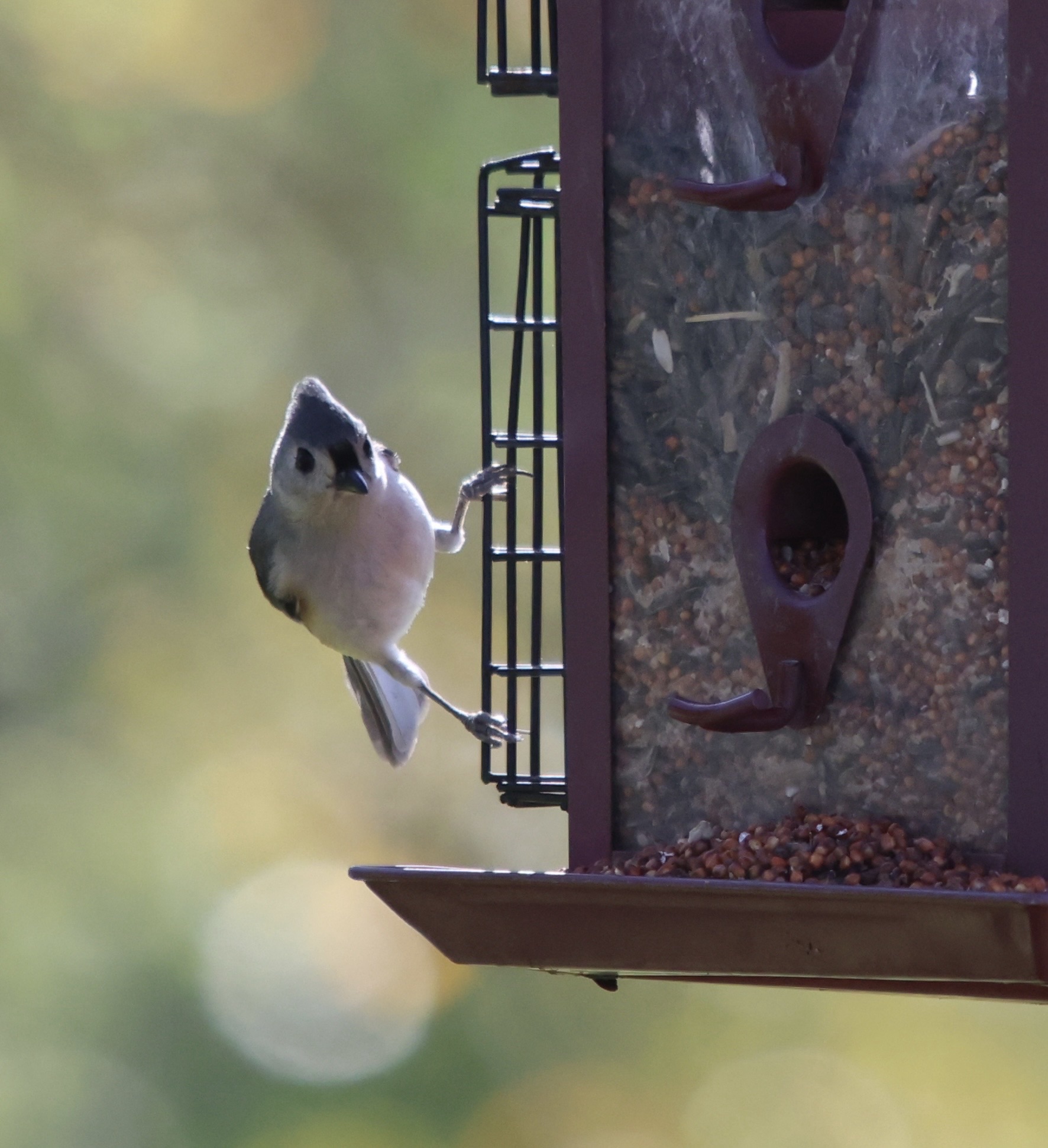
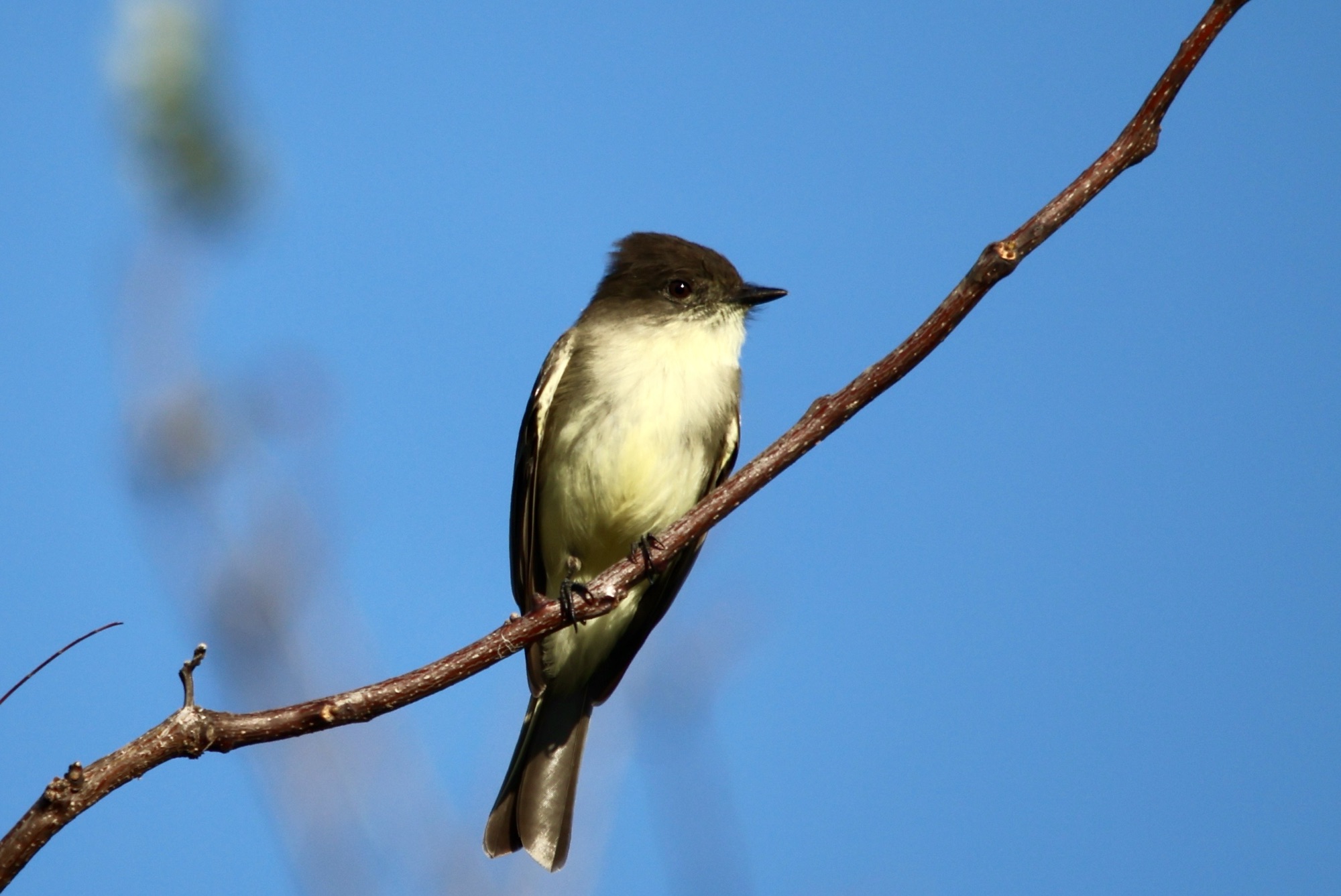
Sitting quietly in the sanctuary with all the feeders filled to the brim by our caretaker, Gene, lets you get some fine photos of whatever birds come to feeders, which means Carolina Chickadees and Tufted Titmice, and one Eastern Phoebe.
What’s in here? A new perspective This is high quality stuffWhat are you looking at?Phoebe! Phoebe!My pretty tail!Fun times with birds
The sanctuary also is home to many bees, as it’s near an apiary. The bees love the rain chain that drips into the bird bath. Look at all the bees!
They’re on the right.
We encourage visitors to the Wildscape to come on down for some peace, quiet, and birdsong.
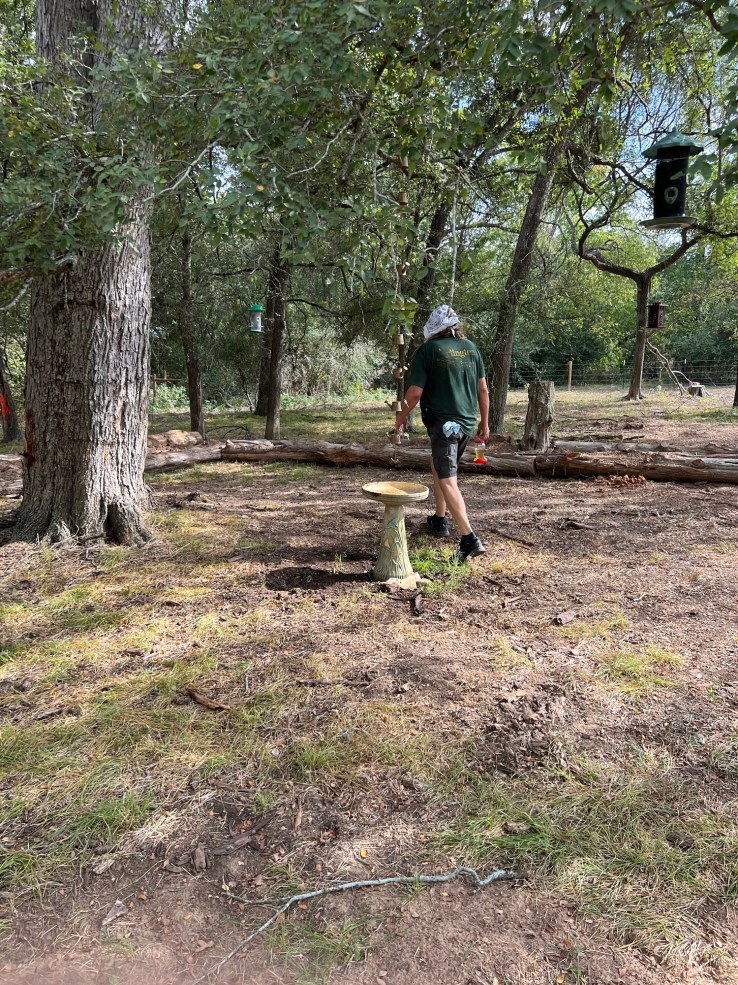
I bribed my little sidekick (not really so little at a bit over six feet and weighing well over two hundred pounds. Anyway, he’s my baby boy, so he will always be “little” to me) to drive me out to Wild Wings Bird Sanctuary to refill the hummingbird feeders. Anthony/sidekick had hung the feeders and of course he “hung ’em high!” I couldn’t reach them, anyway!
The feeders had only a token amount of nectar, so it’s a good thing we went. When we filled them the week before, the hummers were all over them. no hummers were circling this trip. Just FYI, if you go out to the bird station and think the mix looks a bit off, please note that I do not use bleached sugar. If you have ever seen my sugar cane juice, you know it is a dark brownish yellow in color. The color doesn’t make a lot of difference as long as it isn’t colored red with Red 44. Please don’t ever put that poison in your nectar mix.
The hummers are migrating now, so please be faithful to keep your feeders clean and full at all times.
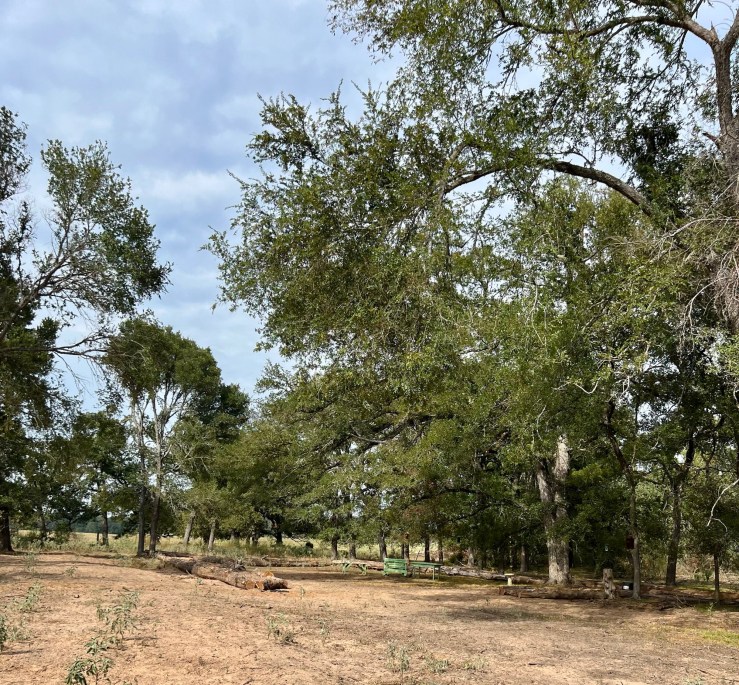
The Wild Wings Bird Santuary
Ruby-throated are the most prevalent in our neck of the woods, but Black-chinned might visit if you have a more open area. You could see a Rufous during migration if you are so blessed.
The Caracara
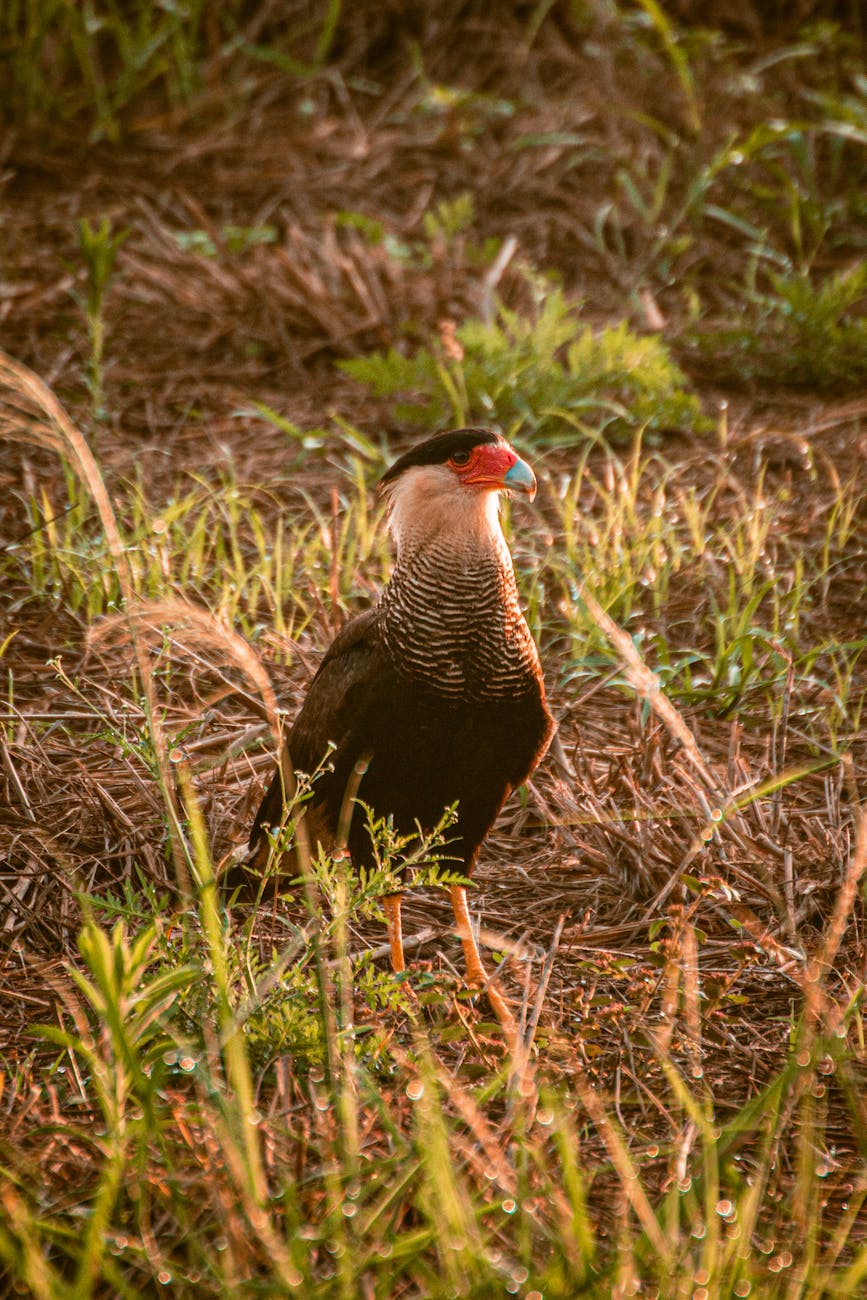
Just before we turned in to Bird and Bee Farn, there was a Crested Caracara perched on the side of a cattle water trough across the road. He posed nicely for us. I say “he” but there is no difference between the sexes. The juveniles are brown with no distinctive white markings.
When we arrived at the gate to the bird station, a caracara came sailing in. There was another one in one of the tall oaks, and “he” can flying out, so we got to witness a bit of a back-and-forth chase. So special! They really are magnificent creatures, even if they do enjoy some freshly killed carrion.
Caracara. Photo by Felipe Gonu00e7alves on Pexels.com
Locally, some folks call the caracara a “Mexican Eagle.” Sorry, but they are not related to eagles at all. In fact, they aren’t related to hawks, falcons, or vultures, either. They seem to be in a class by themselves. They are birds of prey, so I guess that means they can kill if necessary. They are frequently seen feeding with vultures, so maybe they are opportunistic of just plain lazy.
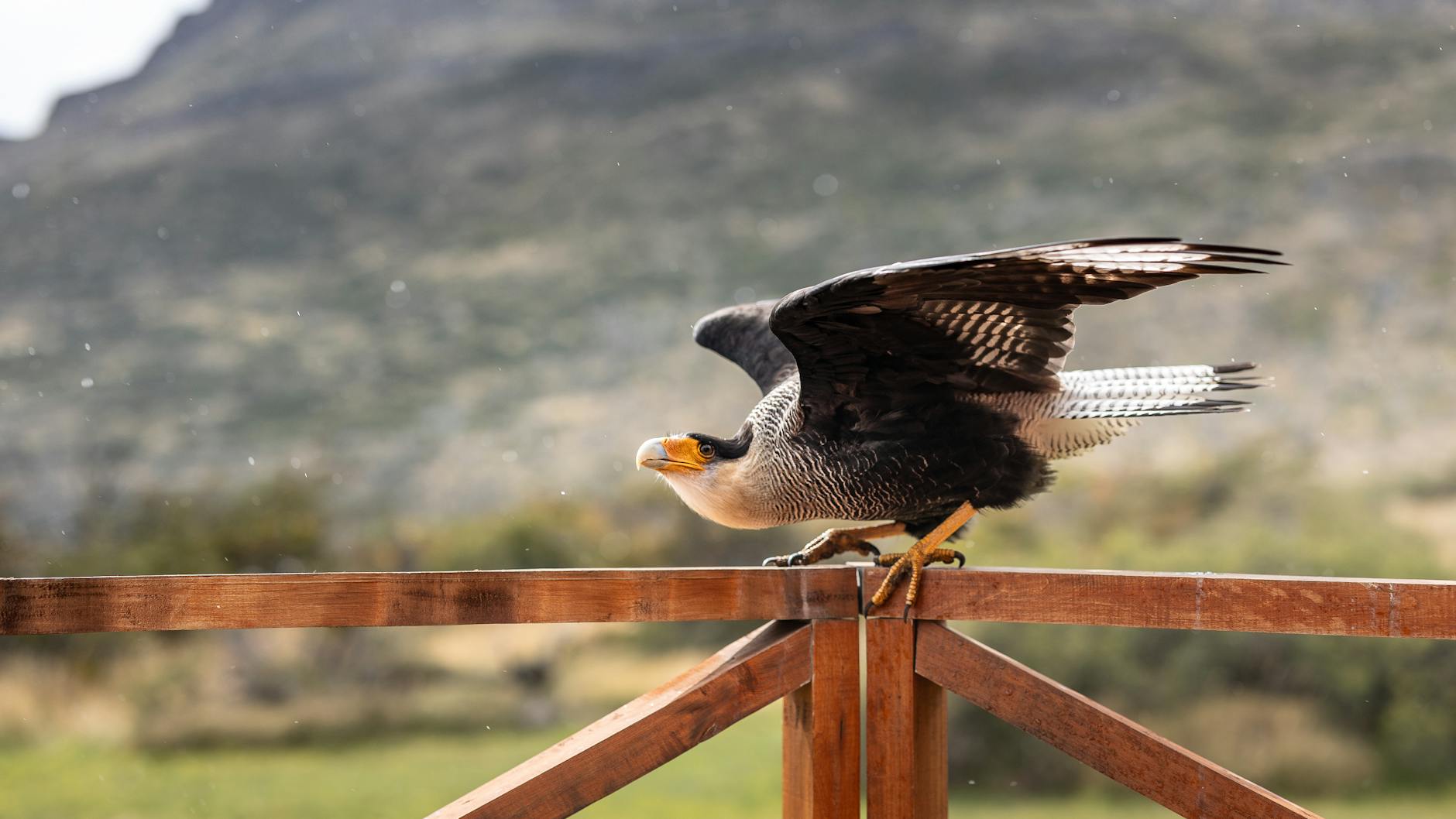
They are regal birds, for sure. Photo by Marek Piwnicki on Pexels.com
A black crest adorns their heads and part of their beak is orange-red, giving them the appearance of having a red face. The chest, tail, and wing tips are white, so they are often descrivved as “white on all four corners.” They are the only species of caracara in the US, but there are probably more to the south of us.
The Bird Bath Saga
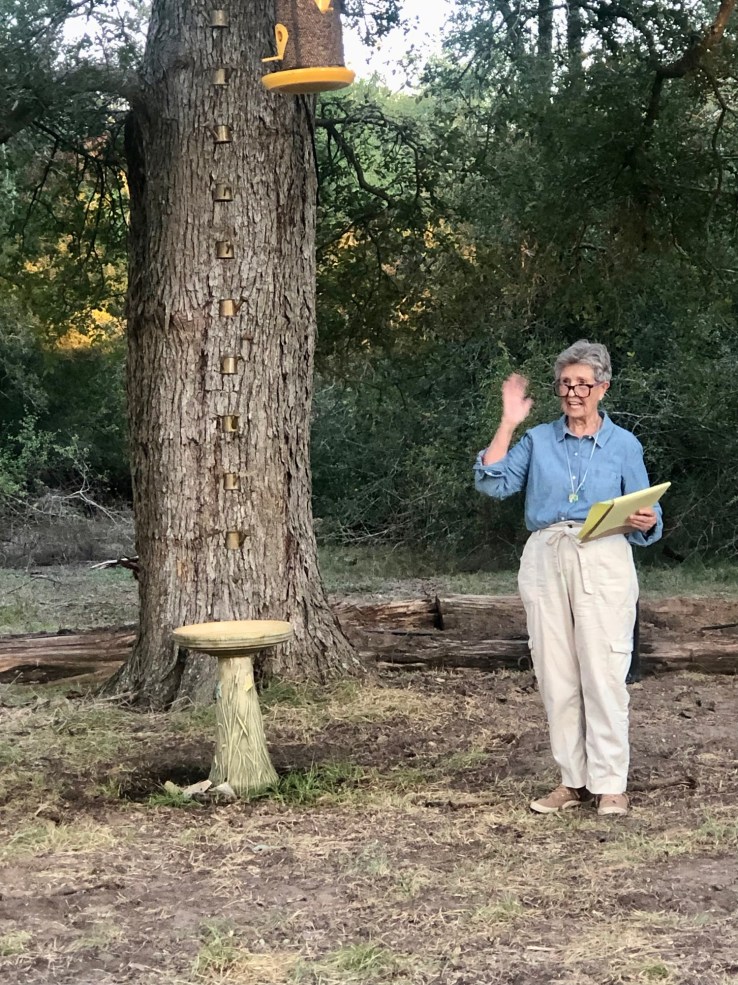
There is a lovely little bird bath at the santuary that the rain chain drips into. We had hoped to be able to keep a steady drip for the birds to have a safe souce of water for drinking and bathing. It’s barely a couple of inches deep, but the heifers or raccoons think Gene put it out exclusively for them. Sadly, they dismantle it and knock the bowl on the ground so that the rain chain just makes a damp spot on the ground. Cindy and Catherine have been diligently seeking a larger, heavier one to put in its place. Lots of dead ends and “sorry, you’re too late” have put quite a damper on the search. Of course, we want one cheap or free.
Ann with the original bird bath.
Update: I just heard from Cindy, and she actually has one for us! Yay! Good job! I know the birds will be happy, too. Pay attention to their tweets for the next few weeks.
Please come for a visit and sit a spell. Even if the birds are still shy, there is always a cool breeze and blissful quiet.
Lately, I keep hearing on the news about West Nile Disease and that you should dump out any standing water. While there is some merit to this statement, it also makes people think they should not have bird baths out. Wrong…
Bird baths also add beauty to the garden
Many items that hold standing water like old tires or things laying around in junk yards that can hold water probably should be addressed.
Please do not include bird baths in this category! We are in a severe hot weather event and birds could use our help. Putting out as many containers that hold water as possible could save the life of a bird, a bunny, or any living creature. I am also including your pets if they must be outside.
I have many different types of bird baths on our property. Some sit directly on the ground for bunnies and the birds.
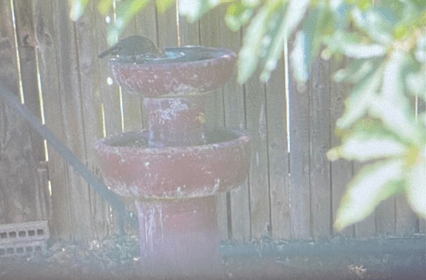
Different kinds of bird baths
It is simple to keep the water safe for humans and the wild things. Note that it takes about 10 days or so for mosquitoes to hatch from a standing water source. Running water does not generally pose a threat, because the larvae or eggs are washed away if the water is running.
Of course, bird baths, which don’t have running water, CAN be a target for mosquitoes. BUT it is so easy to keep that from happening.
First, in this heat, shallow water will evaporate long before 10 days is up. But we probably don’t want to let our water for our friends dry up.
The easiest thing to do to stop mosquitoes is to just dump the water out every day and fill it with fresh water. Problem solved. How hard can that be? Fresh water is good for the birds and animals, anyway.
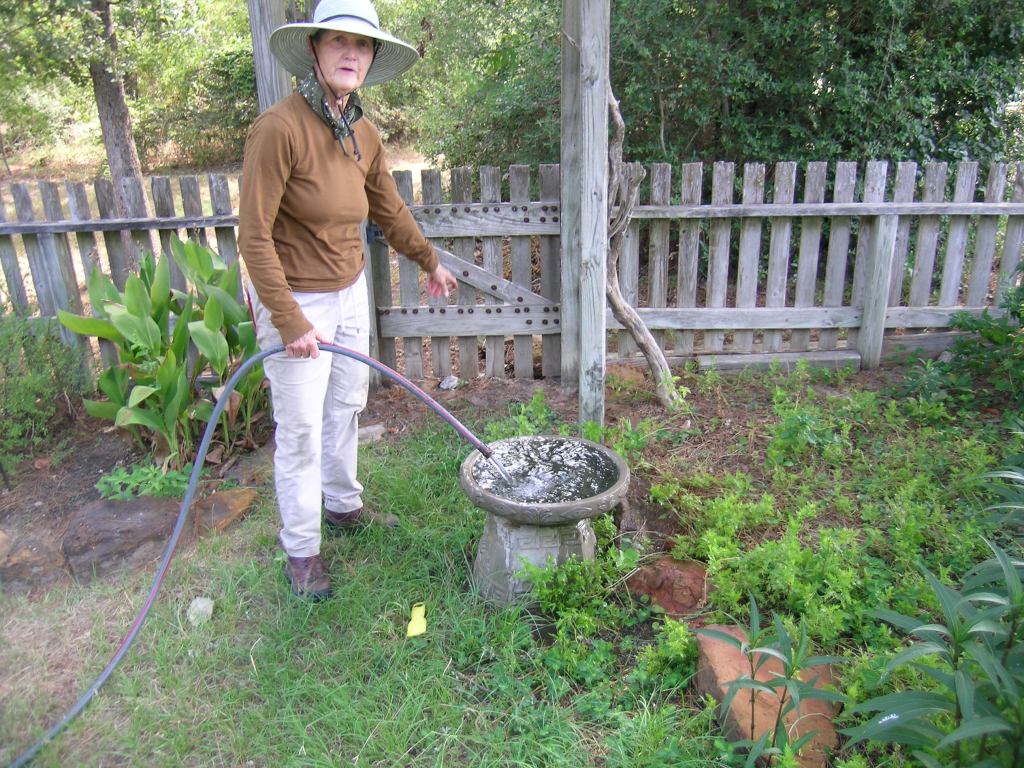
Rinsing
You also buy mosquito dunks at the hardware store. These work well but can cost a lot.
Other Birdbath Maintenance Recommendations
If you have a lot of algae, you can easily clean it with a plastic putty knife. No cleaners are needed. Or you can just rinse it out, the animals don’t care. if there’s algae in their water. Think of it from their perspective.
Scraping excess algae
The water is safer for the smaller birds when it is no deeper than four inches.
If you can put the water container under a tree or have some shade over it, that will be better, and the water won’t get as hot.
A shady bird bath
Yes, cats can be a problem for the birds if the container is near a tree or bush. They love to hide and then pounce. It’s their nature. Cats need water also, and love to get a drink and a snack at the same time. So be cautious where you put your containers.
A bird bath with plenty of space around it
With just a small effort on your part, our wild things can be helped during this extreme weather. All things need water.
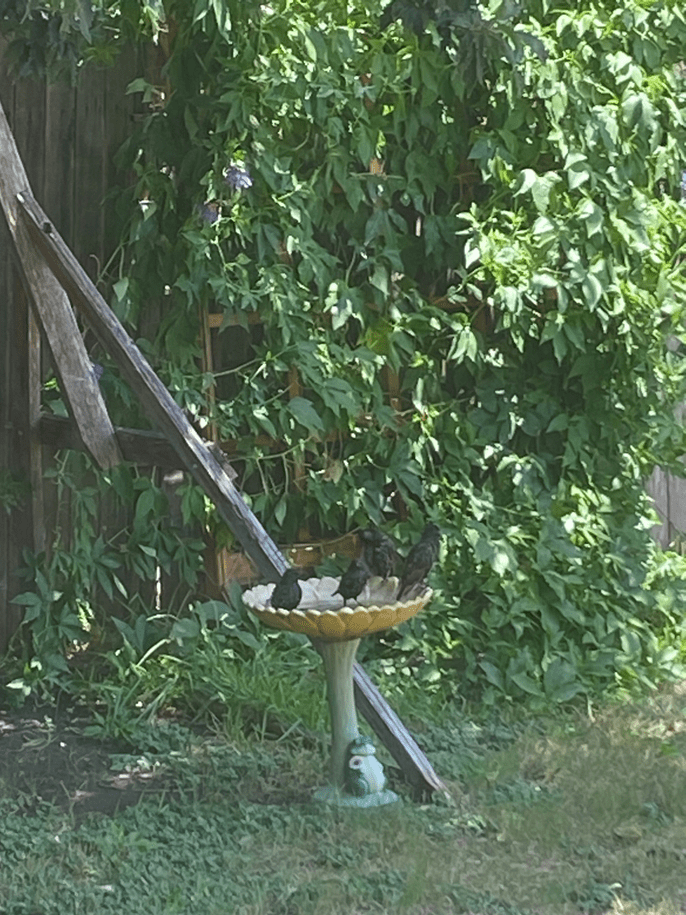
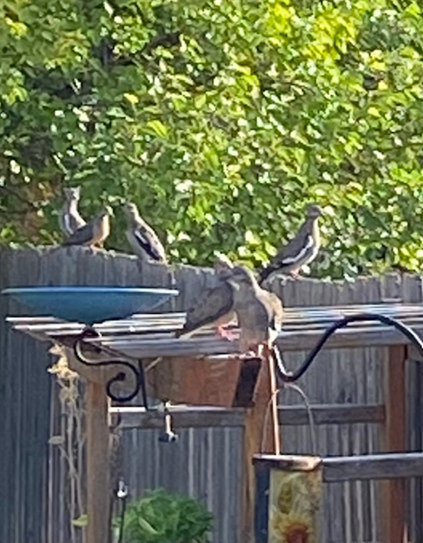
During this heat, I have been filling the bird baths once or twice a day while enjoying watching the birds drink, splash, and bathe. So far, the birds I mostly see are cardinals, blue jays, northern mockingbirds, finches, house sparrows, mourning doves, white-wing doves, European Starlings, ruby throated hummingbird. Even the fox squirrel, cottontail rabbit, and bees seem to appreciate the water left out for them. Here are just a few that I have been able to get pictures of so far.
European Starlings
White wing doves wait in line to get a drink and enjoy water.
You don’t want to know my nickname for the doves. Let’s just say that I have to wash my driveway and car often.
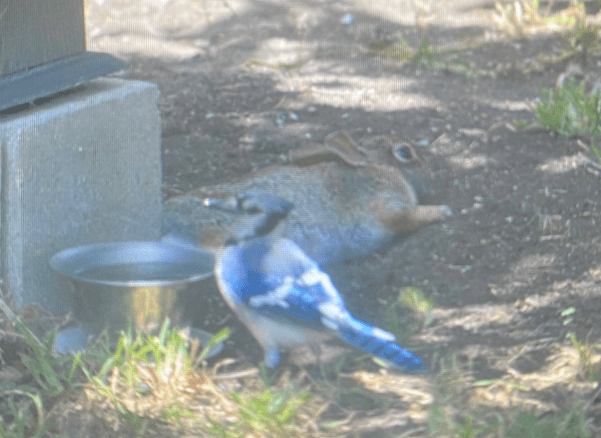
“Peter” the cottontail rabbit in his favorite spot sharing his water with “Jay” the blue jay
“Peter” getting a drink
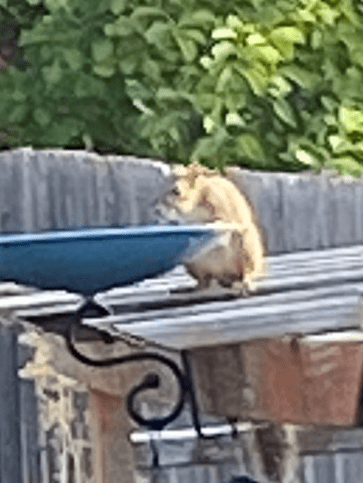
Here’s “Rocky” the fox squirrel getting a good drink
I found that with these larger bird baths, it’s easier to fill them with rocks and top with soil and then place smaller bowls in them. This makes it a lot easier to clean them out daily and refill.
And here’s my favorite, “Ruby” the ruby throated hummingbird drinking from the hummingbird feeder.
Remember to wash out the bird baths and change hummingbird feeders daily or every other day in this heat. We want to help our friends, not make them sick.
Right now it’s 7:00 am and go outside to put up the bird feeders and fill up all the bird baths.
The birds are eagerly awaiting my food offerings. The mosquitoes are waiting just for me! I have to wear long sleeves that I hate.
This is delicious!
Anyway, we need to remember our birds, bunnies and other critters need water that is accessible. Putting it under some shade helps keep yhrm a little cooler. Of course, that also gives the cats a place to hide and pounce. So, use common sense about water placement.
Bird baths should be varied in height. That gives everyone a chance to drink. Make sure to put a stone in the bottom so the babies don’t drown.
I fill all (10) of them every day. And people wonder why I have so many birds.
So many feeders!
In the evening as a treat, I will put out a sprinkler in one area and leave it on for about 30 minutes. The birds go crazy and call all their friends. It’s great to watch them.
The morning is also a good time to water the plants in your garden.
Remember if you use sprinklers, you wash off the nectar on a plant which takes hours to replace. So, watering under the leaves and flowers is the best. I know it is not always possible to do that. In that case rotate the watering, so there is always nectar on some of the plants.
Helpful rocks!
Don’t forget to place your hummingbird feeders under a shaded area and change it out every three days when it is hot. It’s always hot here in Texas.













 Nature Along the El Camino Real