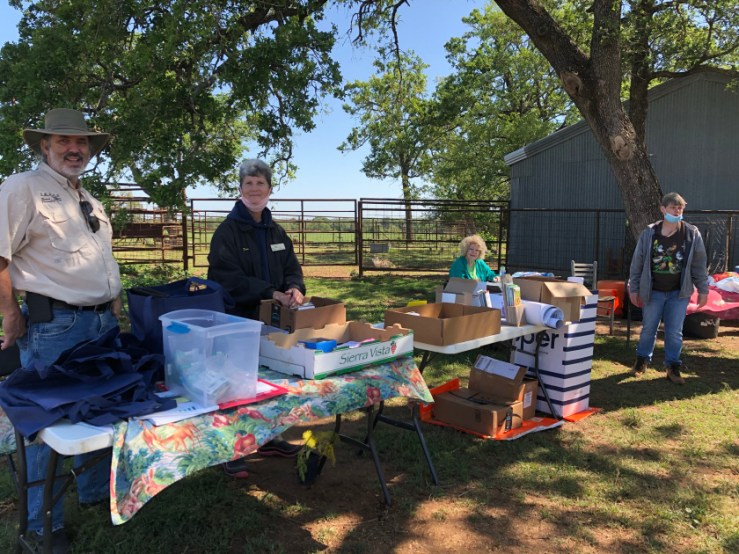
Our Master Naturalist chapter is slowly and carefully starting to do some activities that fall under our guidelines for safety. We really wanted to do something for Earth Day, so a few members got all organized and set up some tables over at Bird and Bee Farm, where our Wildscape project is located. I headed over there, since I had some little pins to give out, and since I hadn’t seen most of them since last year.
By the way, check out my hair. It’s SILVER, from Overtone. No more 1-inch roots!
Our members had put together all sorts of stuff to give away for adults and kids, and by the time I left, they’d had nearly 80 visitors! Luckily, they were spread out over 4 hours, so we didn’t have any scary germy crowds. We were all very glad to see each other, which was a nice feeling.
Due to recent storms, we were able to see which native plants were toughest. We have exchanged some for sumacs, elbow and Mexican honeysuckle bushes, Gulf coast muhly and brake lights yucca.
The ducks!
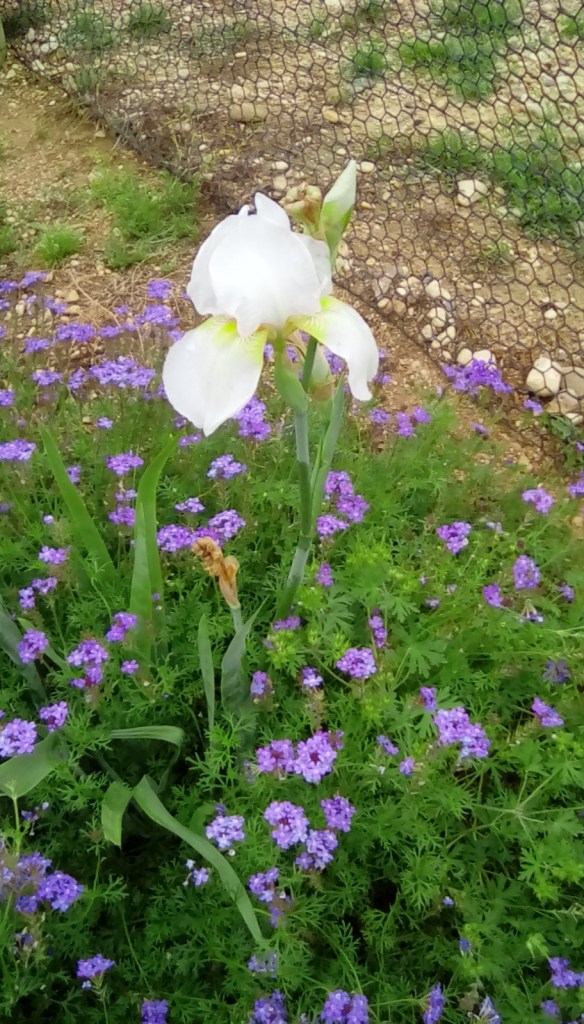
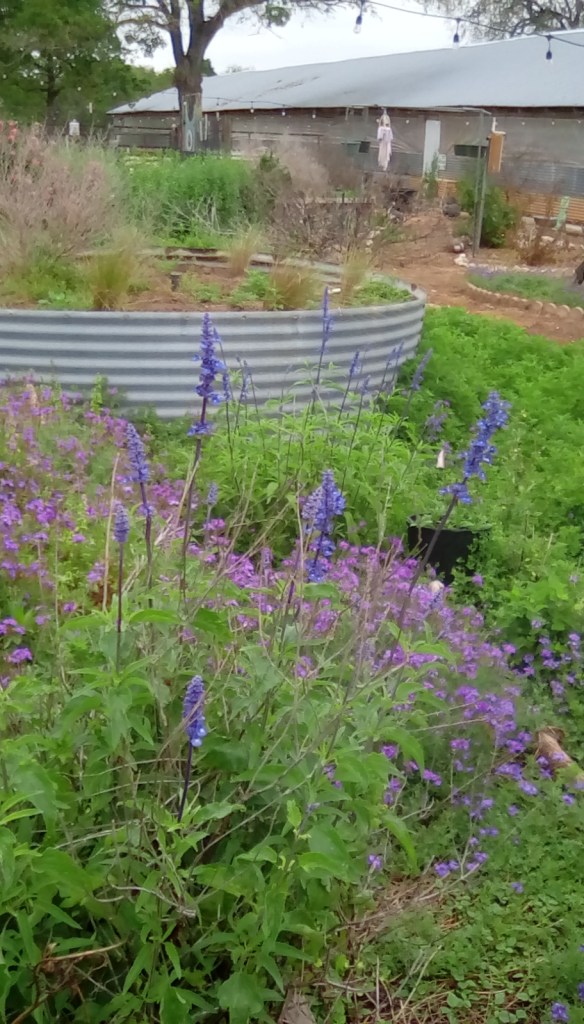
Iris and verbena
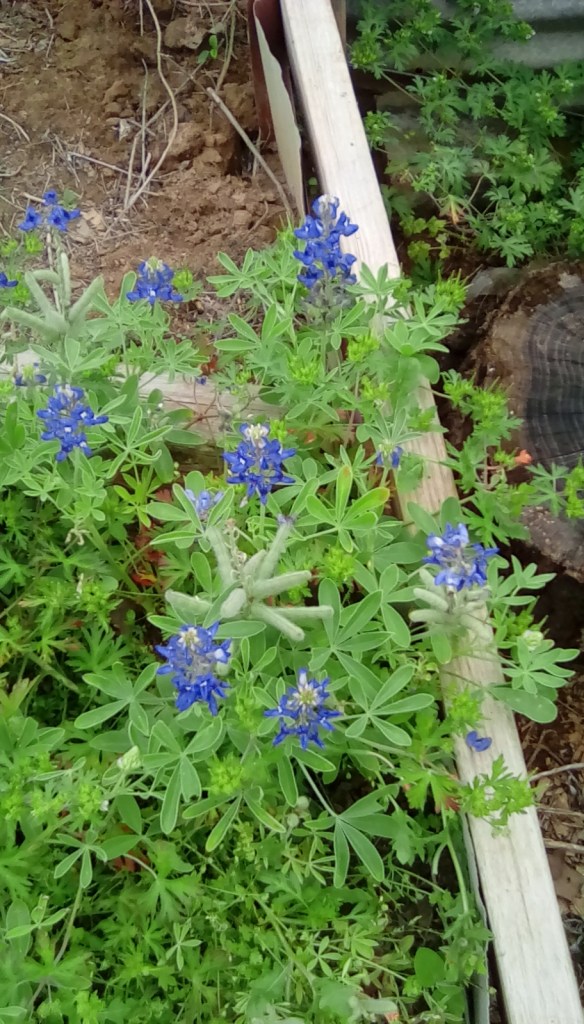
Bluebonnets
Apache plume
Wisteria
Indian blanket
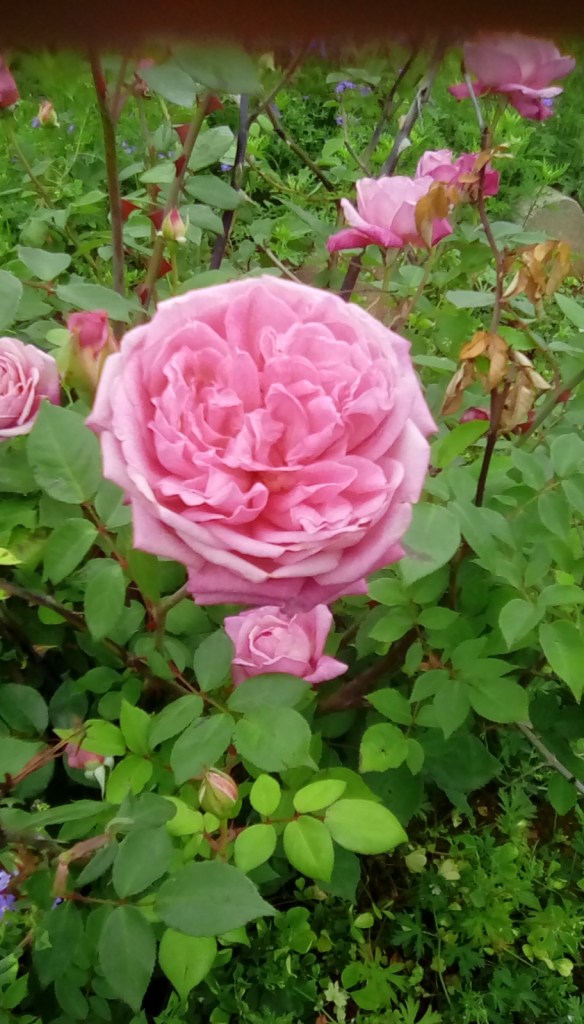
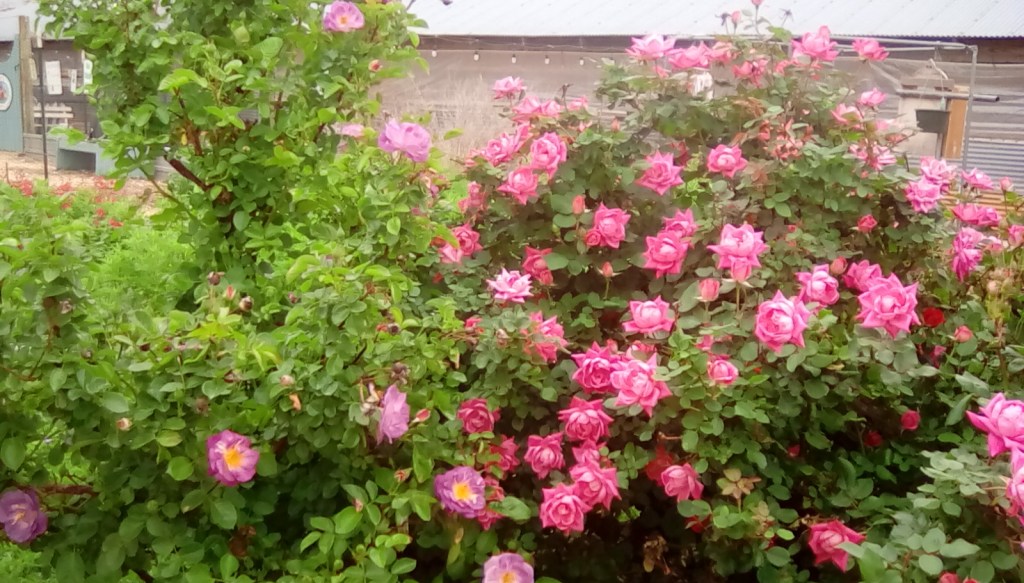
Rose
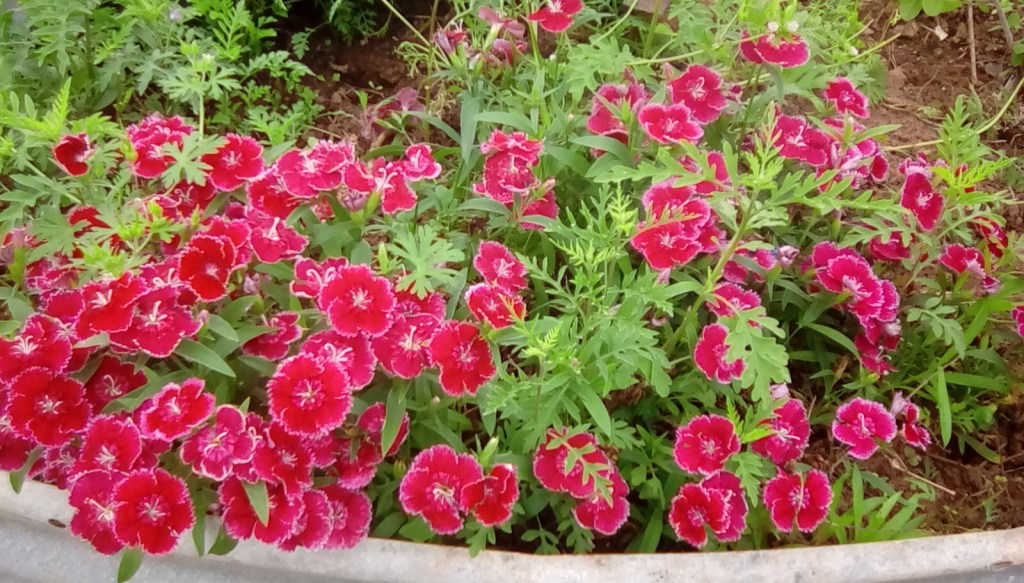
Dianthus
Milkweed
Beautiful roses
Grapes
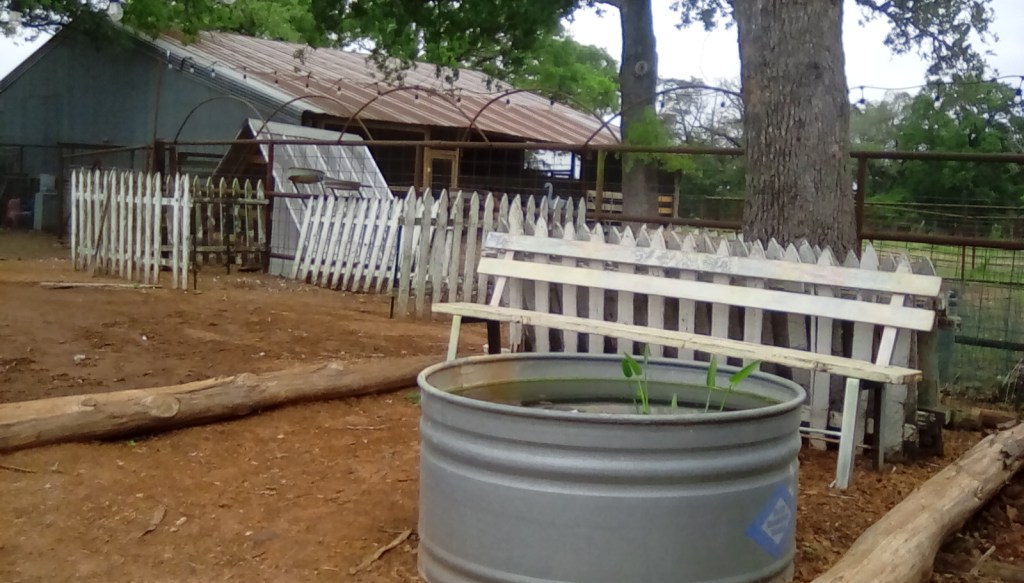
New water feature and fencing for shade garden
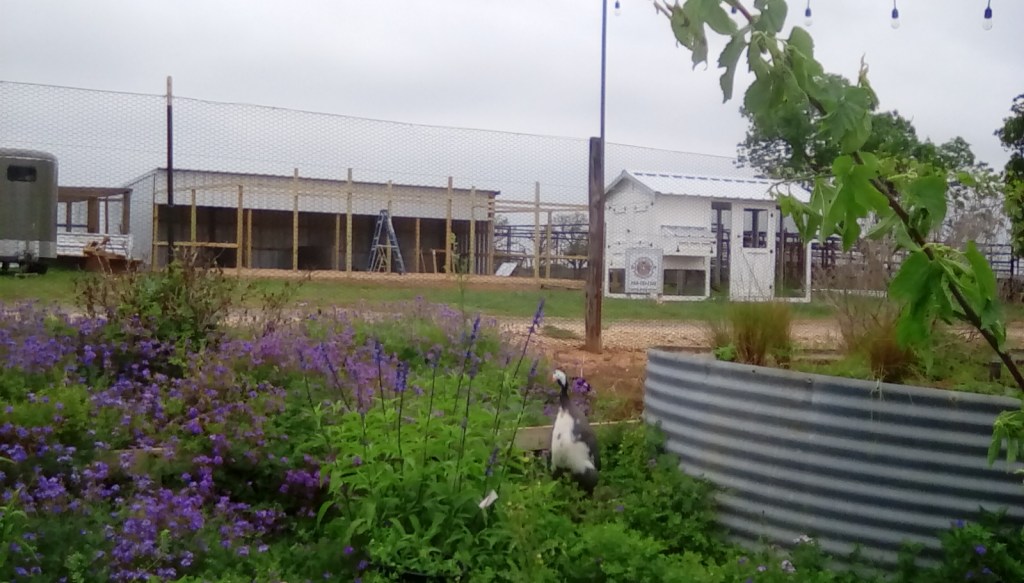
New building for baby Rio Grande turkeys
Lots of pictures! Click on any of them to see them larger.
Come see what’s blooming at our Earth Day celebration on Saturday April 24, at Bird and Bee Farm from 8 am-12 pm.
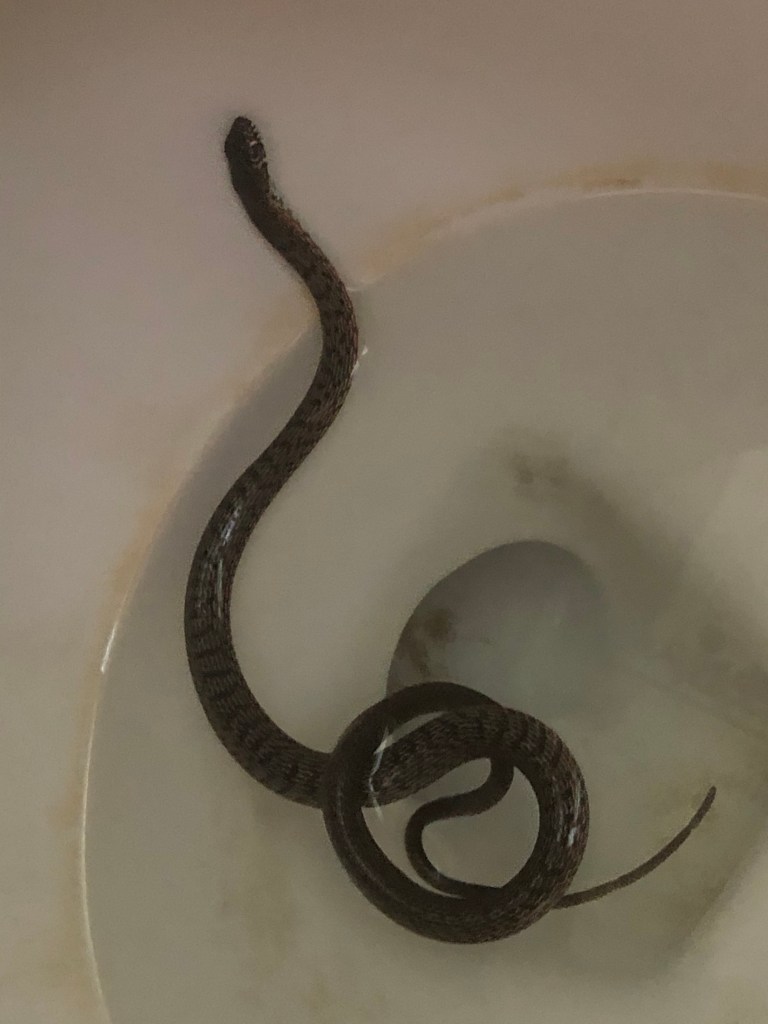
Pamela: Remember the snake encounter I had right after the storm?
I was walking out of house to meet the mail carrier and something ran between and over my feet and ankles. When I turned to chide the cat, it was a snake.
Watched snake long enough to see it was about 2′ long, light green/slight tan mixed in, no spots, no stripes, non-venomous head, fat middle, slim tail and fast. When it ran away from me, at the steps of the porch it turned and looked at me – and then went on into the flower bed. The light/medium green color blended into the grey of the porch – same value! perfect camouflage.
I searched all photos of non-venomous snakes I could find on internet. Thanks to Donna Lewis, I got the contact information of Dr. Crump at Texas Parks and Wildlife. I received a call back from him and he identified it – with all the disclaimers that come with an ID – as a coachwhip.
Why? Because: they vary in color from pink in the west to black in the east; they are fast; they are fat; AND they are curious. Dr. Crump described coachwhip behavior as “curious, and looking back to check is typical.” That was the final clue to the ID. So the valuable identification clue is that it paused long enough to turn itself around and look at me before continuing on.
Yea! I have a coachwhip here! Good mousers, etc. One of the good guys. I wanted to post a photo of the pink variant, but could not locate one that would copy.
Thank you, Dr. Paul Crump.
Suna says: Here’s a photo of a pink one by Jake Scott from iNaturalist. Used with permission.
Phyllis: Coach whips are really neat to watch. They will stop, raise up out of the grass as if to ask, “What are you looking at?” They will also come up from behind you and slither through you legs. And if you run, they will chase you and whip their tail at you…yep had all this happen several times.
I had some in the puppy pen area. Once they moved into Club Med for puppies and mice, I didn’t have a bad problem with the mice. However, I had help quit once because he got chased by one.
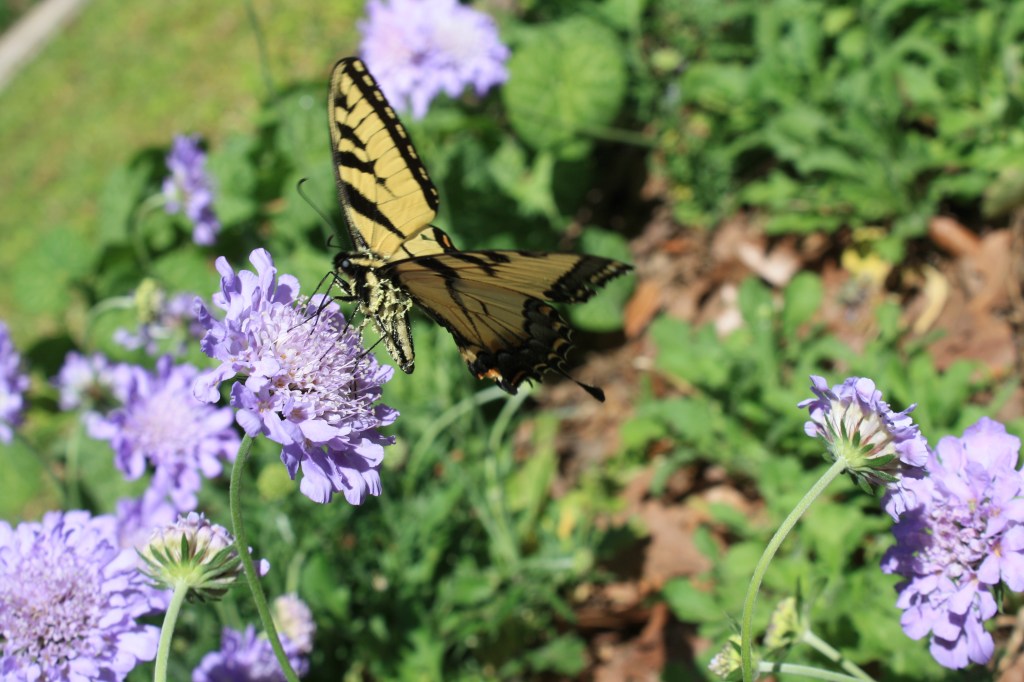
I caught this male Eastern Tiger Swallowtail nectaring on a Pin-cushion plant in my garden this Thursday. Every time I see a butterfly I think that this species is my favorite one.
Of course I say that about everyone I see. All butterflies are amazing creatures.
If you stop and think about it, how could something so colorful and delicate be a real living thing? Nature can produce things that we can not.
This butterfly is very large and has an interesting trait that others do not.
The males are yellow, but the females can be yellow or black! In fact the female can be black on one side and yellow on the other. I would like to see that..
This is called dimorphic coloration. A pretty neat trick.
Swallowtails come in many forms and names. All will have the “tail” on the bottom.
They live in every state and a few in Mexico. The ones that are here in Texas like Coneflowers, Petunias, and Zinnias. Very easy to grow and good plants to have in your garden. The Pin-cushion plant that the fellow in my garden is also a good plant to have even though it is hard for them to land on it because it is spindly. Flowers with a wider platform like Zinnias are easier to land on to have a little sip of nectar.
So be watching in your garden. If you don’t have a garden, plant some colorful pots. Soon you’ll have flying jewels around your home.











 Nature Along the El Camino Real