Plants for Attracting Butterflies and Hummingbirds in Summer

by Donna Lewis

The summer heat and dry conditions make us wonder… what the heck can I plant that will help the hummingbirds and the butterflies?  And of course, it has to be something that is easy to take care of.

I have found that the Coral Honeysuckle Vine and the Flame Acanthus bush fit the bill. Both are visited by butterflies and hummers.  A two-for-one deal.

The coral honeysuckle is in the back on the fence. In front is our friend the passion vine.

The Coral Honeysuckle (Lonicera sempervirens) is a climbing vine that can also grow as a ground cover. It is ever blooming in some years. It likes sandy loams, clay, and poor soils.

How much better can it get?  You can grow it in the full sun or part shade. It goes great on an arbor or on a fence like I have it.

By the way, this is not the invasive Japanese Honeysuckle.

The flame acanthus is in the rear, on the fence. In front of it are zinnias and Salvia gregii.

The next plant that loves our summers is the Flame Acanthus bush (Anisacanthus quadrifidus). It’s extremely drought tolerant , gets no diseases, and is easy to grow. Again both hummers and butterflies like it.

This bush will die down in the winter. Cut it back in the spring before it starts to green up.

Both of these are great plants for hot and dry conditions. They need no fertilizers and little water once established.

Be adaptable and watch what your garden and wildlife like.   Then your garden will be successful in an ever changing world.

I hope you will always see the wonder and beauty in nature.

Wolf Spider Mystery

by Eric Neubauer

I’ve been watching a large population of Hogna wolf spiders growing up on my property since winter. I’ve submitted photographs to both iNaturalist and BugGuide, and people there don’t hesitate to confirm them all as Hogna antelucana.

Specimen of hogna wolf spider with the vee shape pinched shut.

Nevertheless, I found I can easily sort them into two groups from a fairly young age on. The markings on this species are quite variable in general, but one reliable difference between the two groups is in a lightly colored vee shape near the back of the head. The vee points toward the back and is open at about a 35 degree angle on one type and is pinched shut on the other.

Specimen with an open vee shape.

There are other small differences, but they are harder to define and less consistent.

At first I thought it might be a case of sexual dimmorphism, but lately I think there may be two different species.

The dark one.

The third example has the open vee, hard to see because the spider is looking up, and is very dark with none of the warmer tones these spiders usually have. It is the only one like that I’ve seen and perhaps lacks the ability to produce an orangish pigment.

It is one of several mysteries to keeping life interesting.

Milkweeds and a Woodpecker

by Lisa Milewski

Milkweed Report

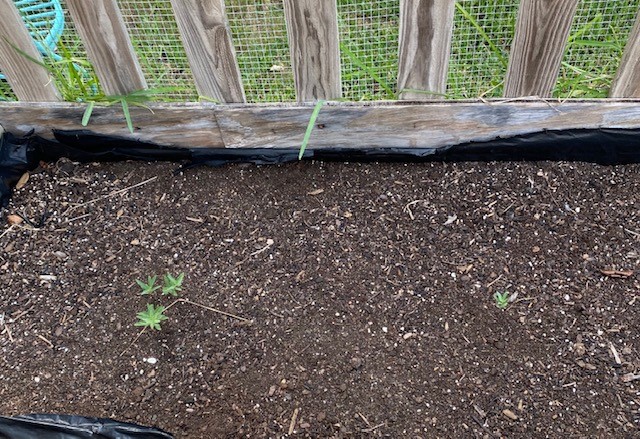
Members of our chapter have been participating in a Monarch Watch Milkweed Project, where we each try to grow some plants and carefully monitor them. Mine don’t seem to be growing as well as some of the others’ plants. Maybe I’m over-thinking!

I picked up the plants on May 2. They are antelope horns (Asperula).

That’s the plants, bottom left.

I planted them on May 4 in a raised bed garden (formerly my vegetable herb garden that didn’t do well since I am still learning how to get a green thumb.J  However, I left the fern leaf dill for the black swallowtail caterpillars which love them are doing well. 

The planting spot.

They are in mixed soil (1/3 compost, 1/3 peat moss, 1/3 vermiculite).

Since the planting, I have tracked the rainfall and dates I hand watered the plants. I take photos of them every week for my logbook. Here are the most recent pictures:

I’m going to try to add the grass clippings around and not water too much, maybe?  Wish me luck. 

Annie the Woodpecker

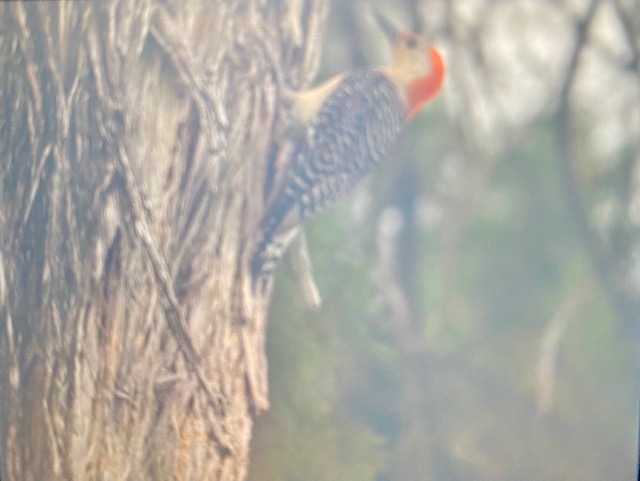
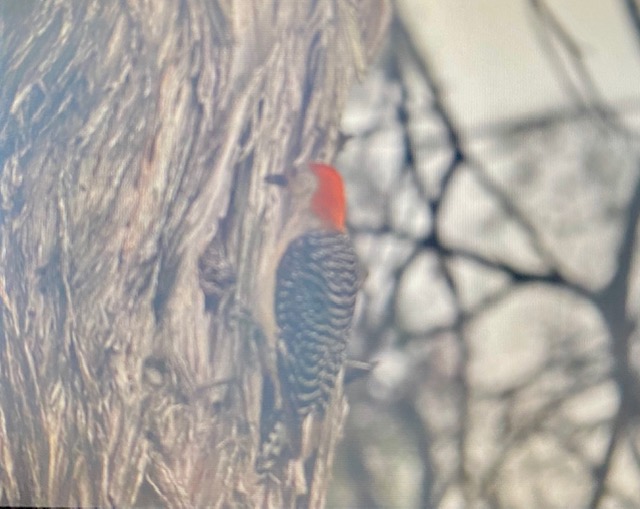
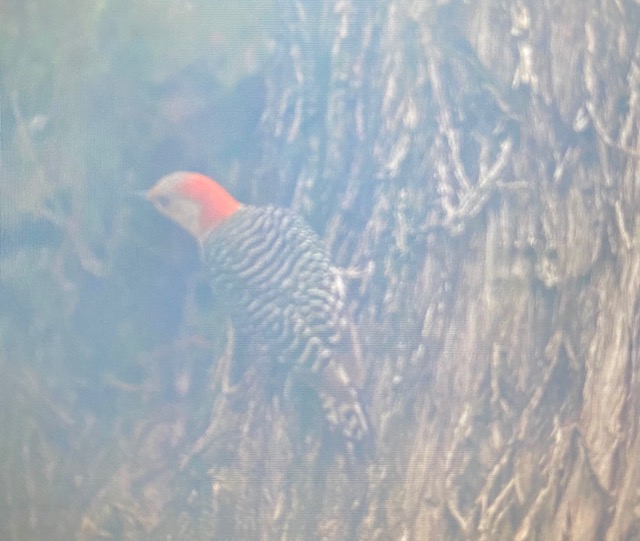
I told the people at last week’s chapter meeting about Annie the red-bellied woodpecker, who has been hanging around the food pantry in the church building in Hutto where I do a lot of my volunteer work.

We’re hoping to discourage her from pecking away at the wooden cross on the property, but not chase her away entirely. I have really enjoyed watching Annie. These pictures are taken through a dirty window, but you can see her pretty well!

July in the Garden

by Catherine Johnson

Last weekend, Bird and Bee Farm reopened again after selling out twice. A diversity of customers from Houston, Dallas and surrounding counties came, all practicing safety rules. 

The ducks and some guineas were a popular attraction.

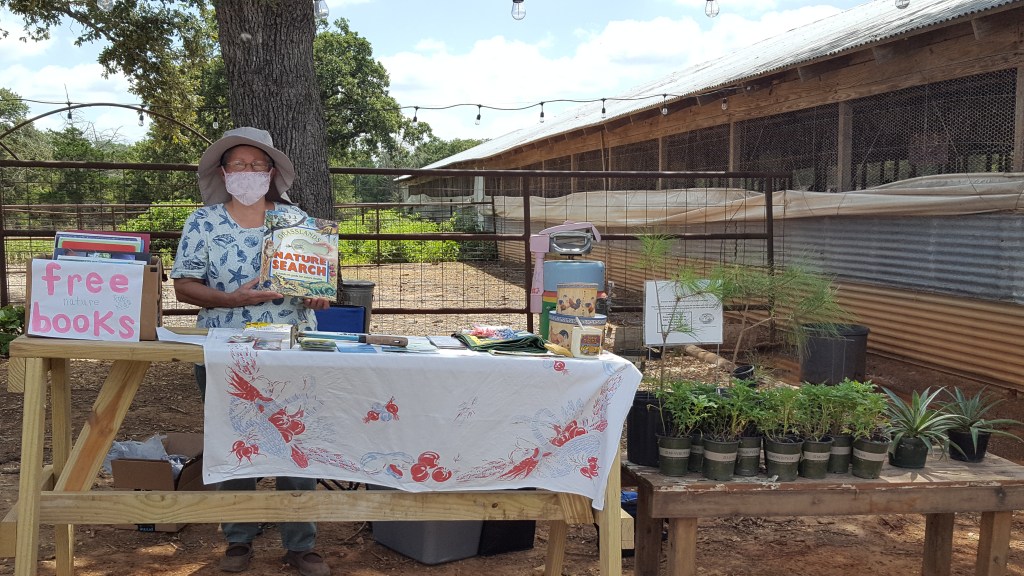
Some plants were for sale, while the Master Naturalist table gave away nature books donated by Donna Lewis as well as nature brochures.

Plants and books for sale.

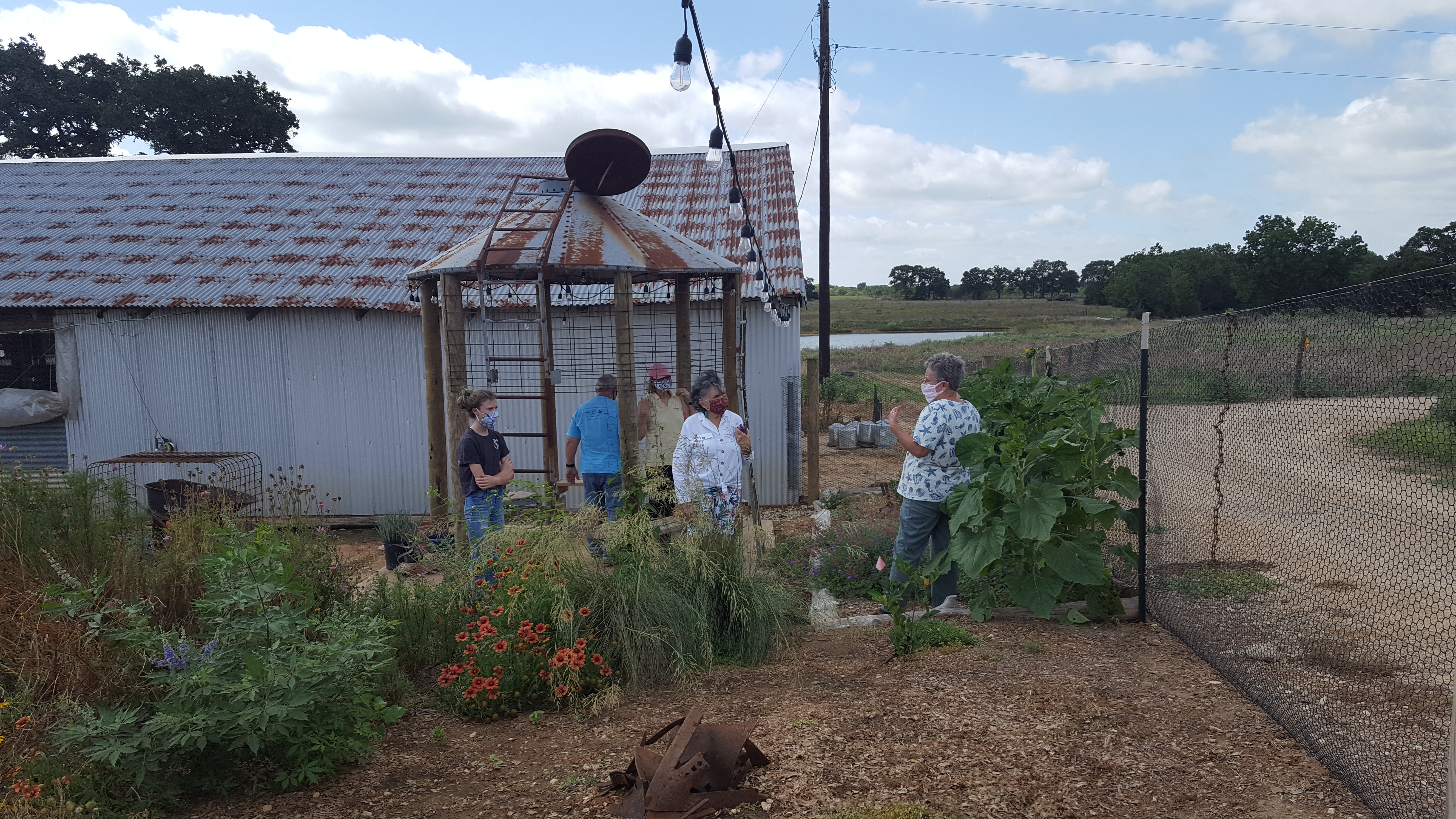
The highlight for me was giving the first tours of the Milam Wildscape.

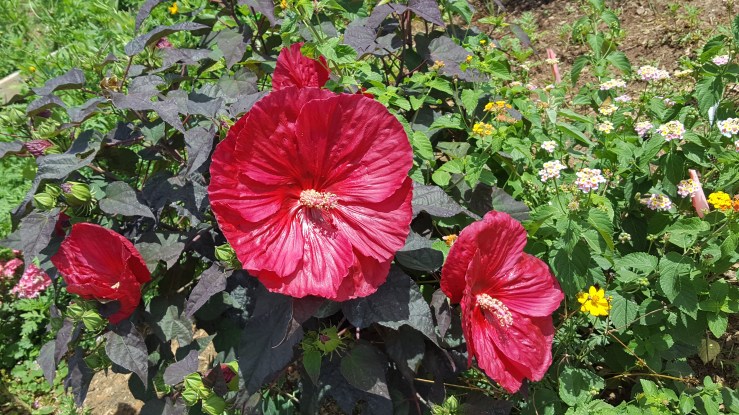
One gentleman said the giant hibiscus was the prettiest flower he had ever seen. A Houston firefighter is coming back in the fall for native plants from the garden. 

hibiscus flower
The beautiful hibiscus flower

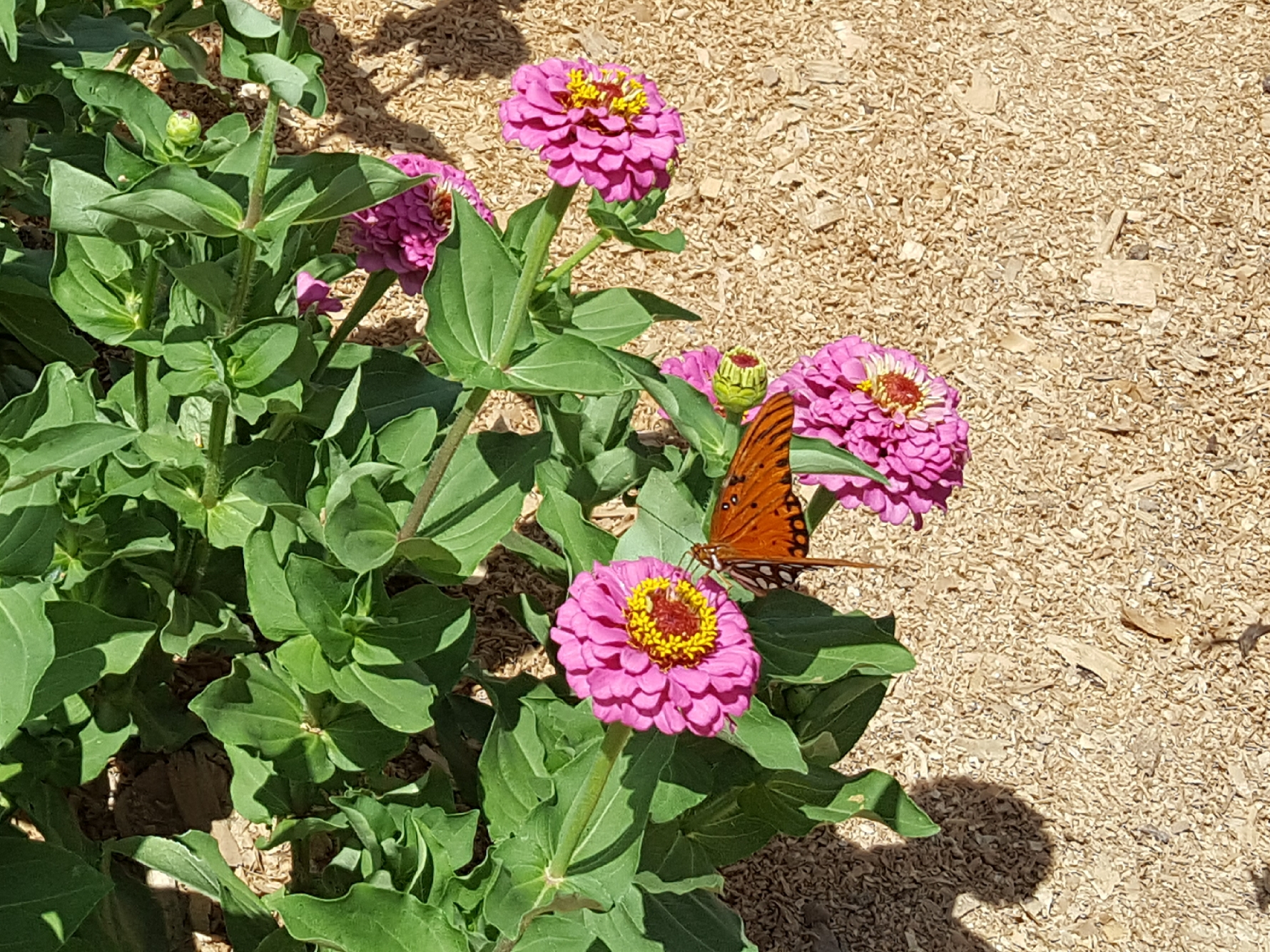
I will send out notices on future events and the next quail release. Enjoy some more photos from around the garden, until next time!

One More News Item

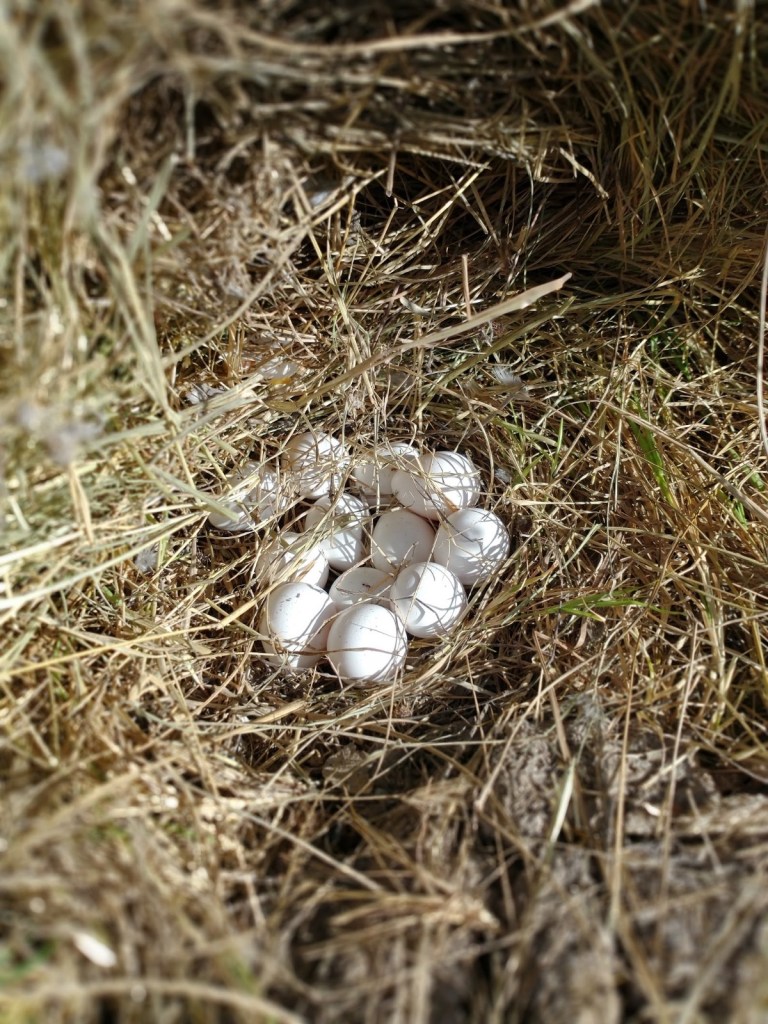
Remember when we released quail into the rehabilitated prairie area? They must be doing well, because we found eggs!

Bobwhite eggs. Such a great sign.

The Checkered Beetle and the Painful Plant

by Marian Buegeler and Sue Ann Kendall

This month’s iNaturalist observation of the month was this beautiful image of a checkered beetle (Trichodes bibalteatus), photographed by Marian Buegeler of our 2020 class.

Marian reports:

[It] is sitting on a vine that iNat identified as sorrelvine (Cissus trifoliata). It is a beautiful vine that grows like crazy all over the family farm. 

I have always referred to this vine as poison ivy, because anytime I come in contact with it I break out in a nasty rash that gets identified at the docs office as poison ivy/poison oak.  

The flowers.

Sue Ann adds: The iNaturalist entry says that sorrelvine is a member of the grape family, and native to the US. It’s very common in this area (Sue Ann’s family lives nearby and reports they have it on their property, too, and it causes allergic reactions as well, though maybe because it’s near actual poison ivy).

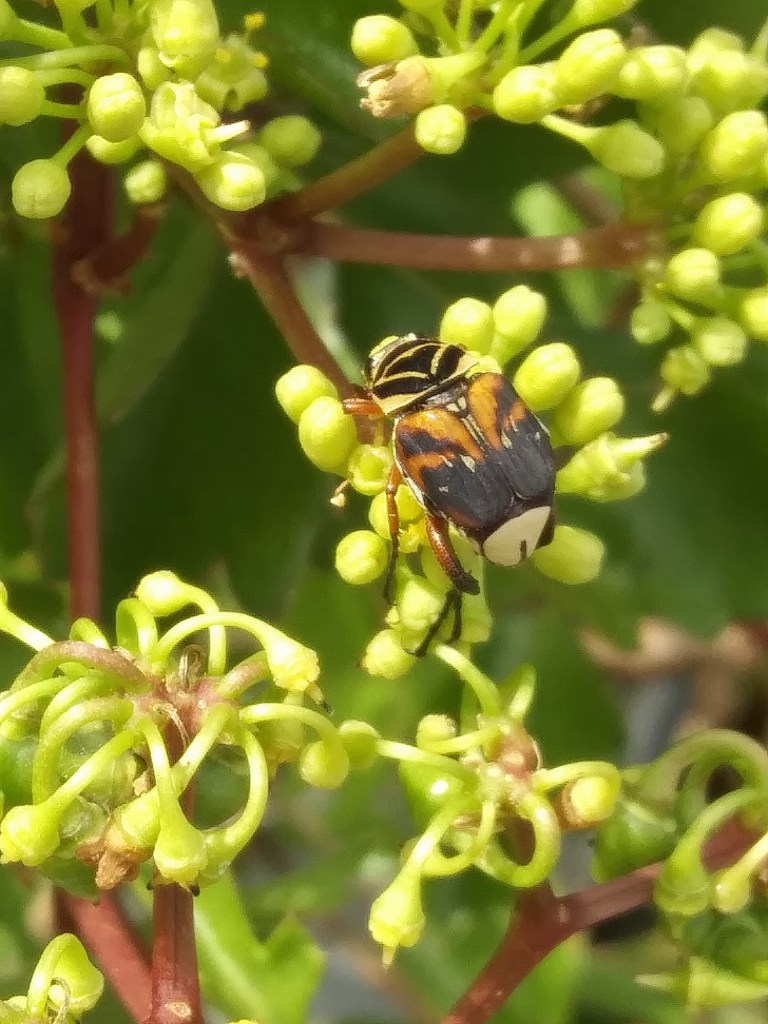
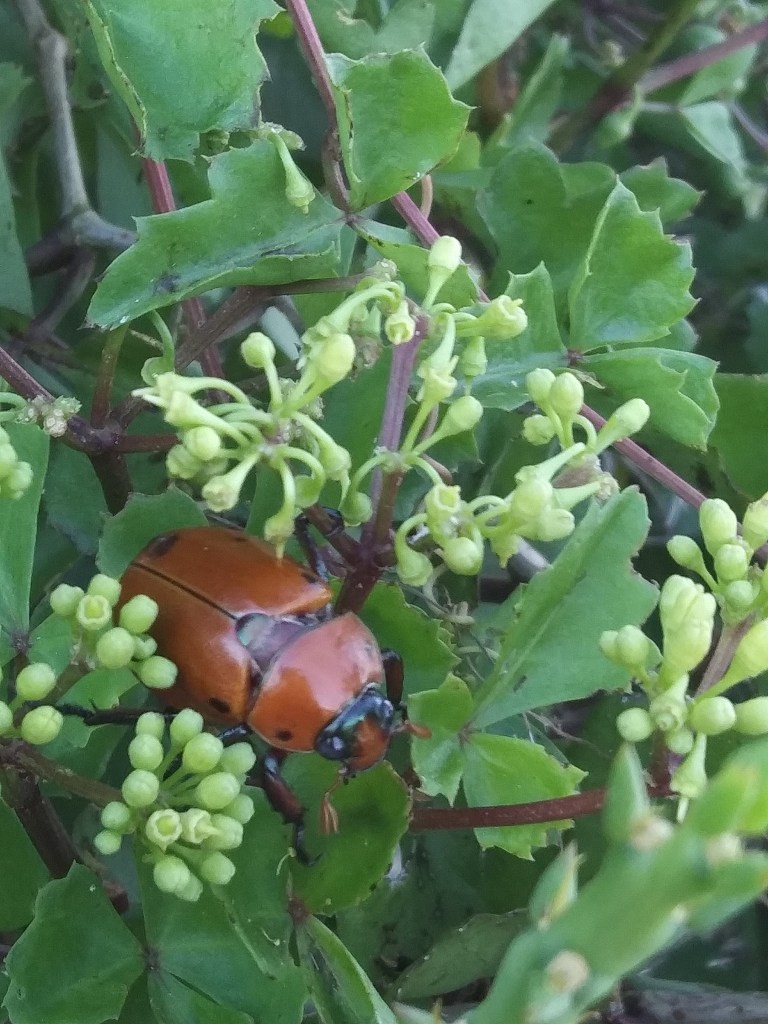
From Marian: Here are three more pictures of insects on the sorrelvine.

Another beautiful beetle on this vine.
It must be delicious.

I put these on iNat and they have been identified as Grapevine Beetle (Pelidnota punctuate), Delta Flower Scarab (Trigonopeltastes delta), and Bumelia Borer (Plinthocoelium suaveolen). Although, only the Bumelia Borer has reached research grade status.

This is definitely a scarab.

I have also seen lots of wasps and grasshoppers enjoying a meal at this vine. It certainly seems to be the place to eat! I just wish I wasn’t allergic to it.

Do any of you readers have more experience with this vine?