I had a need to buy chickens last weekend, so I took the female members of my family over to Bird and Bee Farm to get them. The chickens I got were great, and you can read about them here. But my real point was to share how much has been going on at the Wildscape project over there. Much of the work is led by our own Catherine Johnson.
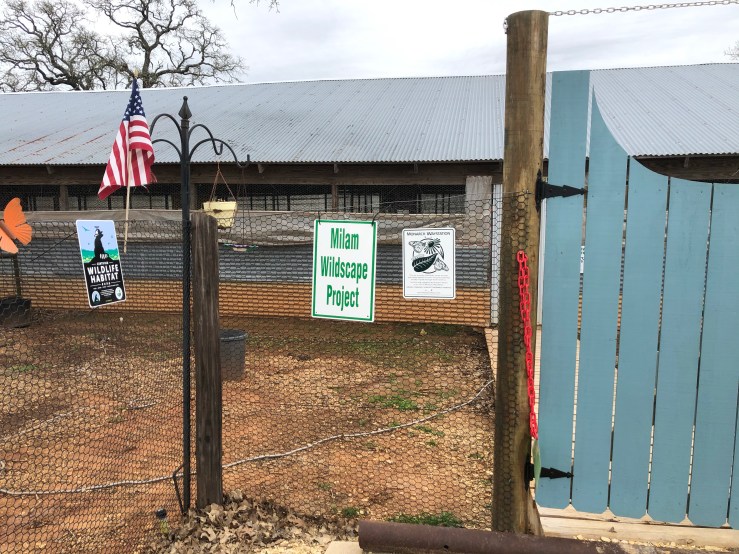
The entrance shows all their certifications. The chicken house is in the rear.
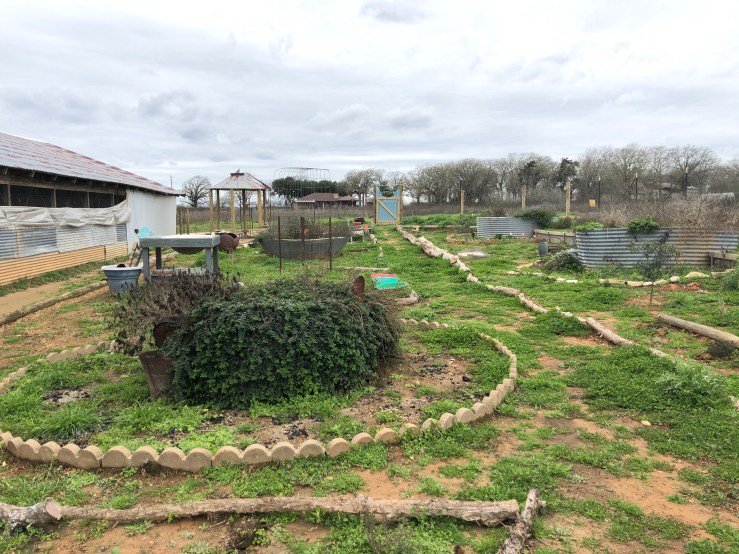
I was impressed that there was so much in bloom in the middle of January, and equally impressed by how charming the design of the project is. There are so many sweet surprises lurking among the recycled material being used to create planters, edging and decorations.
Many of our members are strong believers of practicing what they preach and recycling or re-using materials as much as possible, and a tour of the wildscape provides a lot of good ideas. All sorts of kitchen and farming implements have found their way into the beds.
Of course, there were kitties to provide natural pest control. Rodents love bird food, and kitties love rodents!
Lots of flowers!
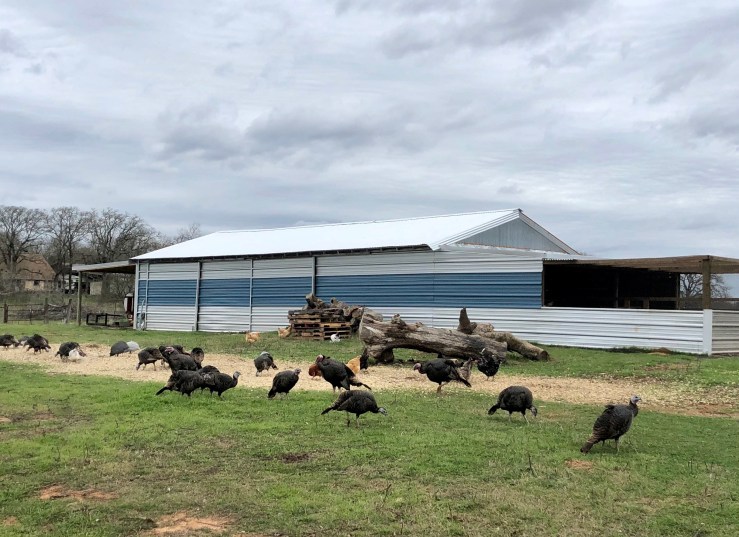
I also enjoyed watching the natural insect pest control in action as the guinea fowl and Rio Grande turkeys roamed the area.
Rio Grande turkey wants in the wildscape. Nope, it’s not for you.
It made me happy that Cindy Rek, one of the owners of the farm, used my guinea fowl photo to sell some of the guinea flock online! It’s great to be able to give back to folks who give so much to the community, our plants, and our animal friends.
Dale Kruse, curator at the herbarium at Texas A&M University at College Station, is in need of several volunteers on a regular basis to help with the new National Science Foundation digitization project.
The S. M. Tracy Herbarium has thousands of vouchers that are to be included in the National Science Foundation digitization project. At last count, there are over 360,000 vouchers in the S. M. Tracy Herbarium stored under strict environmental criteria.
Definition:
A voucher herbarium specimen is a pressed plant sample deposited for future reference. It supports research work and may be examined to verify the identity of the specific plant used in a study.
A voucher specimen must be deposited in a recognized herbarium committed to long-term maintenance.
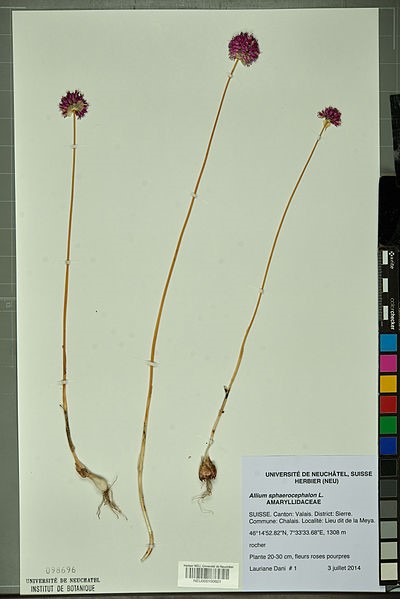
A typical herbarium voucher looks like this. (It is a dead flattened plant glued on a piece of special paper.)
The National Science Foundation digitization project involves the digital scanning of the vouchers in several selected herbariums in the United States including the S. M. Tracy Herbarium so that the uploaded images may be shared globally with all botanists and taxonomists.
This volunteer effort at the S. M. Tracy Herbarium, located off of East University Drive in College Station, will involve several tasks, including:
Gluing dried, pressed specimens and their descriptive labels to special herbarium paper to create vouchers.
Re-gluing and / or re-enforcement of existing vouchers.
Computer activities such as data entry and digitization,
and other tasks as may be requested by Dale.
Result of the program will be digital images of the vouchers that look similar to this.
The digital vouchers will then be uploaded into the National Science Foundation digitization project under the scope of the prestigious BRIT Herbarium in Fort Worth.
From there, the ultimate data entry will be accomplished using many volunteers including the existing Texas Master Naturalist volunteer effort project approved for the El Camino Real chapter under the Volunteer Management System (VMS) classification “Citizen Science Transcribing-Selections for BRIT”.
To reach this final stage, tasks must be completed at the S. M. Tracy Herbarium. If you are interested in volunteering on a regular basis at the herbarium, contact:
Dale Kruse Curator: S. M. Tracy Herbarium, Department of Ecology and Conservation Biology Lecturer: Department of Range, Wildlife, and Fisheries Management dakruse@tamu.edu Herbarium: 979.845.4328
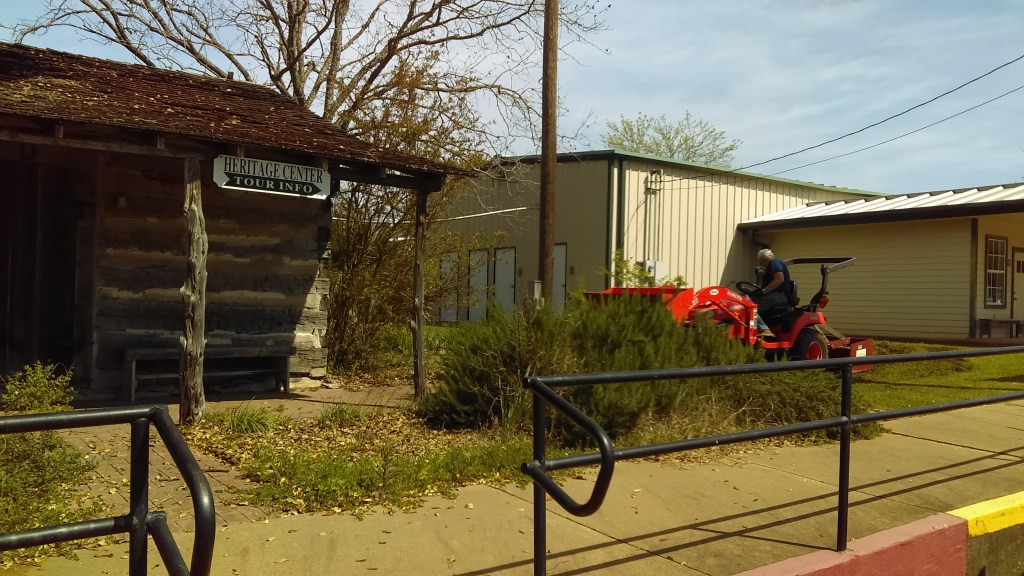
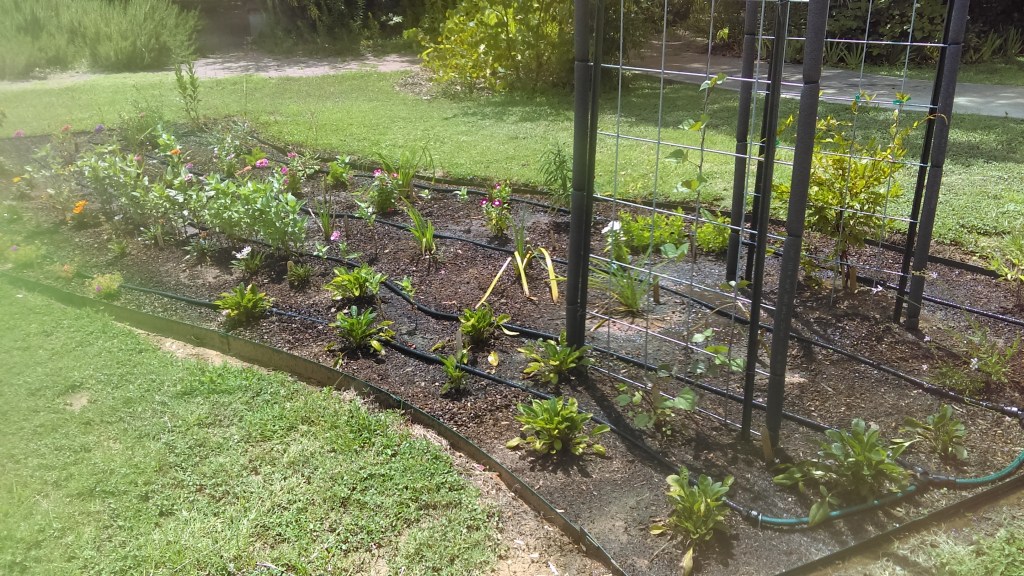
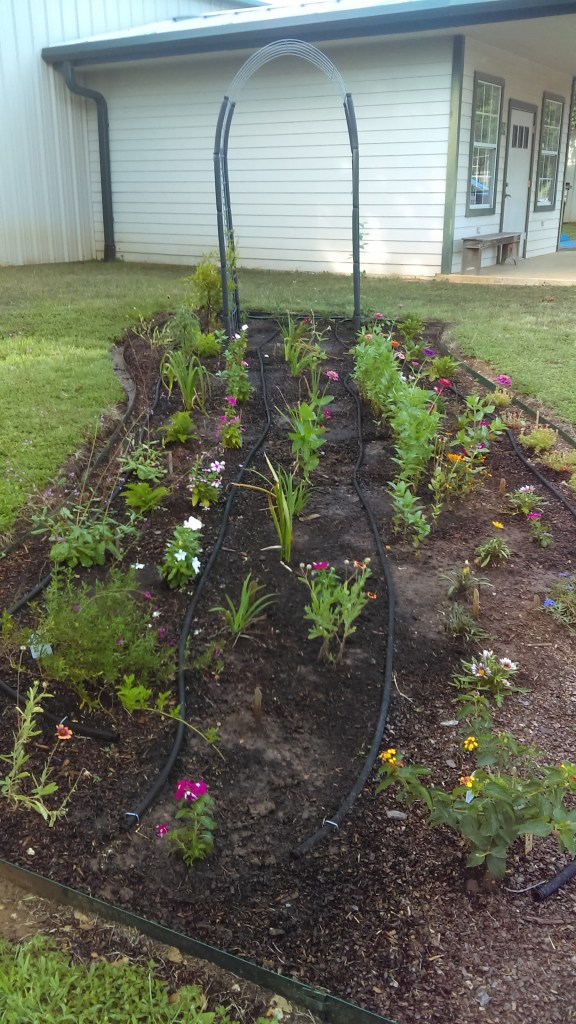
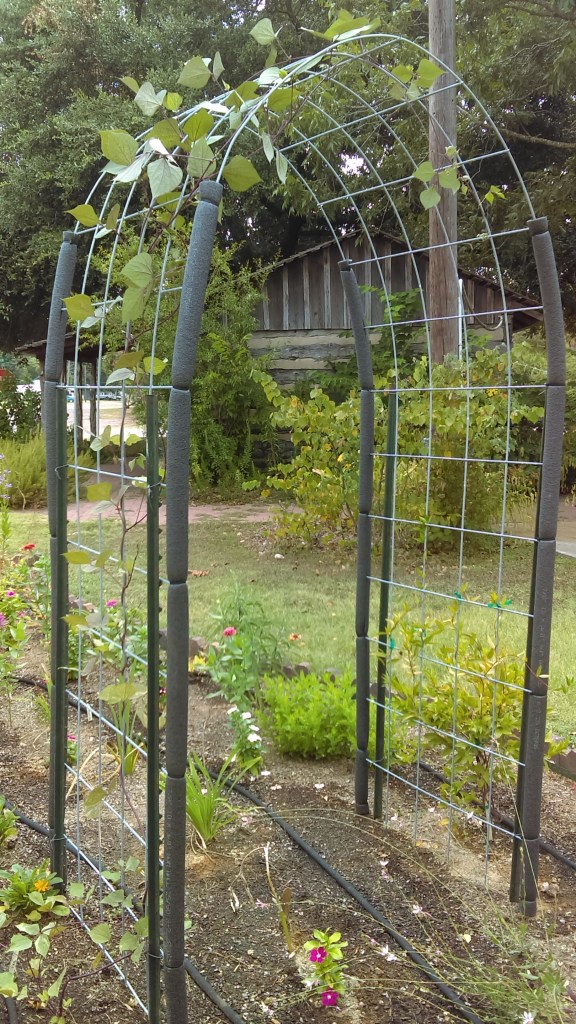
We’ve received a report from Sharon Sweet, sharing the work she and her husband Wesley have been doing on the beautiful butterfly garden they have been building and maintaining in Lexington. It’s at the log cabin area near the Lexington Senior Center. (See their initial post from April 2019 for more.)
How to Find the Garden
Maybe you’d like to check out the gardens in person! Sheri sends these directions:
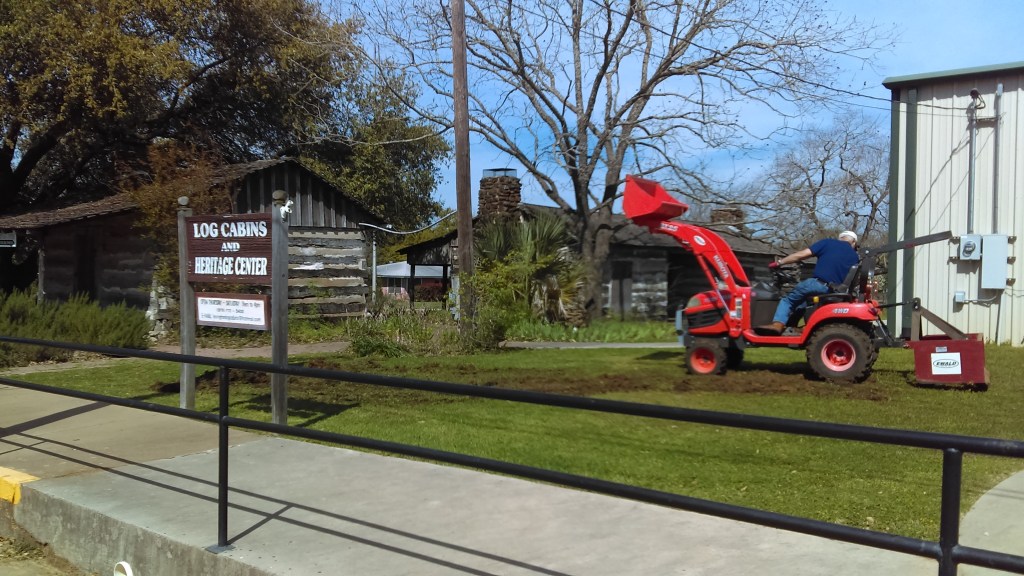
The Lexington Log Cabin Garden is located on 4th Street, 1/2 block west of Rockdale Street (Loop 123). It is directly north across 4th Street from the town square. There is a large sign titling the Log Cabins in front of the garden. I’m hoping to get this sign moved elsewhere so the garden is more visible.
The Lexington Senior Center Garden is located across from the south-west corner of the town square on Main Street. It is right around the corner of the Lexington Senior Citizens Center.
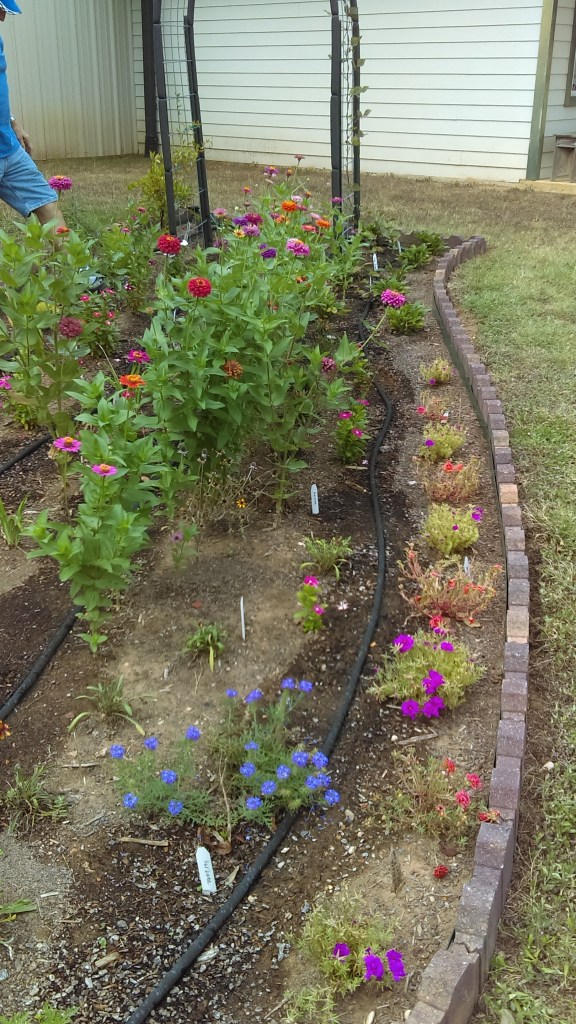
This gallery of photos will take you through their work over 2019. Be sure to click on the photos to see them full size. It’s really beautiful.
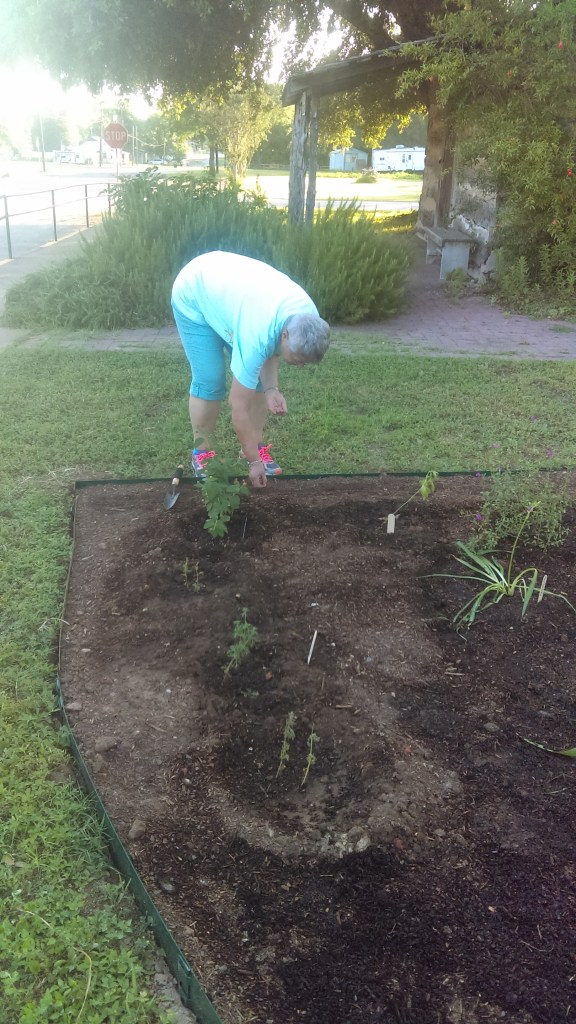
Starting the digging
Marking the site with a box blade
Breaking ground
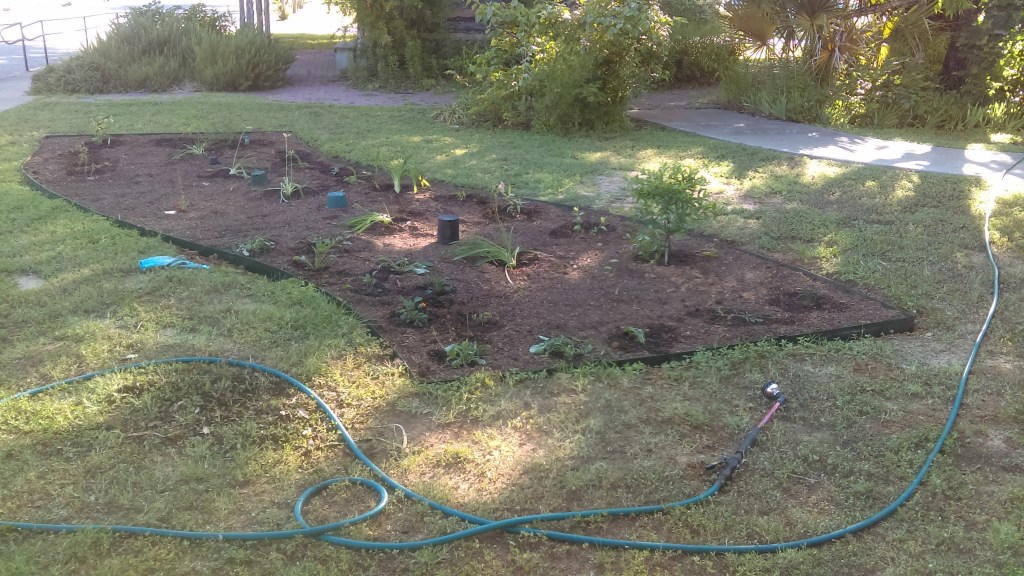
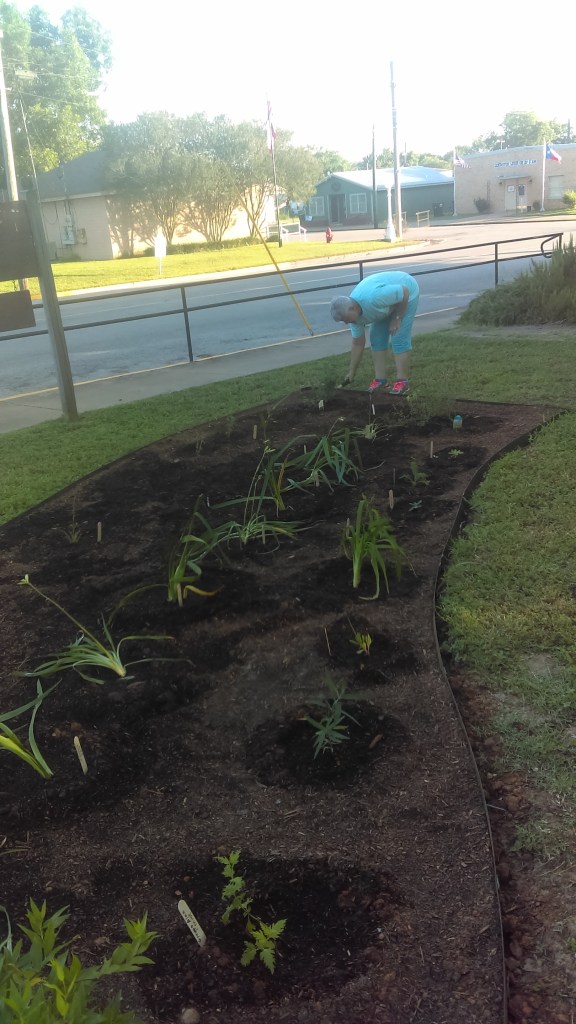
Initial planting
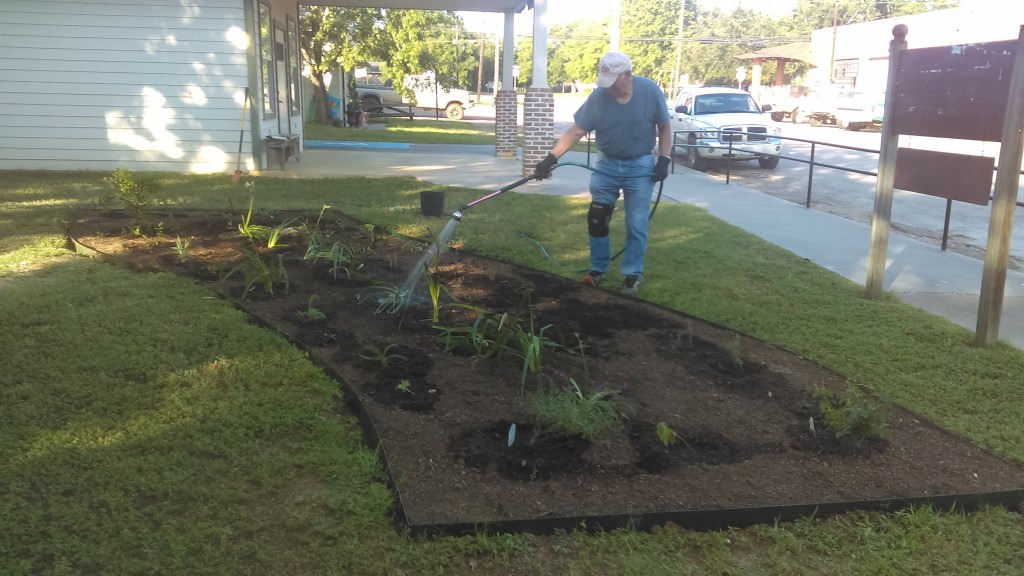
Watering everything in
Planting petunias so Wes can see some color!
Planting Louisiana swamp iris and peach day lilies
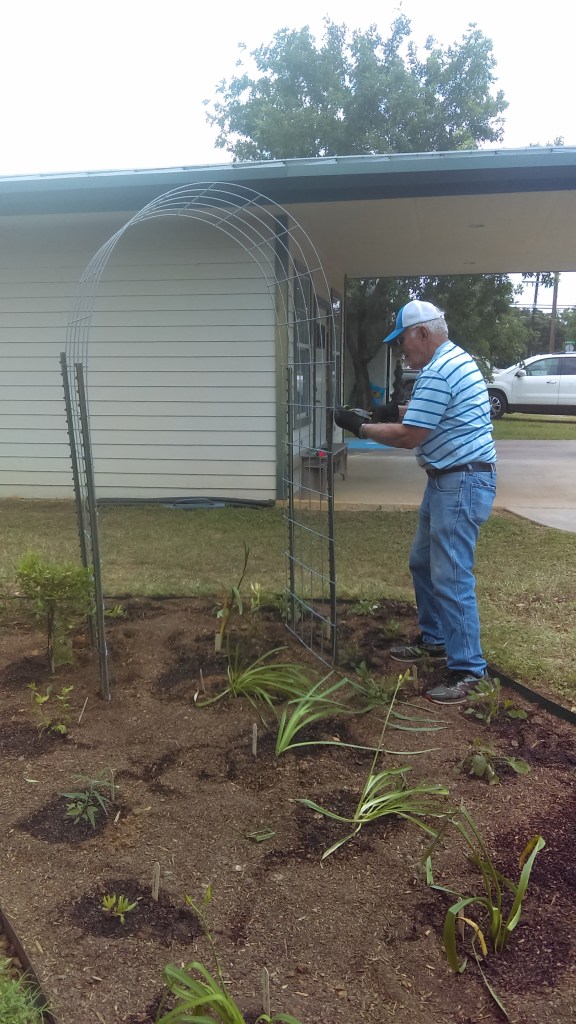
Installing the protective arbor
Wes was sidetracked by some knee surgery!
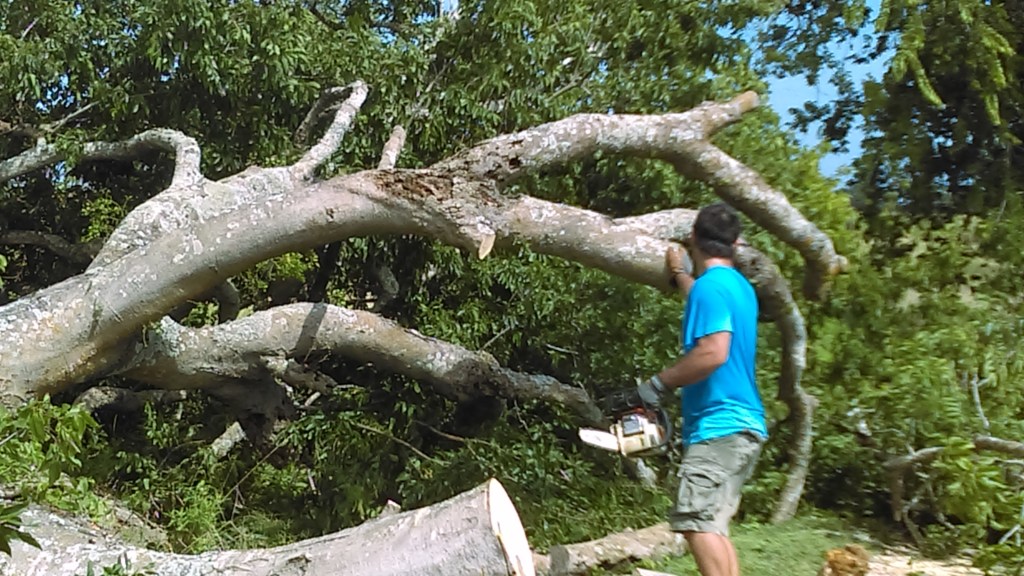
This huge downed tree required help from their son
Growing in
Already showing lots of color
Growing more as they waited for Wes to heal up
Concrete edging that fits together nicely
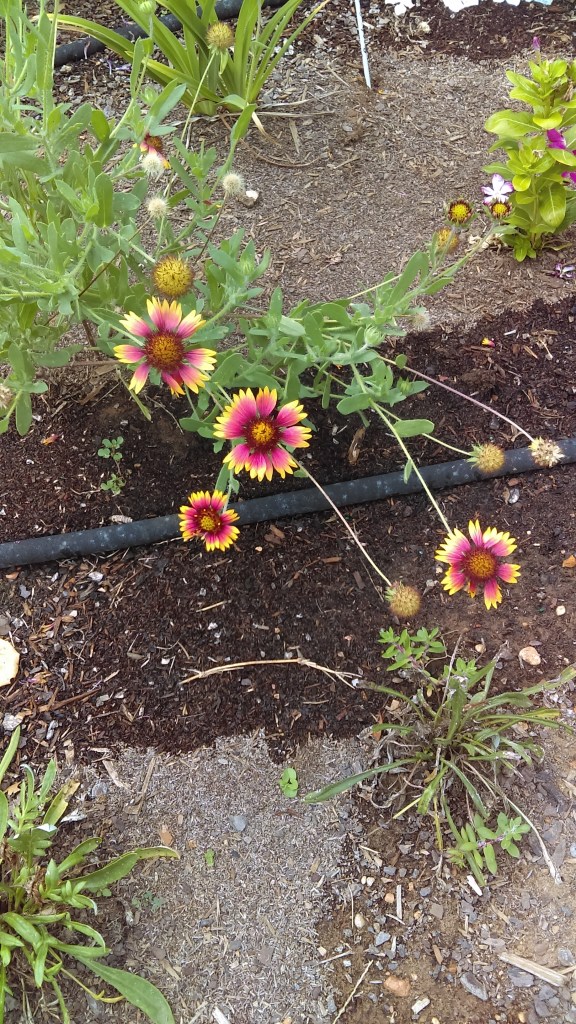
Sharon was able to transplant these Indian blanket flowers from her garden!
Another view of the edging
Flowers and the drip irrigation system
More of the edging and flowers
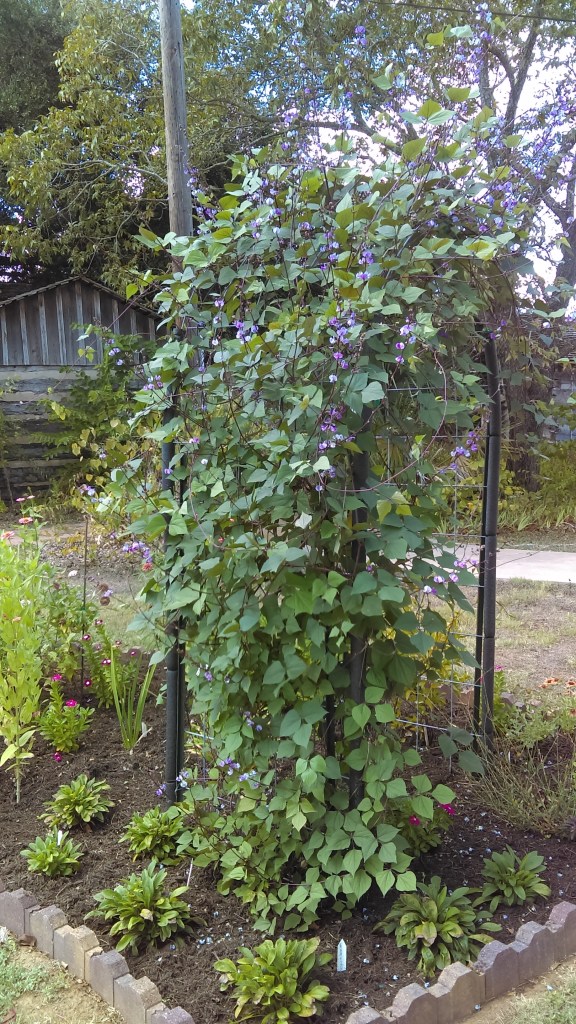
Hyacinth vines growing up the gazebo
Striking blossom
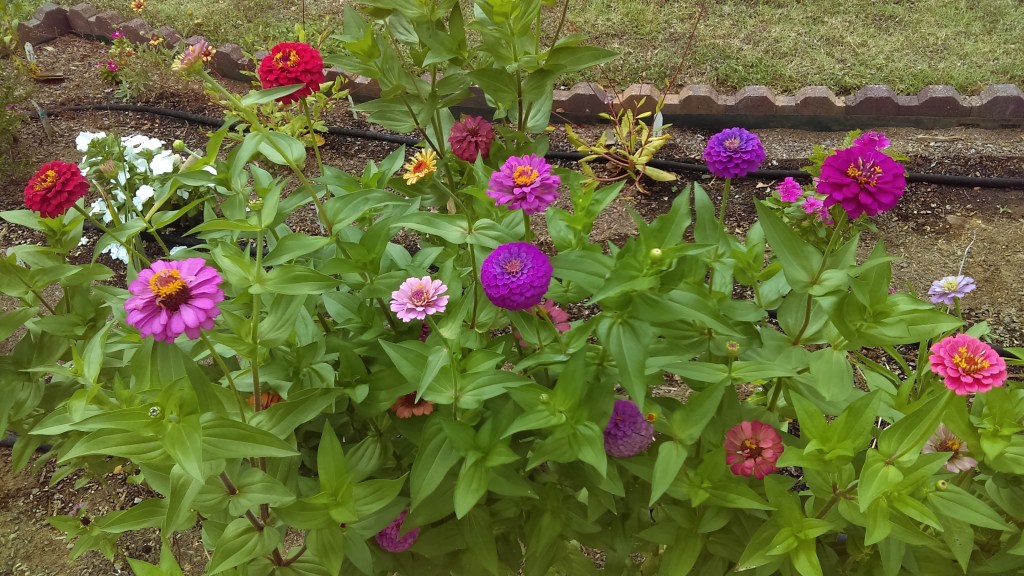
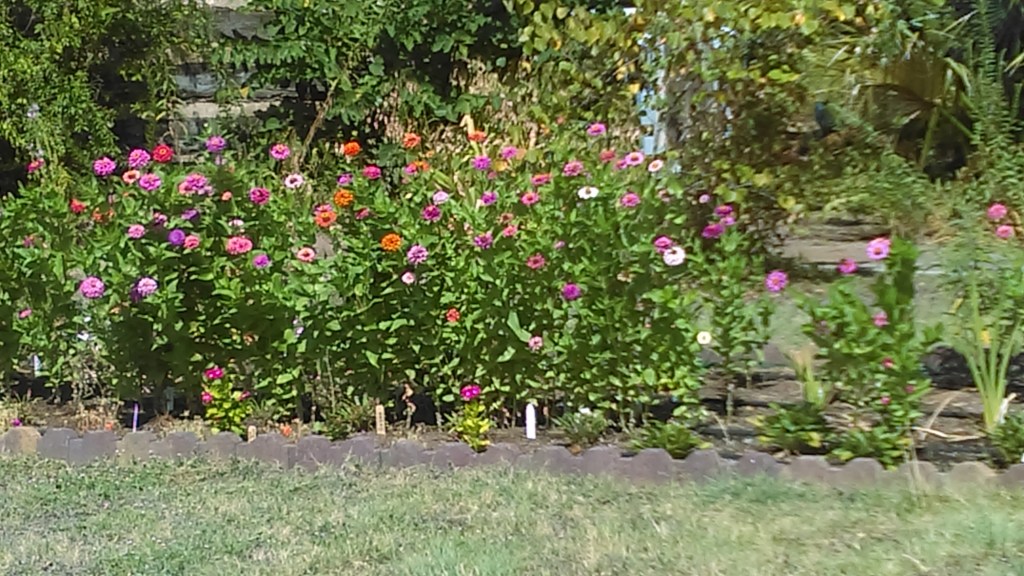
Zinnias
Butterflies love the zinnias
Painted lady on a zinnia – these are Sharon’s favorites
Skipper on a zinnia
Hyacinth bean vine in full glory!
Lantana not doing too well due to over-watering
Amazing progress on the log cabins butterfly gardens.
Last weekend, three members of our Texas Master Naturalist chapter traveled to Williamson County to attend the holiday fundraiser hosted by All Things Wild Rehabilitation organization.
Beautiful new facilities for rehabilitating animals.
We saw beautiful wildlife gifts and sampled baked goods.
A great horned owl with a broken wing.
Since our last visit, many outdoor shelters have been built, including a huge raptor complex. A zoologist provided owl programs and tours to view raptors. It was fascinating!
A shelter with one of its residents happily perched.
It’s easy to help out at this valuable organization, which helps so many injured and otherwise needy wild animals. From their website you can sign up for newsletters, get hours of operation, and see lists of needed supplies. They also provide useful information about what to do if you find a wild animal that may be in need.
Watching a raptor demonstration.
Consider volunteering with All Things Wild. Master Naturalists can earn volunteer hours under the opportunity – Natural Resource Conservation.
Every year, the Audubon Society sponsors the Christmas Bird Count. This year counts will be held from December 14, 2019-January 5, 2020. It’s very important for keeping up with rising and falling bird populations in the US. You can participate in many ways.
One nearby project came to us via Kyle Watter, a park ranger with the US Army Corps of Engineers at Proctor Lake in Comanche, Texas. He wrote:
January 4th, we are hosting our second annual Christmas Bird Count. Last year, we recorded 99 species at our lake. The count incorporates six driving routes, each of which includes a portion of federal property. Some of the properties are off-limits to the general public or are quite remote.
email, November 25, 2019
If you’d like to head to Proctor Lake, contact Kyle at Kyle.J.Watter@usace.army.mil or call the lake office at 254-879-2424.
While we may not live very close to Proctor Lake, we do have other opportunities to participate. The Bird Count project requires registration with a coordinator within one of the specified circles in this map. The circles are 15 mile radius. If one lives within one of the circles, they can register and sit in a lawn chair in their yard to count birds on the specified days. That is not our luck here in Milam County.
Here are the observation locations nearest to Cameron.
As you can see from the close-up above, there are several circles in easier driving distance for us, such as Granger Lake WMA, Buescher/Bastrop State Park in Bastrop County, and McKinney Roughs Nature Park in Bastrop County aren’t too bad. Linda Jo points out that she knows that in the past, ECR members have traveled to all these locations for training or volunteer events.
Linda Jo would like to especially recommend the McKinney Roughs location, because it is being led by Nicolaus Cowey, a very knowledgeable bird person. The count led by Sheila Hargis of the Lost Pines TMN chapter at Buescher/Bastrop would also be a worthwhile experience. Sue Ann really likes Granger Lake for its variety of shore birds.
Here is contact information on each of these locations. Contact the compiler to register and get more information:
Granger Date: Saturday, December 29 Compiler: Byron Stone Email: drbirdie@aol.com Granger Lake, in Williamson County, is 35 miles northwest of Austin. The area is significant due to its reputation for harboring threatened prairie species like MOUNTAIN PLOVER and SHORT-EARED OWL. Other specialties and expected species include a variety of duck and geese, BURROWING OWL, HORNED LARK, SPRAGUE’S PIPIT, LAPLAND LONGSPUR, MCCOWN’S LONGSPUR, and as many as 18 sparrow species, including HARRIS’S and LECONTE’S SPARROW. The area offers diverse habitat, and participants will have the opportunity to count open farmland, fresh water, riparian woodland, and Blackland Prairie habitat.
Lost Pines/McKinney Roughs Date: Friday, December 28 Compiler: Nicholas Cowey Email: nicholas.cowey@lcra.org This CBC is located in Bastrop County between the Bastrop CBC and Austin CBC circles and just a bit to the north. This count is a community collaboration between the Lower Colorado River Authority, Bastrop Audubon Society and the Lost Pines Master Naturalists. This year the count will take place Saturday, Dec. 29, 2018 and will include the properties of McKinney Roughs, Hyatt Lost Pines, Webberville, Utley, numerous rural areas around Elgin, many area county roads and neighborhoods including Crystal Lake, Bluebonnet Acres, Wilbarger Bend, Union Chapel and Young’s Prairie Road. The count also encompasses miles of the lower Colorado River. Count starts on Saturday, Dec. 30 at 6 am at McKinney Roughs Visitor Center. Plan to arrive by 5:30 am to meet up with your count group. Countdown will take place at 6:00 pm at the McKinney Roughs Visitors Center. Register online at https://goo.gl/fxDmvU.
Buescher – Bastrop State Parks Date: To Be Announced Compiler: Shelia Hargis Email: bastroptxcbc@gmail.com We need many birders to adequately survey the birds in the circle area to find all of the expected species and the rare species visiting the area. We would especially like to have some feeder watchers, so if you live within the circle and have bird feeders including hummingbird feeders, please consider participating in that way. All groups will begin their day from a location of their choosing. We will meet at the end of the day for the countdown. Email bastroptxcbc@gmail.com to register or visit our website at www.bastropcbc.com for more information as well as maps of the areas to be covered.
Perhaps there is a date and location you will be able to participate. This is a great opportunity to earn some end of the year volunteer hours. Please let Linda Jo know if you plan to participate, in case we want to coordinate rides.
Report hours as Cit. Sci. – Cornell / Audubon TMN Field Research Hours.