Today, Sharon Sweet shares some photos of the butterfly garden project she and Wesley created five or six years ago at the senior center in Lexington, along with a bonus bluebonnet photo, because, well, who can resist those? We hope you enjoy this photo essay.
It has really grown in nicely.The flowers really add a lot to the formerly bare wall.
This log is on the Willow City loop, outside of Fredericksburg.
Spring is upon us. It’s March. So I have been spending the last six weeks getting the garden cleaned up, ready for the pollinators: raking leaves, trimming bushes, and pulling up dead plants so I can put the pollinator seeds in.
This year, I had an early visitor to the garden – “Amy” the nine-banded armadillo. Dasypus novemcinctusSomehow, she managed to get inside the garden fencing and the garden gates.
One of Amy’s kin. Photo from USDA.
Now, Amy didn’t just stroll around looking at my plants No, she decided to dig a little here and there.
Amy has been visiting the garden for about four weeks now. All of my efforts to persuade her to stay outside the garden and dig in the pasture have failed.
I love it when I go for a walk and see things that you’d only see right where I am. This afternoon in Austin, where my housemate and I were enjoying some sun after all that rain over the weekend, I found these guys. Here’s an excerpt from a longer post on my personal blog. Let me know if I’ve mis-identified anything!
Today turned out to be beautiful. Anita and I enjoyed looking at some of the native plants and insects we pass by on our walks. Two were right outside our house, next to a steep rocky slope.
Cedar sage outside the Bobcat Lair (our Austin house)
No matter how hard the landscapers try, they can’t get rid of all the beautiful plants that were here before the development was here. Case in point is the cedar sage you see here. Its native habitat is cedar brakes on caliche, where the ashe junipers are located. They like the rocky hillsides. Yep, that’s accurate! These beautiful flowers cover the rocks our house sits on, right under the native trees that got to stay when the neighborhood was built (now they qualify as “heritage” cedars, so allergic people can’t cut them down).
Slender false pennyroyal
Nearby were these lovely little plants with tiny pink blossoms. There are many tiny plants with pink blossoms this time of year, but these looked different from all the others I’ve been finding. Sure enough, they are slender hedeoma (Hedeoma acinoides). There is not much about them in iNaturalist, but a quick check of their habitat shows it’s mainly the middle of Texas. It’s a local! Further checks on the Wildflower Center site found that their common name is slender false pennyroyal. I learned something new!
At the mailbox, my housemate, Anita, started jumping around, and I saw that there was a large winged insect flying and landing, which caused that reaction. I got everything nice and calm so I could photograph it.
Extreme crane fly closeup.
It appears to be a crane fly, but I’m not sure which one it is. It could be Tipula tricolor or Tipula furca, juding by the wings. I assume someone on iNaturalist will set me straight. I thought it was nice of the crane fly to hold still so I could get such a good picture!
What have you been seeing? Care to share? I’d love to see more posts with your observations in them, to share with our fellow Master Naturalists
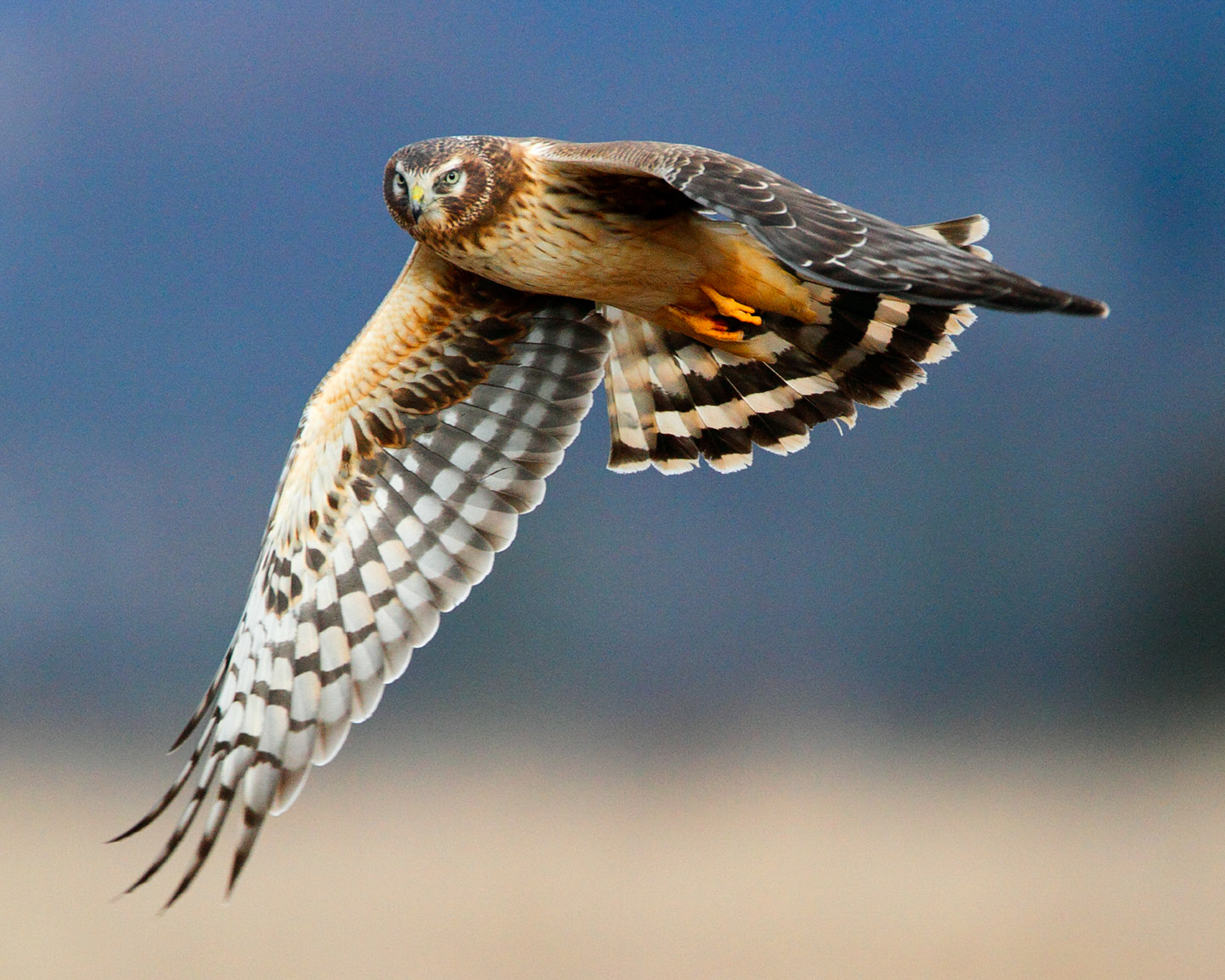
For the past couple of years, I have been observing one or more harriers on our ranch property north of Cameron. I will admit that I thought harriers were dogs or airplanes until I looked the bird up on Merlin Bird ID. I thought maybe some of my fellow Master Naturalists would like to learn a bit about these beautiful hawks.
photo by Dan Pancamo
As soon as I spotted one, I had a feeling that these weren’t our usual hawk species around here (red-tails, red-shouldered, kestrels), because of their actions. Rather than sitting on a high perch or flying high and diving, these hawks were skimming the pasture and then diving in for what I assume are mice, since our fields are full of them.
The resources I look at say they are uncommon around here, so I feel lucky to have her flying around here. I say “her,” because the hawk I have been observing is brown, rather than gray like a male would be. You can’t miss the patch of white on her rump area, which is the second main identifier of northern harriers.
Northern Harrier. Steven Sachs / Audubon Photography Awards
Harriers are fun to watch, since they are lower to the ground while they hunt, and you can get a good look at how they comb the area for food. It’s sort of like a vacuum cleaner, in that they go down a field, turn, and go back a few yards to the left or right of the first pass. Soon enough, something gets caught.
Little did I know how they actually hunt! It turns out they use their ears, unlike most other hawks. According to the All about Birds website from Cornell Labs:
Northern Harriers are the most owl-like of hawks (though they’re not related to owls). They rely on hearing as well as vision to capture prey. The disk-shaped face looks and functions much like an owl’s, with stiff facial feathers helping to direct sound to the ears.
Once I looked further into their behavior, I can see that our land has the kind of habitat harrierw want: lightly grazed pastures along with lots of ponds and marshy areas (hooray for me for making our pond, which is fed by a long arroyo that’s usually damp or wet).
Have any of you seen northern harriers on your property? I know that the literature says they don’t breed here, but I do have the right setting, if they want to.
by Ann Collins, with additional photos by Linda Jo Conn
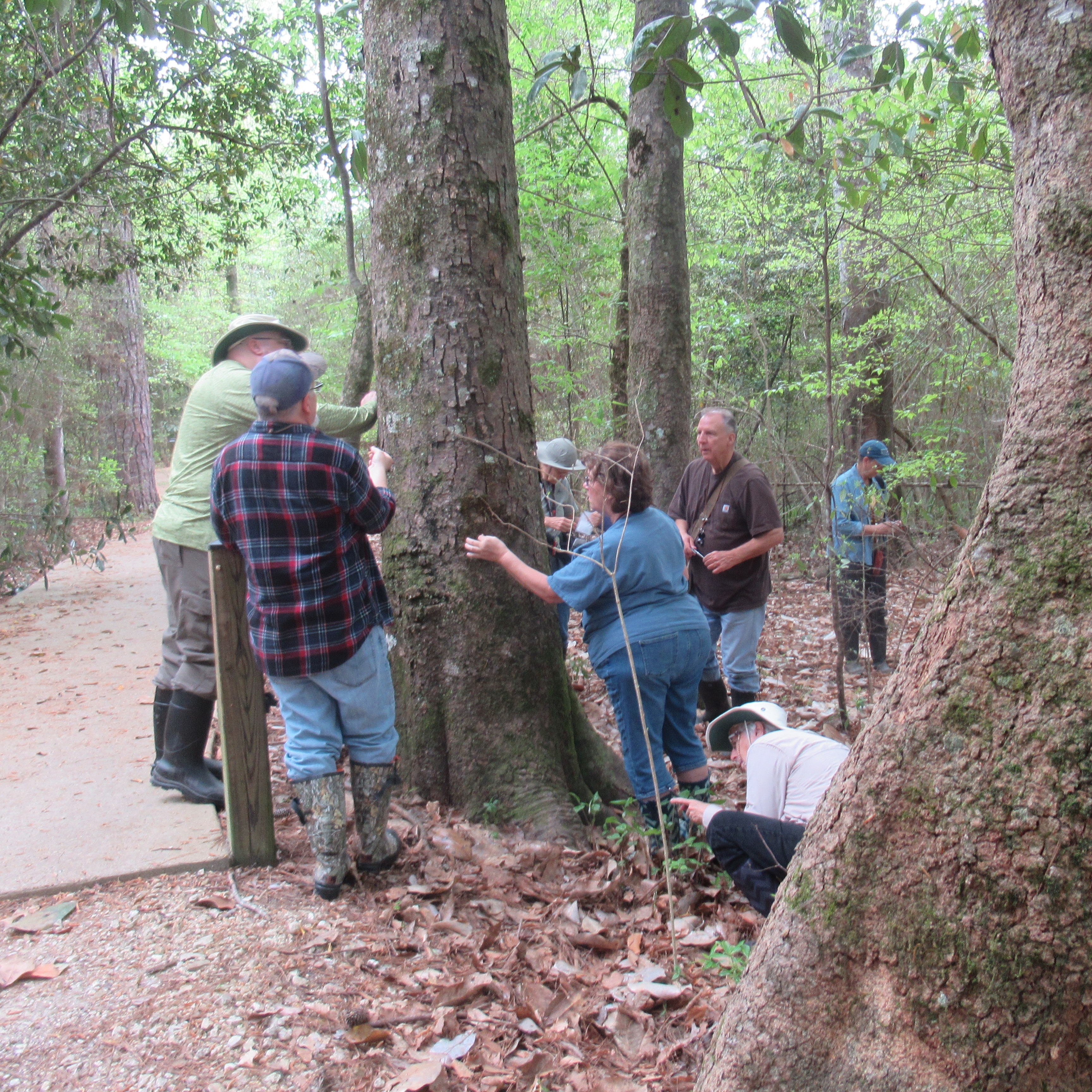
Linda Jo Conn and I just got back from “Nature Nerd Nirvana” – a phrase coined by a fellow traveler this past weekend. Ten lucky participants were able to trail along after Master Teacher Dale Kruse on Bryoventure III. We spend three glorious days immersed in the flora and fauna of the Big Thicket National Preserve. Talk about herding cats; Dale actually had a whistle to keep us rounded up!
Finding mosses everywhere in the Big Thicket.
Dale arranged lodging at the Research Station in Saratoga, Texas. We brought our own food and “drink,” but everything else was furnished. Not exactly the Plaza, but more than adeqquate for our needs.
Extreme dragonfly close-up
Trails in the Thicket were in great shape. There hadn’t been too much rain, so there were few muddy ruts in the roads. Of course, some of us managed to get in water deep enough to seep in over out boot tops – not me, of course! One trekker actually fell in and another, who shall remain nameless, fought her way across a bay gall (that’s an area dominated by sweet bay and holly) on a fallen cypress log. Such fun to watch!
We were supposed to ignore all the vascular plants and focus entirely on the bryophytes – like that was going to happen! Fortunately, birds are somewhat difficult to see with so much vegetation, and the trees are so tall!