Master Naturalists attended a squirrel program at All Things Wild. Here are some things we learned.
The smallest is the Pigmy 3.9 inches, while the largest- Buthan at 4 feet.
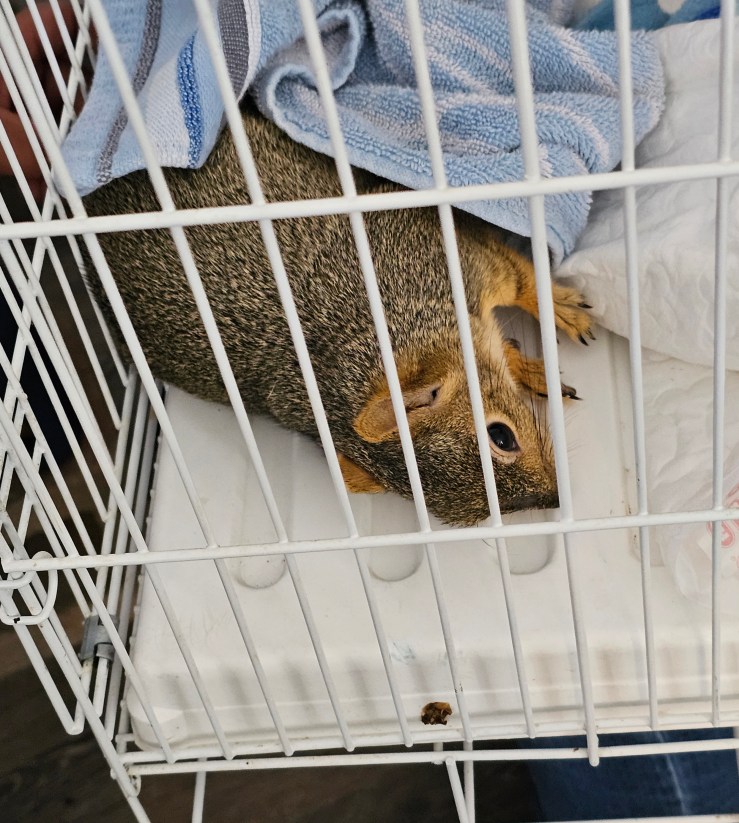
Texas has mostly Fox squirrels. They nest in trees while Rock squirrels nest in the ground. All have excellent hearing and smell and can detect food a foot under snow. When they lay down flat and stretch out to cool it is called a “sploot.”
Tails are used to signal, parachute, cool off and provide shelter. The most interesting fact is that they can rotate their ankles 180 degrees to enable them to climb face down, as seen in the picture of Violet.
If you find a ” Pinky” baby, put it in a warm box with a rice filled sock warmed in the microwave. A mom will not claim a cold baby and baby squirrels do not have body heat. Keep predators away! If after four hours the mother has not claimed it, bring it indoors. Never leave it in the dark. Hydrate the baby with a few drops of water or Pedialyte, very slowly with a dropper. Do not let the baby get too hot on a heating pad. Raising squirrels requires detailed instructions and about 3-4 months until they can be released.
Pictures below show ages based on their tail sizes. Violet came to the shelter disabled and is now an ambassador.
Squirrels adapt to urban areas, help plant trees, and are a natural resource. Sign up for the ATW newsletter and be sure to call them for help in dealing with injured wildlife.
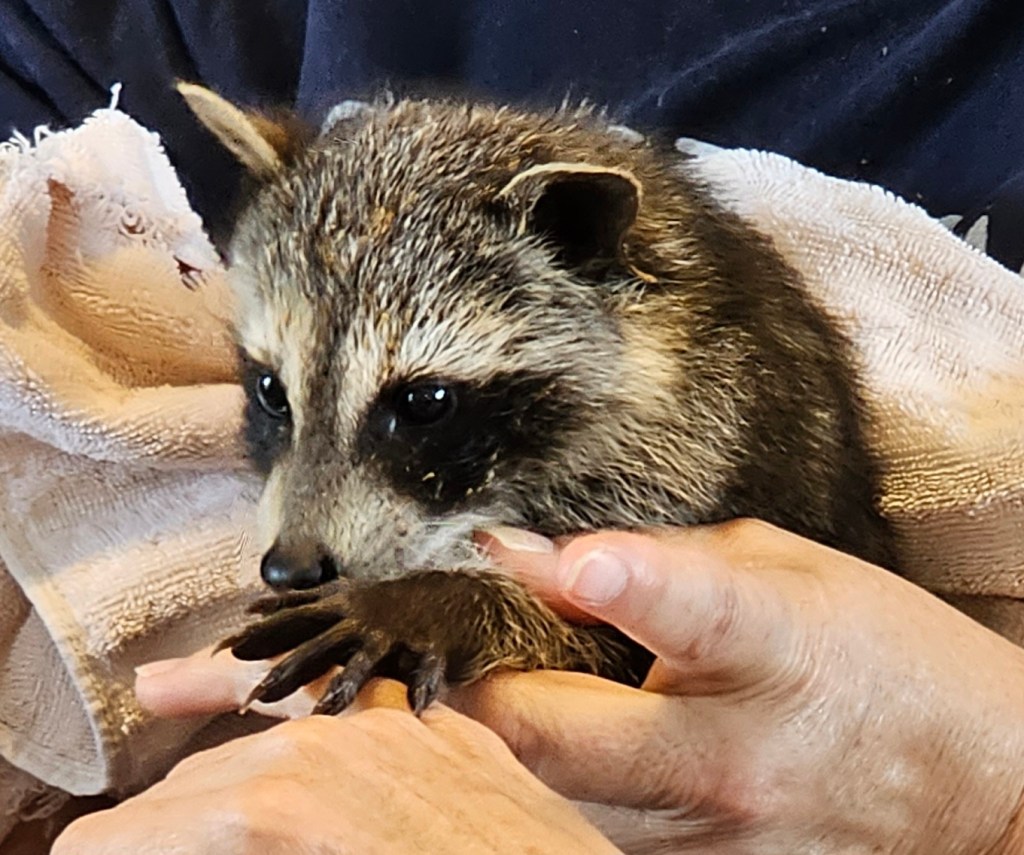
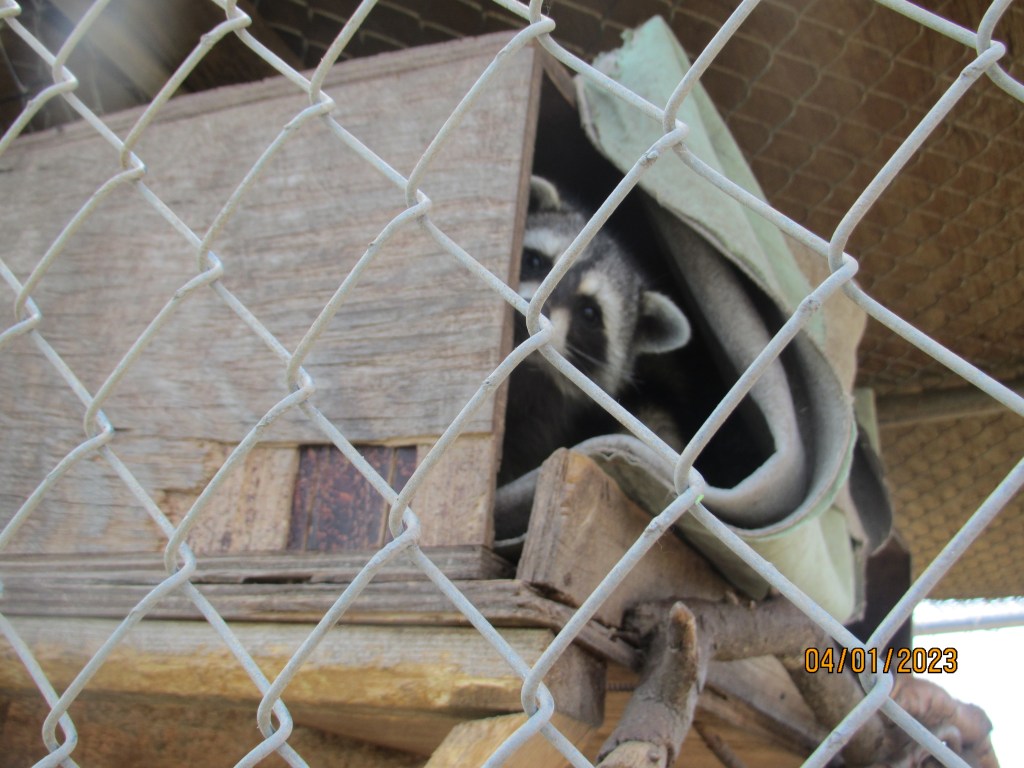
Master Naturalists attended a recent All Things Wild (our region’s wildlife rehabilitation center) program on raccoons. They are more active than the opossums we learned about recently and require much care from the TPWD-permitted volunteers.
Raccoon presentation, from the ATW Facebook page.
Some facts about racoons:
Raccoons eat almost anything, and rub items between their hands in water to tell what kind of food they have.
Babies stay with their mothers for five months.
They purr when happy.
Their fur is not waterproof, so they do not swim much.
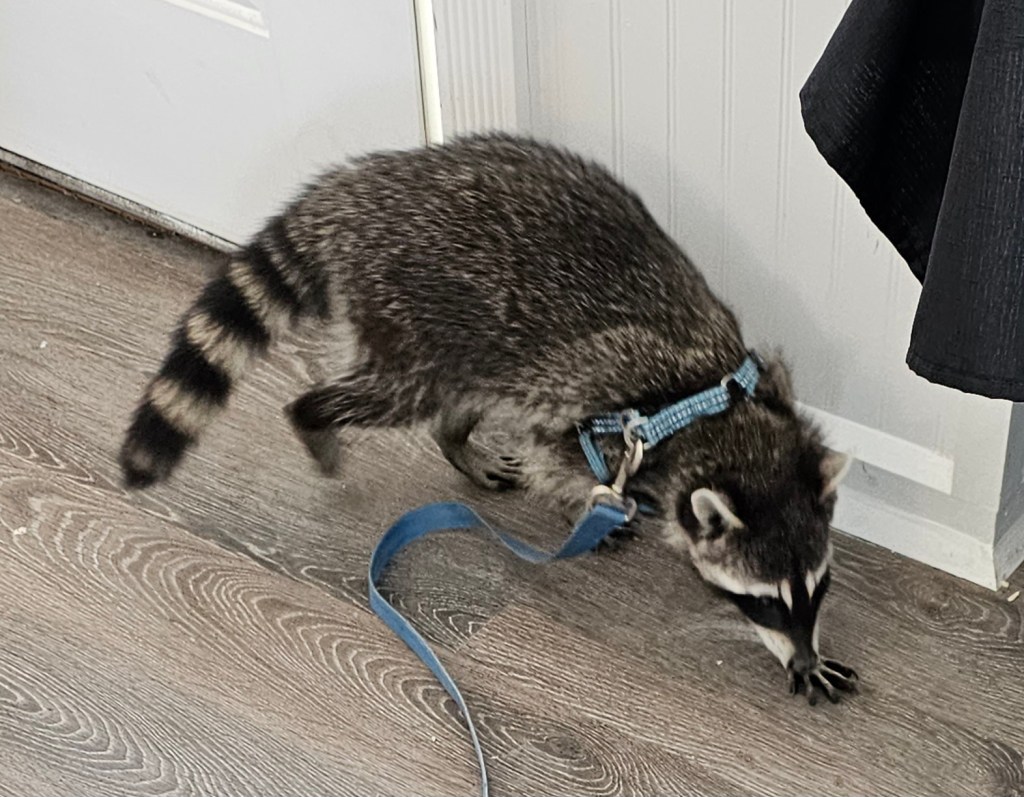
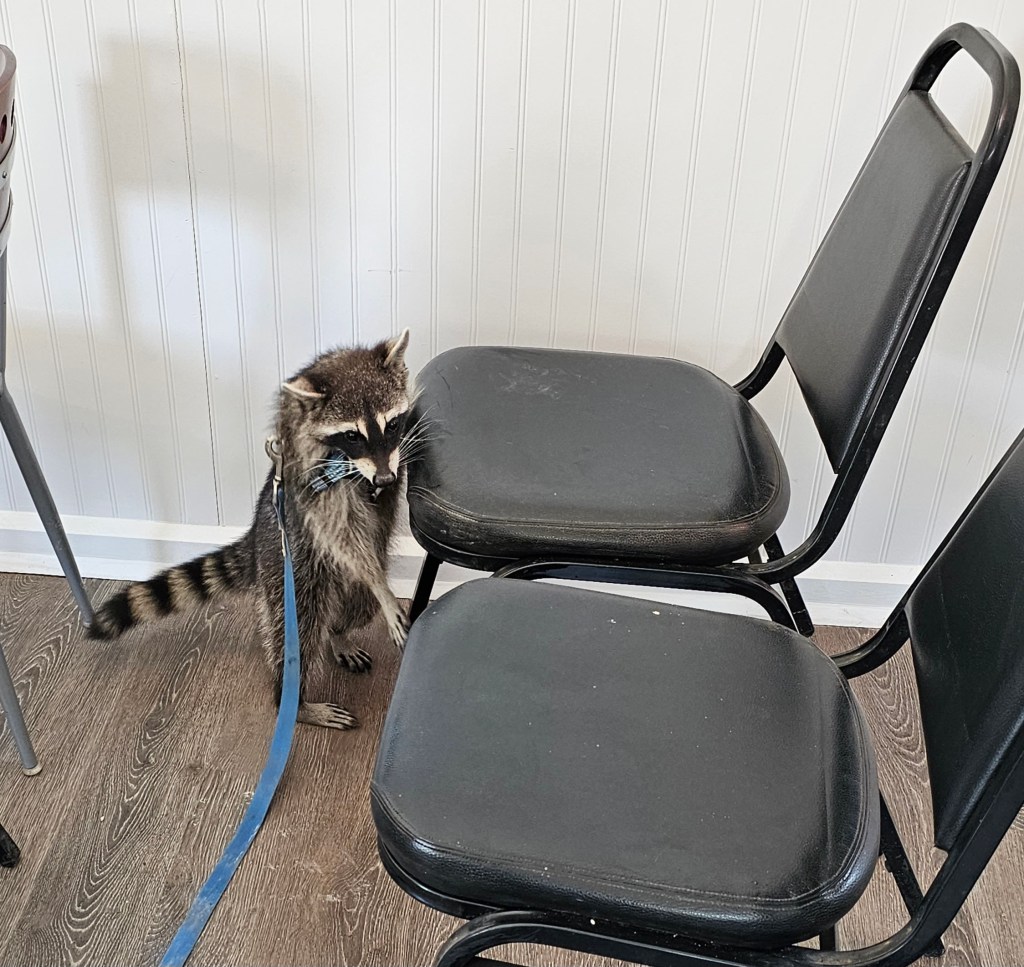
We were informed by the presenters of disease risks with racoons and how to humanely get them to leave your property. They do not make good pets, and as always, you should contact a rehabilitation center if in need of help with them.
You can see some of the reasons not to keep raccoons as pets in this photo from the ATW Facebook page.
Animal Ambassador River lives at the center and is blind and has seizures.
Exciting news from All Things Wild is that there are plans underway to acquire permanent land for an expanded center nearby with direct access from a highway.
By the way, make sure you sign up quickly for their programs, as they fill up within two hours.
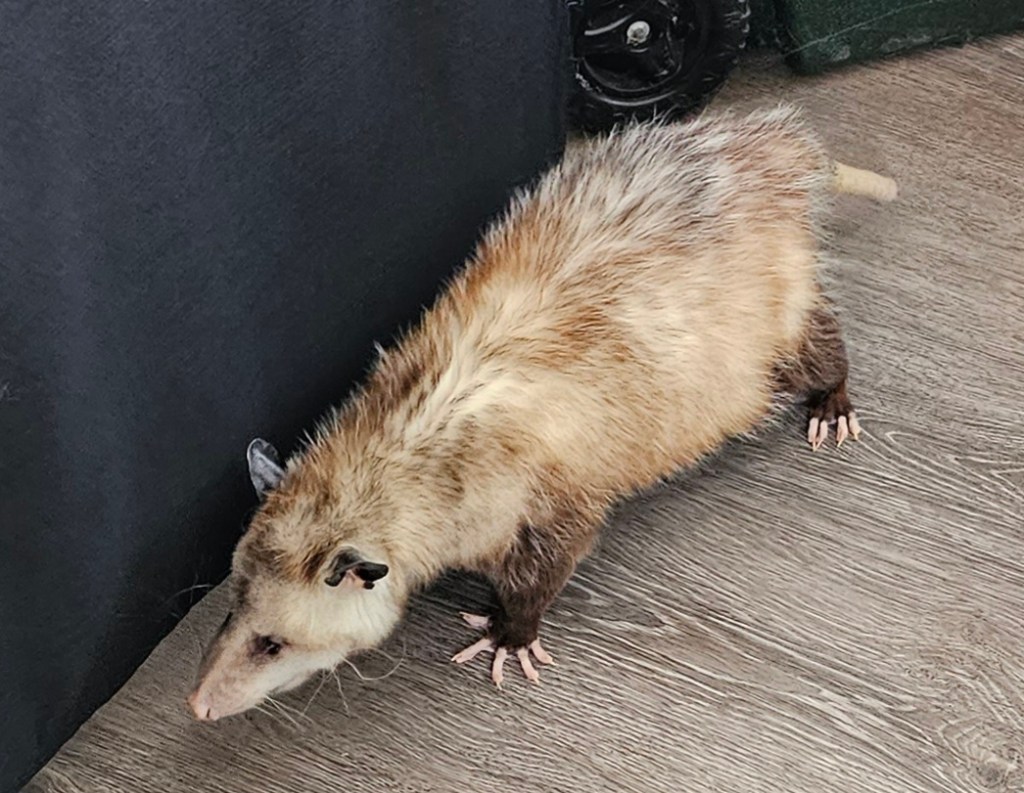
Master Naturalists Patricia and Catherine attended an All Things Wild program on opossums. Sign up early for these programs, as they fill up fast.
Opossums are beneficial to have around for many reasons. For example, each one eats about 5,000 ticks a year, and they eat all venomous snakes except for coral snakes.
Here are some more opossum facts:
They are unlikely to carry rabies because their body temperature is too low.
If you relocate them, make sure it is in a safe place near water.
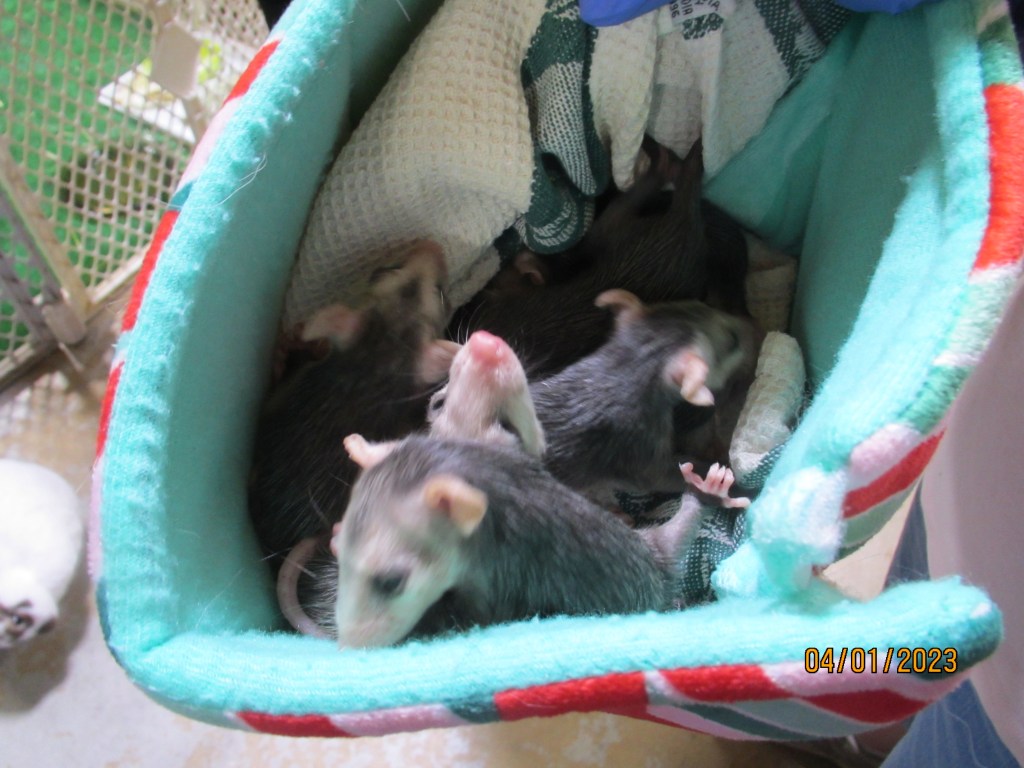
A dead opossum may have babies in its pouch. If you can get them, keep them warm and take them to a rehabilitation facility.
A mom can have delayed conception; she decides the best time to mix sperm with her eggs.
So much to learn!
We were able to interact with Beteljeuce and others, as well as ask questions. We were also offered refreshments.
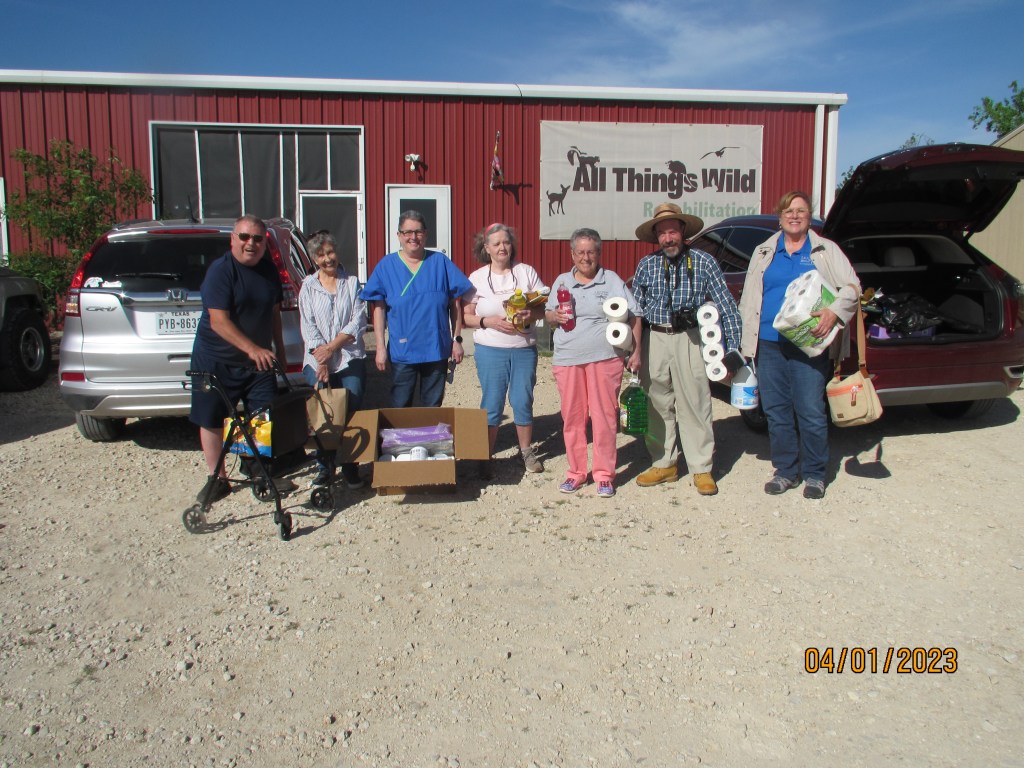
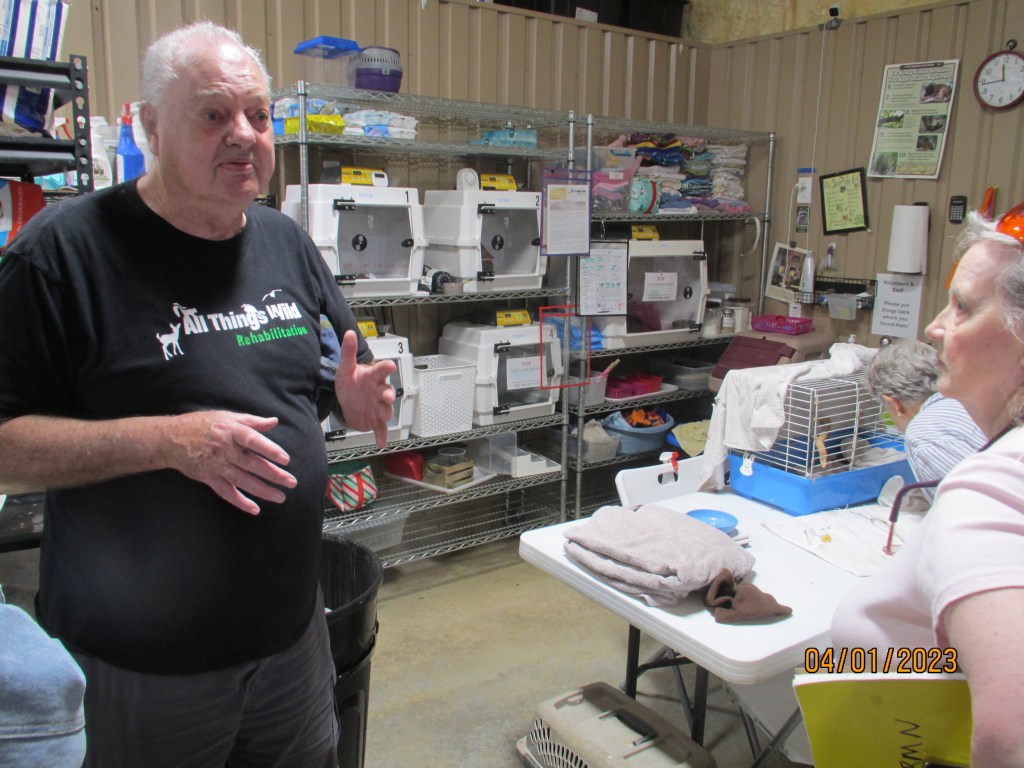
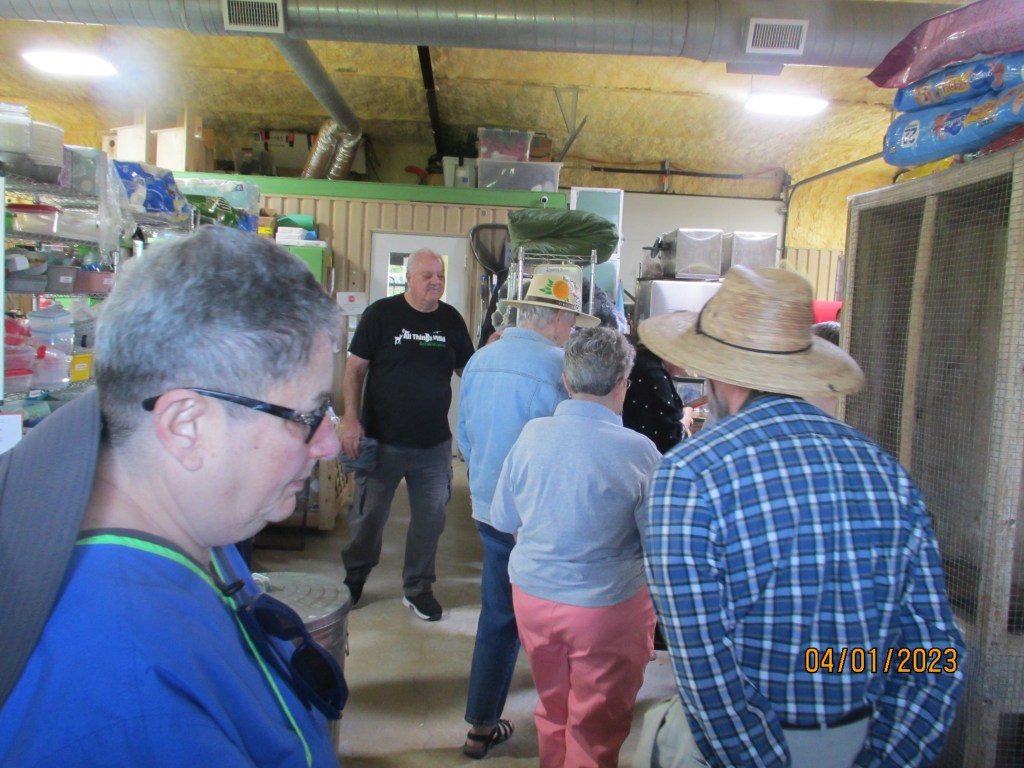
Eight members and a few friends of the El Camino Real chapter of Texas Master Naturalist toured the All Things Wild Rehabilitation Center near Georgetown, Texas, Saturday morning, April 1. The tour was led by Roger Rucker, Vice President and Director of Education for All Things Wild. It is an amazing degree of service the organization performs for injured and orphaned wild animals and birds in the area. The trip there was an awe-inspiring show of wildflowers.
We brought donations
They take in injured animals and rehabilitate them with the intention of releasing them back to their natural habitat. Occasionally, the injury prohibits the animal from being able to survive in the wild. In those cases, the animal or bird becomes a permanent resident of the facility.
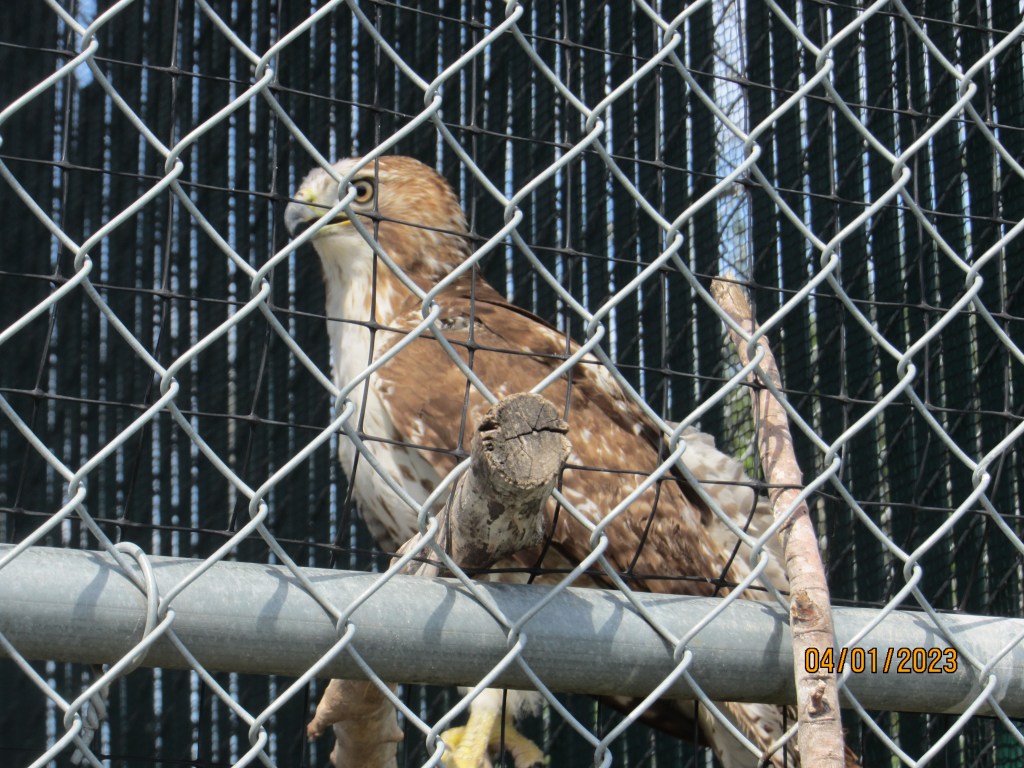
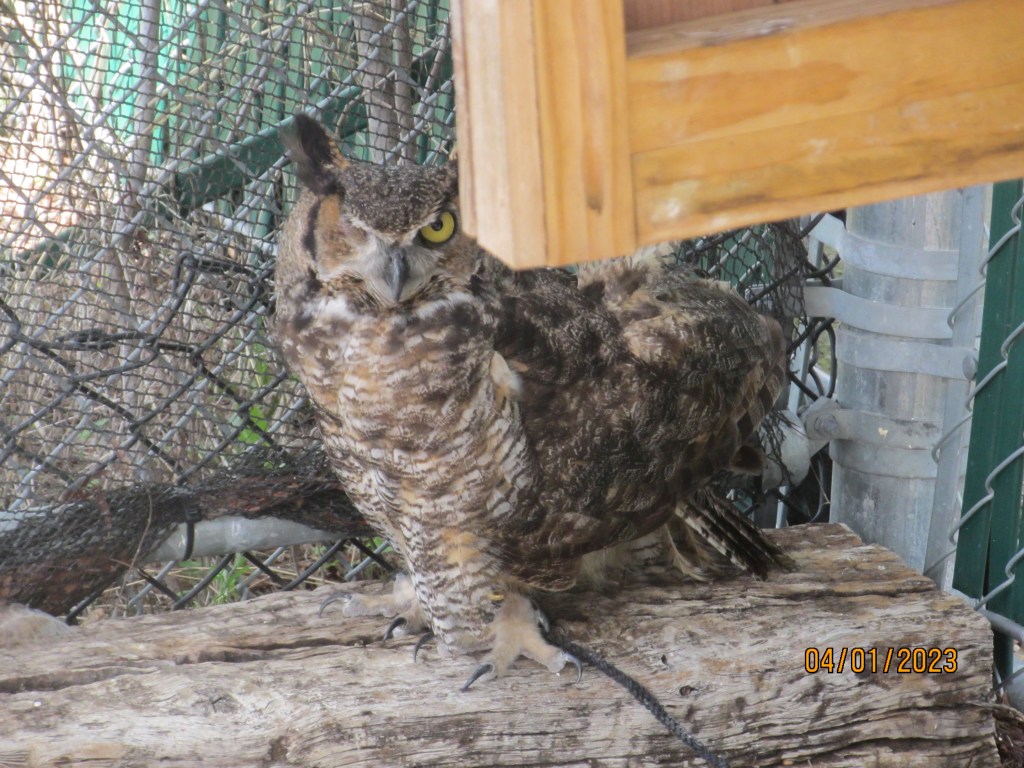
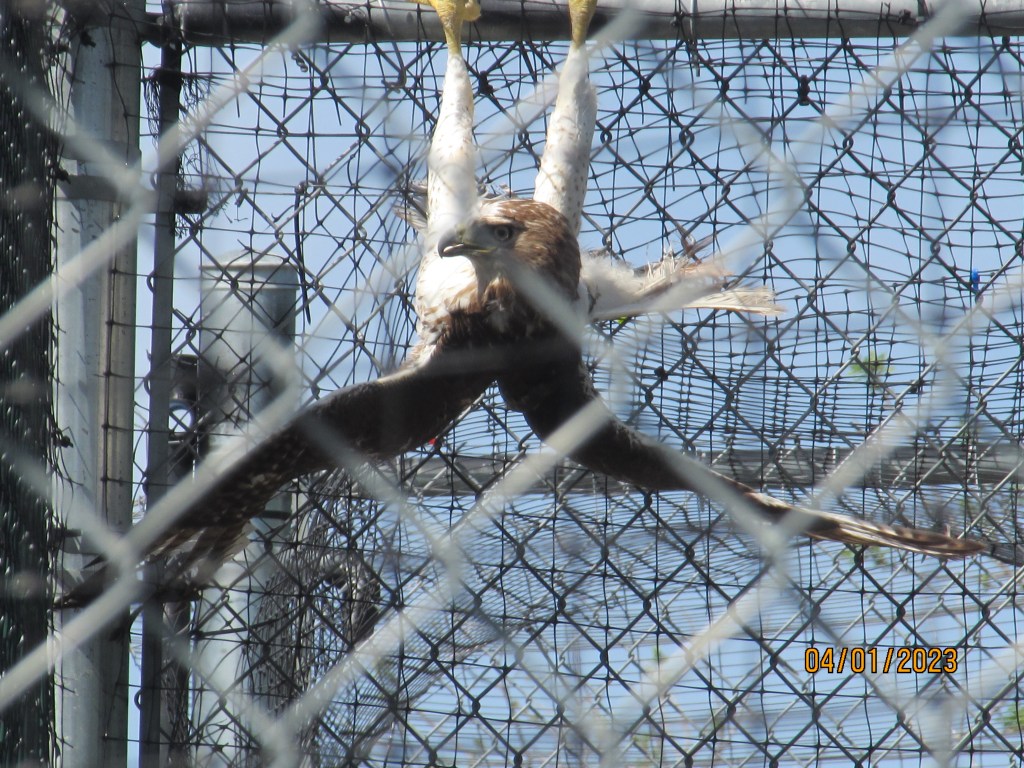
Birds of All Things Wild
Volunteers and staff also care for and raise orphaned baby animals and birds to adulthood. Once they are of an age to support themselves in the wild, the team releases them as close to where they were found as possible.
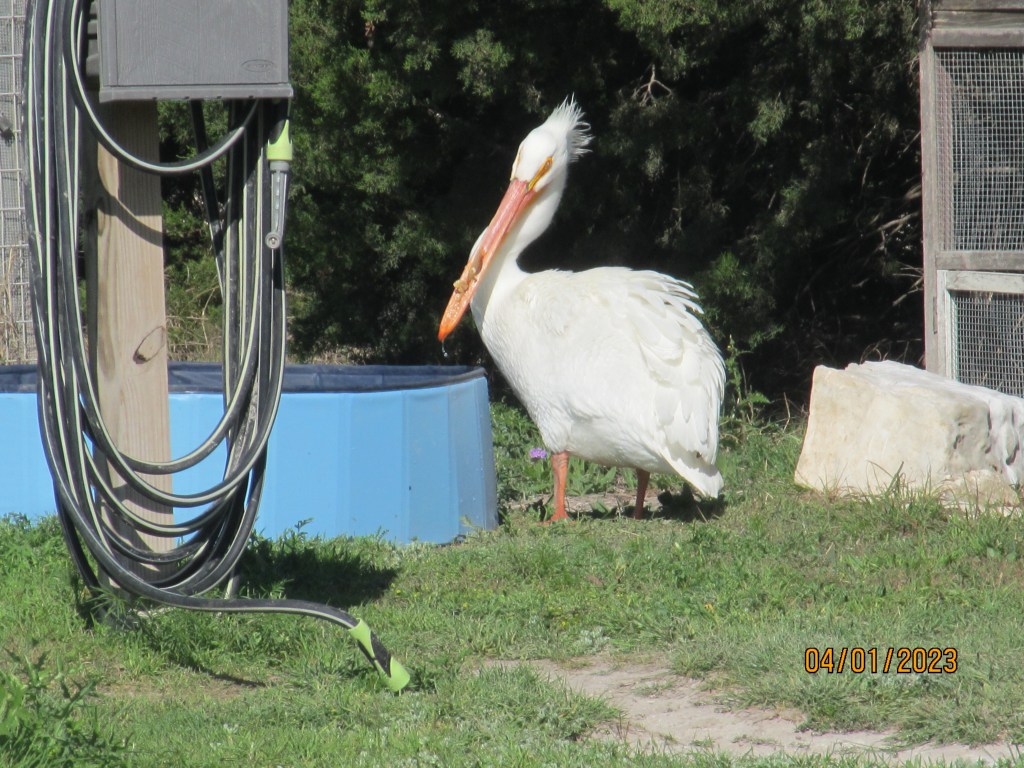
The resident wingless pelican
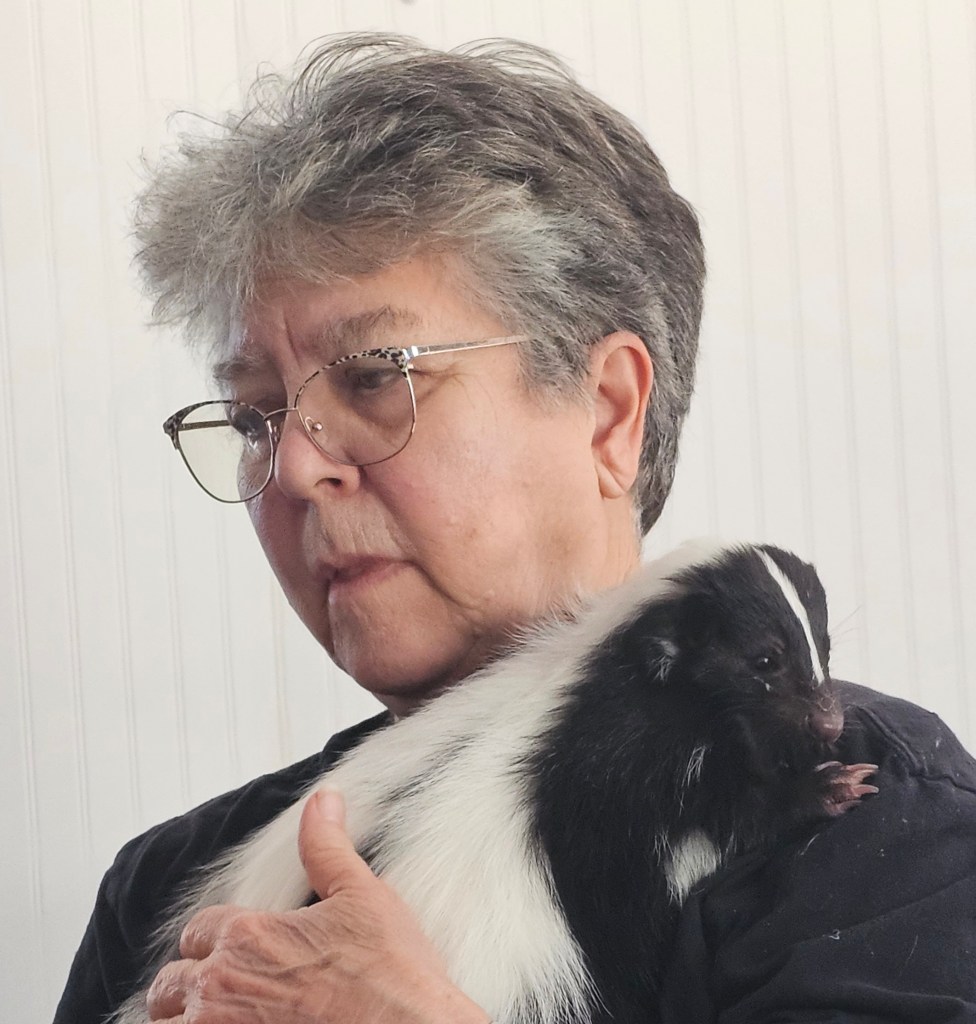
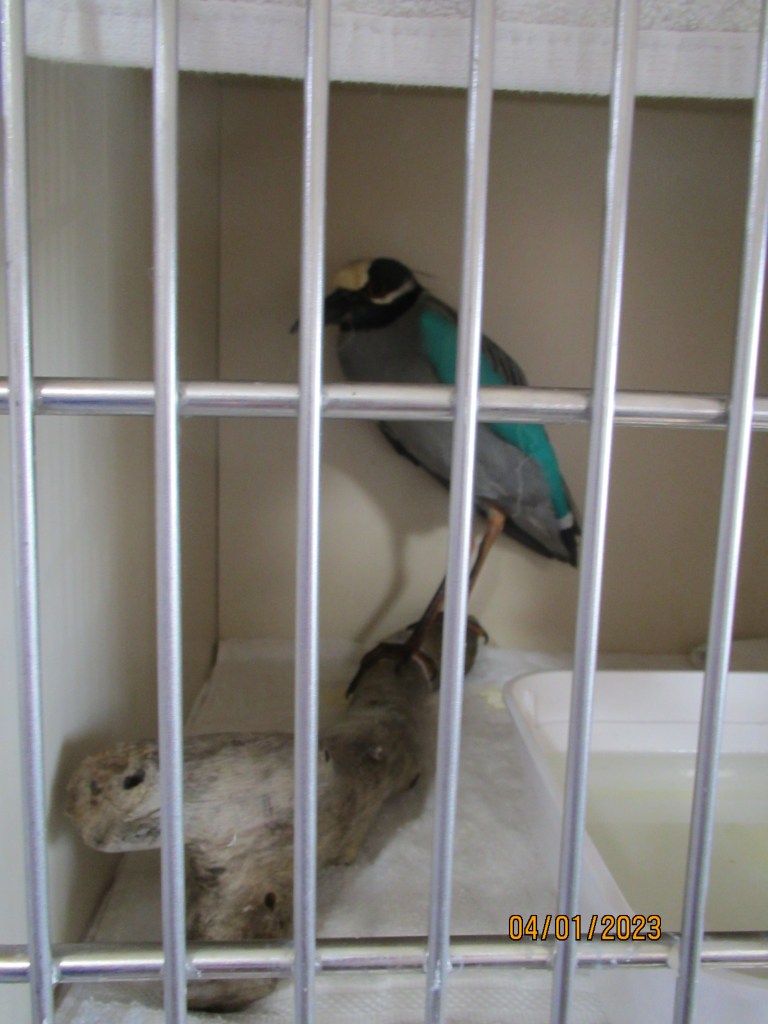
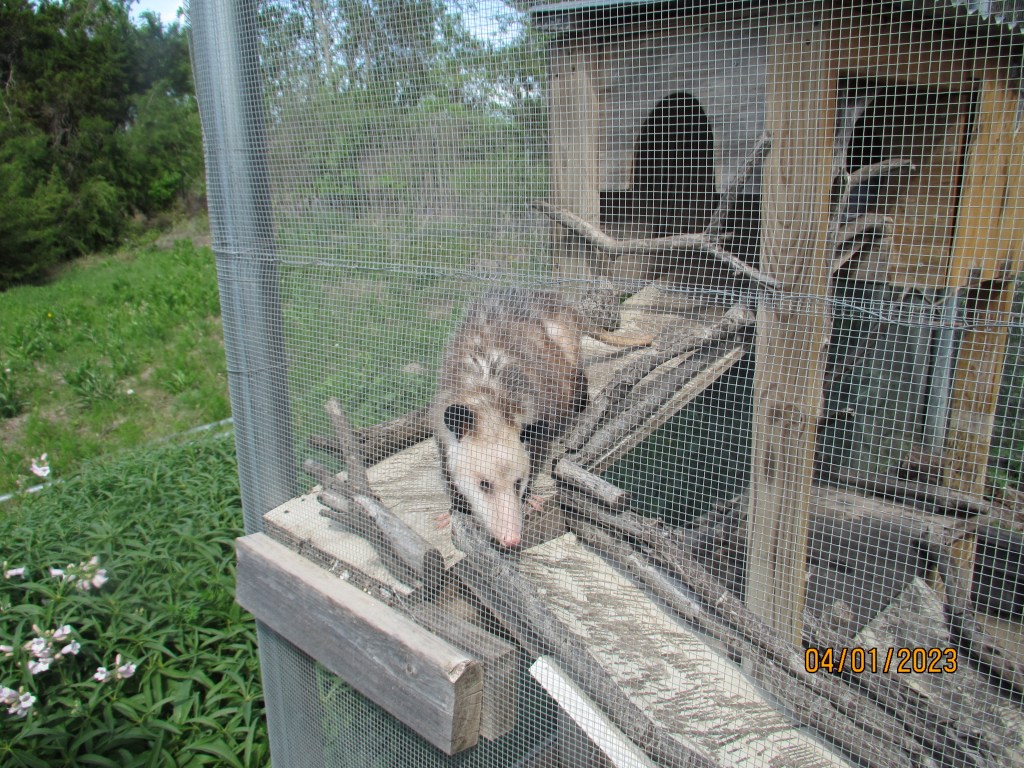
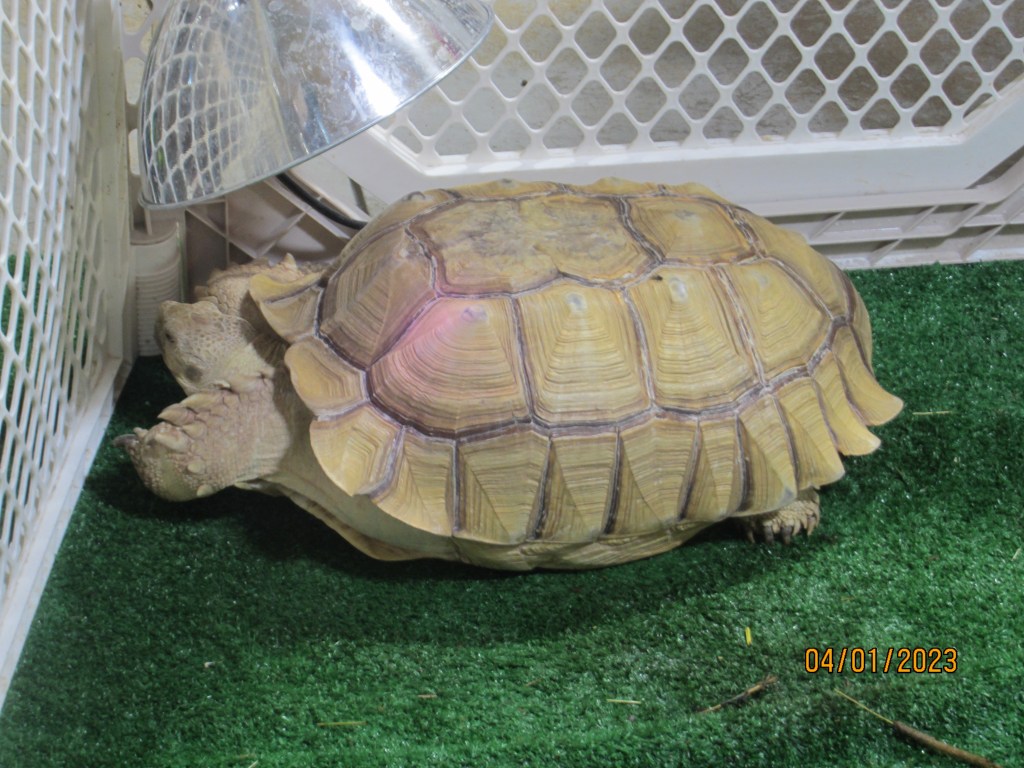
All Things Wild is currently housing many squirrels, several opossums, large turtles, some raptors, many baby rabbits – both cottontails and jack rabbits, a nearly featherless vulture, an owl in ambassador training, a Blue Jay, a skunk, and a very large, wing-less white Pelican. They range from newborns to recovering adults.
Critters at the facility
If an animal or bird cannot be released to the wild, they are made ambassadors for the education programs the staff and volunteers perform. They are trained to be people-friendly then taken to schools or other locations to be used in education programs around the area.
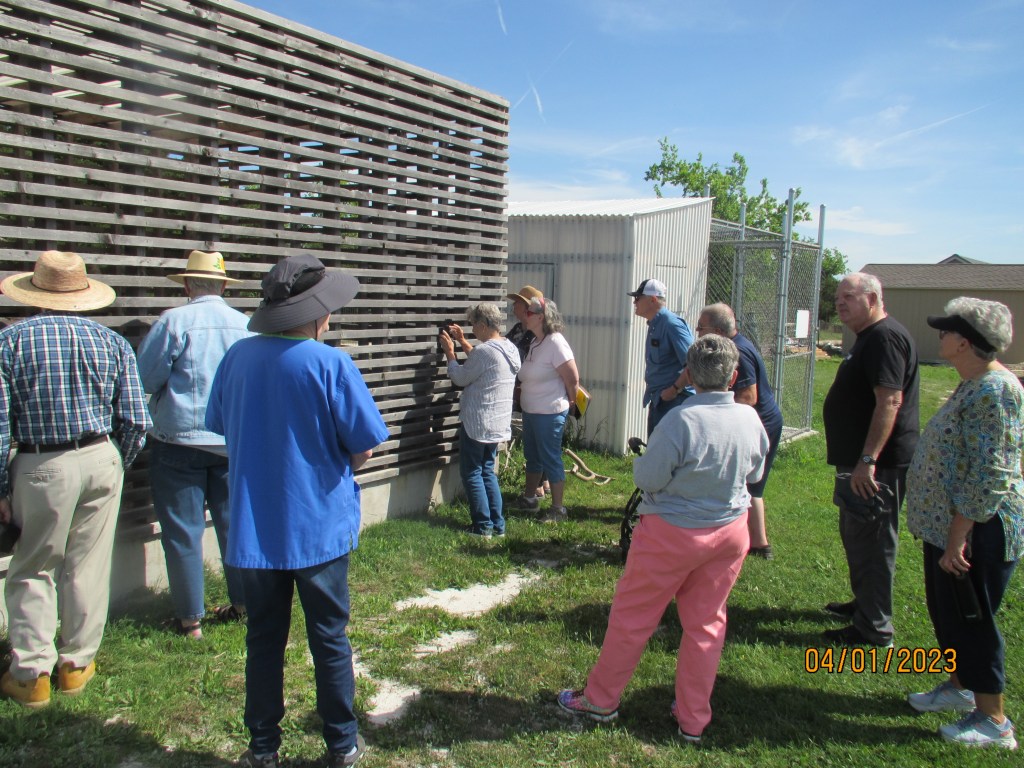
Checking out a building
Up until a few years ago, volunteers worked from their homes fostering the animals. With donations from supporters, they have built a large building to house the ill, perform surgery, and manage the organization. They have outside habitats for those getting closer to being released. Just recently, they received some buildings to add to their range. They are building an office and an education room that will seat up to 60 students.








 Nature Along the El Camino Real